Categories
Blog

START HERE: On the Wild West of freelancing, creator journalism—and choosing yourself

Hiya, happy new month!

Thought it was time for a (re)introduction so I’ve written this post – the story behind the Shift and what I’m building online.

On the Wild West of freelancing, my 25+ year career, the rise of creator journalism—and choosing yourself.

Just reading Henry Zeffman’s post on why Labour MPs are still craving a compelling story from Starmer. Feeling frustrated that he’s not found a way to land his message.

Remarkably for a politician who’s been a party leader for a long time he’s still not defined for a lot of the public.

People also ask on Google: What does Keir Starmer actually believe in? Has Keir Starmer written any books?

A personal newsletter would help and be a home for all his writing.


I had an email the other day from a charity asking if I’d like to be a guest writer on their new Substack. “Sadly, we don’t have the funds to pay for submissions—but writers can promote their other work or organisations.”

Perhaps writing about the ups and downs of being a freelance journalist and promoting your own Substack (why you decided to launch it, how it’s going etc). What do you think?

Nice to be asked, and I’m keen to work with them—I like what they’re doing for media issues, but at the same time, my heart sank. Someone else asking me to work for free. I’m already doing quite a bit of pro bono work. If I printed out similar requests I’ve had over the last 25+ yrs, I could start my own stationery line. Make a paper Christmas tree or three!

Median pay for freelance journos in the UK is piss poor: just £17.5K/yr—less than the minimum wage—for a typical 35-hr work week (ALCS/NUJ). Payment rates have been stagnant for YEARS. There are no pay rises or promotions. “As freelancers we just get paid the same rate. I think most freelancers are afraid to ask for more in case they aren’t commissioned anymore.” Plus: kills fees, payment on publication, implicit contracts etc, which are hard to challenge solo.

The next day, I read Christina Patterson’s post on the slow death of journalism – and the fast death of my career, which struck a chord with me. “Asking us to write for free is like asking an electrician to rewire your house in exchange for a smile.” I restacked it on Notes and mentioned the email.

I think it’s a huge cheek for anyone to ask anyone who isn’t a friend to do anything for free. I am trying to learn to say no, unless I’m pretty sure there’s something in it that will make it worth my while. We can spend our entire lives doing unpaid work and meanwhile the bills have to be paid.

My first unpaid gig was on X-Campus, my uni mag, to get some clippings—arts & culture stuff, which I loved (clue #1). After graduating, I moved back home for a bit to figure out my next move—wasn’t sure whether I wanted to do broadcast or print journalism. I joined the startup Radio Mansfield as ‘community news editor’ and got some radio skills while the MD applied for a permanent licence. By night, I was waitressing at Center Parcs to make ends meet.

That year, I wrote to 100 production companies looking for work as a runner and eventually got offered a gig on Art Attack! at the Maidstone Studios. £80/wk (my bedsit was £40/wk), so a low-key lifestyle, but I was learning the ropes and meeting people. It led to other work—a kids’ show called WOW! (met the Spice Girls, just coming up), Endurance, Masterchef (didn’t see anything dodgy). Then I got offered a FT role at Wizja TV, a new Polish station, as a programming assistant at £13K/yr.

Got my head down, but I was bored to tears working in Acquisitions. Lots of admin, chasing and nothing creative—but it gave me stability and a routine, while I was studying journalism on the side. I kept writing and saving so I could quit and go travelling—figured I’d Wwoof my way round the world, live/work on farms and look for media opps in the cities.

I worked at Foxtel in Sydney for a few months (more programming!) and got some freelance work in Perth with Travel Maps Australia, a budget travel mag. A road trip to the Pinnacles and some market research, interviewing backpackers in hostels. My first foray into magazine journalism and travel writing for niche communities and it sparked something in me (clue #2).

When I got back to the UK, I applied for a scholarship in magazine journalism with Emap in Peterborough and got it! (the work/travel adventure paid off). I was so excited, I didn’t care it was only £12K/yr—I’d manage somehow. Six months with Country Walking, so I’d be learning on the job, and it might lead to something permanent.

This was 2000/1 so digital revolution pre-social media and most of the mags were launching websites. CW were fully staffed and didn’t really need me, so I went to work on the website launch with the ex-editor who’d moved over to digital. I liked the tiny team start-up vibe. She was open to ideas, didn’t micro-manage and let me get on with it (clue #3 – I’m not good with authority).

There was no job on CW at the end of it, but I could move to another title at Emap Active. I was a bit restless though and really wanted to work on women’s mags or The Face so that meant moving to London – Media City, where everything was happening. Mad really – Peterborough is no distance and much cheaper to live, but I wanted to be IN IT meeting people. They weren’t thrilled I was buggering off but helped me get some work on Here’s Health.

A shoutout to my friend Natasha from Wizja TV for letting me stay in her box room in Waterloo while I found my feet and did work experience. It gave me the confidence to take the leap, and I couldn’t have done it otherwise.

I spent the next five years in London working myself into dust—freelance journalism, copywriting, comms/PR, ghostwriting. I found the women’s mags competitive and a bit snooty, but liked the culture & health stuff so did more of that. Spent 18 months at a corporate fraud agency doing pre-employment checks, creating resources, and rifling through bin bags! Still journalism but better paid and more stable—I even had a pension. Not sure why I left… well, that’s another story.

A mate was trying to launch a sex mag for women and asked me to write a piece on orgasms. I had amenorrhoea and was struggling with vaginismus, which was getting me down. So, an opportunity to go deeper and figure out what was going on. I guess my niche found me. Writing about it all was my way of healing myself.

I joined the NUJ, Women Writers’ Network and Women in Journalism and started helping out. Ran events in nice hotels for WIJ freelancers to bring women together—I needed that. Freelancing is lonely so it’s crucial to have a support network (clue #4). I’m still working with the NUJ and am grateful for their financial support during Covid when I fell through the cracks.

I left London in 2006 when I pregnant with Julieta. This was peak mamasphere, as blogging was evolving and social media taking off. Women started the creator movement – Heather Armstrong, Dooce. Catherine Connors, Her Bad Mother. Motherhood warts n all. They paved the way and talked about taboo topics – yet were vilified for it by the media.

I started my own sex & culture blog, Rude and threw myself into that. Got lots of energy back from it, but struggled to monetise it on WordPress. I wasn’t running paid subs or paywalling—just Google Adsense and sponsorships, which were sporadic. I had sex toys coming out of my ears, but I didn’t have a sustainable business model to keep paying writers.

I had a knowledge gap and a lack of biz skills (not part of J-school, uni or talked about on the job) so I was learning from my peers. When I did start paywalling much later, I got backlash from a male writer who said, “I think you’re making a big mistake.”

The blogging paid off in other ways though and helped me land publishing deals. I wrote more letters to agents (I swear by the LOI – it works!), found one and got commissioned to write a book on orgasms for Hamlyn. This was Belle de Jour, ScarletAmora MuseumShades of Grey era so something in the air…

They commissioned me to write two more. All the book deals were flat fee contracts minus the agent’s 15% so pretty modest. I got a wee advance but carried on working while I wrote them. They did a bit of publicity, but I was expected to do most of the work—research, writing, marketing, socials, events, organising book signings.

I wrote a few more books for different publishers including Vibe, a Norwegian outfit who then went bust so my Kama Sutra guide never got published, and I didn’t see a penny. My debt collector couldn’t do much as the contract was outside the UK (will never do that again).

Median earnings for UK authors was £7K/yr in 2022 (ALCS), so it’s part of your portfolio career—if you’re a non-famous, non-fiction writer, anyway. I get a small amount of royalties for secondary uses from ALCS and PLR every year so worth signing up with them.

By my late 30s/40s, I was feeling burned out with creating content online and a bit trapped in my niche, as I was writing under my name. I didn’t want to be a sex & relationship therapist like Sarah Berry or a presenter like Tracey Cox. I thought about becoming a dominatrix (great money!) and writing a book about that, but I’d need to be in London—couldn’t turn my flat into a dungeon and I didn’t want to work locally.

I’d outgrown it, but I wasn’t sure what I wanted to do next. I remember a journo from The Telegraph calling me for a quote and saying, “what’s left to say about sex in your 40s?” She needed a new angle lol. So did I.

I found it hard to let go though—Rude was my second baby. I’d put my heart and soul into it, built a digital mag I was proud of, and paid writers. Giving up felt like failure so I kept going, juggling love and money work. What I needed was a mentor/coach to talk to – to get a plan together so I could pivot slowly and expand into new things.

In the end, my body made the decision for me. I got ill and was diagnosed with RA aka Wayne the Pain so had to stop everything. I’ve never known pain like it—childbirth doesn’t compare. Horrible condition. Fat fingers so I couldn’t write properly, and it made me feel so tired.

These things don’t happen overnight so it’s long-term stress: precarious work, doing too much, money worries (I had 20K debt in London and eventually did an IVA to consolidate). I was solo parenting and miles away from my family so all a bit much. Body says NO. I’m not doing this anymore.

I’m grateful for the opportunities I’ve had—graft, timing and luck—but journalism and publishing has never felt secure as a career, or like I had someone invested in me long-term. I’ve done all this good work but I don’t have a lot to show for it materially ie a home to pass on to Julieta.

I’ve had three agents—the first one left and I didn’t gel with her replacement (I wasn’t high-brow or famous enough). Then they restructured and let a few of us go (including me) so she left to do her own thing. I got an email thanks & bye but no advice on what to do now or offer to connect me with the other writers. I found them on my own.

So here we are. 2025. A bit older and greyer, still plugging away, having another go (the tech is better!). Writing the Shift, enjoying the Substack Motel.

Choosing myself and reinventing myself, which is the lesson I’ve learned from all of this. Choose life and building your career around that not the other way around.

Exploring and helping to shape the new media revolution. Creator journalism is the most exciting area of journalism imo. Intimate and collaborative. People are paying for news! I’m here for it.

An opportunity to tell untold stories and go deeper into a niche that the mainstream media can’t cover. And so many great women in this space Taylor Lorenz Kat Tenbarge Daysia Tolentino Kristin Merrilees kate lindsay Emily Sundberg Lex Roman Kaya Yurieff, Jasmine Enberg Rachel Karten Lia Haberman Kerry Flynn Alexa Phillips.

Substack isn’t perfect (what platform is?). I don’t love the closed API/walled garden—the future of the web is decentralised. I don’t want to be too dependent on a platform – use them for discoverability. But I like their mission to be a home for culture and they have changed the culture around paying for writing online. I’ve also met some brilliant people here.

The good thing is we have options now. The creator space is growing and platforms have to stay competitive. I see Beehiiv has a big reveal coming up in Nov that “will completely change how creators and publishers build online”.

Creative freedom is important—my main driver. But this time, it has to be sustainable and a proper living. More collaborative, less lone wolf – the route to burnout. The cult of founder (whose bright idea was it to name ad agencies after people?) puts all the pressure on the individual to succeed. We’re not content machines and we can’t be productive all the time. I need to work in seasons, with my energy and human design.

Build something bigger than myself and bridge the online and offline worlds, which takes time – you have to commit to it and be consistent. In time, I’ll host affordable writing retreats – the House of Letters – because the magic happens in person. And life is better with the sun on your face, a bowl of olives and a Negroni in hand.

Julieta has just started at U of York so new beginnings for both of us. I miss her little face and it’s quiet in the flat, but I don’t miss the unpaid, undervalued, and invisible labour.

It’s ME SEASON—a great feeling.

Not sure where I want to base myself next so I need to do some mini trips while I figure it out. A week in Bristol. A smart village in Italy. I was talking to Amy Fallon about that earlier—a reminder to renew my YHA membership. If they’re well run and have private rooms, I can hack it!

Feels good to bang this out. I can see the patterns and clues about how I like to live and work. The stories I’ve been telling myself for last 25+ yrs (‘there’s no money in writing or being creative’…‘journalism is a middle-class industry’…’I’m not a numbers person’). And what I’ll be telling myself for the next chapter—my unretirement and a happy, healthy 100-year life, I hope.

Christina just replied to my comment about sending something I’ve already written. “If at all. I sometimes ask people if they would ask a plumber to mend their boiler for free. What’s the difference?”

I know. I’d like to be involved though, think it’ll lead on to other things. I’m a giver and believer in karma—do it for the beauty of it. Life is so transactional, and I don’t want to live like that.

My mate Marianne Lehnis: “Send him something you’ve already written. Doesn’t cost you anything and you get the exposure/free visibility. Just look through your newsletters.”

A reminder to sort my archive out!

Or I could just send him this.


What I’m working on

  • Nov 11: Digital Creators Association panel on the creator economy and AI and the issue of creator mental health – key learnings/opps
  • Nov 30: ChatGPT’s 3rd birthday – AI & creator compensation latest: Australia’s move to protect creators. Equity campaign to help strengthen copyright law. We need to opt in, not opt out!
  • Jan 15: Findings from the Late Payments consultation – see the NUJ’s #StopTheFreelanceRipOff campaign
  • Feb 26-27New Media Summit. Good to see a shift in focus from last year’s ‘Newsletter Marketing Summit’ – they’re thinking about who they want in the room. Need to see the agenda
  • April 15-18: Liveblogging the International Journalism Festival – creator journalism talks and coffee chats for my Bold Types creator profiles
  • Updating my Media Diary – key media + culture dates to help you plan content and get out and about!

Ideas and feedback welcome.

Thanks for reading!

Have you written your story? I’d love to read it.

Love Nika

Categories
Interviews

Bold Types Q&A #10: Christin Thieme 🇺🇸

Since 1999, I’ve been writing online and interviewing creative folks I admire about courage and craft. I love learning from others’ journeys & experiences and want to help more ambitious solo entrepreneurs—especially women—impact the world with their personal stories. And make a shit ton of money!
Inspired by the book ‘Bold Types: how Australia’s first women journalists blazed a trail’ in the fight for gender equality, I’ve launched the Bold Types Q&A series.
Here’s the 10th interview, featuring Christin Thieme, creator of The Content Brief and host of The Content Spark Summit – Nika 

Christin is editor-in-chief of The Salvation Army in the western US, where she tells stories about people making an impact for good and prompts others to action. She holds a master’s degree in specialized journalism from the University of Southern California, has taught journalism, and helps creatives simplify their content strategies on Substack.
Welcome, Christin! ✨

What problem is ‘The Content Brief’ solving?

I help creatives simplify their content. Anything we create and share is an invitation to connect, and I want people to have a plan and a workflow that is exciting to show up for.

I hold a master’s in specialized journalism, have worked for nearly two decades leading a content marketing team for an international nonprofit, and taught journalism and communications as an adjunct professor. Content is what I eat, sleep and breathe if you will. 

After helping friends strategize how they could better connect with the right people online around their makeup artistry, barbershop and even psychology practice, I saw how overwhelming this world of content is to people who aren’t necessarily in it daily. I enjoy helping people break it down into something more tangible, sustainable, and real-life approved, so I’ve taken up doing so here on Substack.

If you’re feeling overwhelmed, frazzled, and frustrated with how you show up online… If you want to better connect (and convert) people to your ideas and your work… 

The Content Brief is for you. I’ll help you take control of your content so you can stay in your zone of genius.

What’s always on your desk?

At my full-time gig, coffee, water, a Blackwing and my Airpods. At home, I’m often typing straight into my Notes app between baseball practice or bath time.

With three boys under six, I love and live by the Julia Cameron quote:

The ‘if I had time’ lie is a convenient way to ignore the fact that novels require being written and that writing happens a sentence at a time. Sentences can happen in a moment. Enough stolen moments, enough stolen sentences, and a novel is born—without the luxury of time.

I also printed out a screenshot of my first-ever paid subscription and put it in a little frame to remind myself I might be onto something, to keep going, and to keep finding ways to be helpful as I build this community.

What are you struggling with right now?

Time! I have so many ideas, but we all only have so much time, so I’m constantly reminding myself to focus on what moves the needle. This week, I am largely wrestling with delivering a virtual summit I’m hosting: The Content Spark Summit.

This free full-day event on Substack June 27 is meant to help you spark meaningful connection with your content. From understanding the importance of engagement to creating a content strategy you can’t wait to show up for to fostering genuine connection and leveraging your unique expertise and experience, 14 expert speakers will share what they know.

And I’m working on getting the word out…so please come! Grab your free ticket here.

Best business advice received this year?

Just this other day, I saw this quote from Seneca: “You must match time’s swiftness with your speed in using it, and you must drink quickly as though from a rapid stream that will not always flow.”

He may have been a Roman philosopher, but the advice holds today:

Keep a bias toward action. It’s easy to hide behind planning, plotting, and perfecting (I know!), but the impact you want to make can never take hold until you actually take action.  

Tell me about your newsletter strategy, its value to your business, and how you measure success.

Right now, I’m in an awareness-building phase, focusing on free subscribers, which is part of the strategy behind the summit.

There are three ways to engage with me at The Content Brief:

  1. As a free subscriber, you get each of my posts to help you create a newsletter you love *without* the overwhelm. Things like: What to do with your story, questions to find your content sweet spot, and a template to write your personal bio. Plus, my monthly content report of things I’ve digitally dog-eared and Creator Briefing Q&As with other creatives, like this recent one with Lucy Werner.
  2. As a paid member, you get access to my quarterly content planning party, where I’ll help you plot out your next three months of content. The next one happens in August and will help you create a plan to show up consistently, with intention.
  3. And as a paid member of The Briefing Room (the founding member tier), which I’m just about to launch, you get exactly what you need to design or redesign your newsletter content strategy with ease, including my exact simple content system, an all-in-one dashboard workspace, and a monthly brief on one specific thing to reset to keep your strategy fresh. It’s all designed to save you a lot of time and frustration so you can have a bigger impact with your newsletter.  

If you Join The Briefing Room before September, you get a bonus 1:1 Content Strategy Session with me!

I’m also building in ways to collaborate and share with other creatives. I hope The Content Brief becomes a vibrant community that supports each other in what can sometimes be a lonely endeavor.  

What important truth do very few people agree with you on? Or your ‘spiky point of view,’ Wes Kao calls it. 

Providing value doesn’t mean having all the answers. 

Creative work that inspires an audience and builds a community (and business) doesn’t require anything stunt-like, viral or wildly innovative.

We don’t have to show up as “experts,” with all the answers ready to guide others to the big transformation. Trying to do so often leads to becoming another faceless creator of tips & tricks and *value* in some Wikipedia-esque, robot-generated “I have it all figured out” status quo.

And the problem is…that says nothing of the journey.

You could have the most well-researched writing in the world, but if it feels like nothing more than a robot production, it won’t get read.

Conversely, you could write about your life as a dog walker, and if you’re asking questions that take us on a journey and leading a conversation from your perspective, every word will get read.

To provide value, you need curiosity, questions, and a yearning to explore. It means being willing to lead the conversation and invite us on the journey of an idea in real time through your content. People don’t want to see processes, deliverables, skills. We want to see perspective, relationship, transformation—and that means your point of view, personality and perspective.

Last week, I wrote about why I hate the word ‘content’. It’s become a catchall term for everything we make—words, video, audio—invading everyday talk and devaluing the creative process. What’s your take on it?

This is SUCH an interesting question and a sentiment I’ve seen pop up recently. I’ve never thought of it negatively. I think of it like the word “box”—a catchall term that encompasses so many different specific things but one word that gives you the gist. 

I’m sure some of the negative vibes toward the word come from the push for “top ranking” and “click-worthy” content that doesn’t deliver, but for me, it’s just a succinct way to describe the many ways we invite people to connect with us. 

That’s what content is, in my view, whether it’s a newsletter, podcast, social post, and so on.

When you create and share something, you invite others to connect with you about your ideas and work. Of course, if you are specifically a podcaster or a novelist, say that. Lean into concrete specifics over summary words whenever you can.

How have you shifted from ‘creating content’ to ‘building community’ on Substack?

With a relatively new newsletter on Substack, I came in knowing I wanted to build a community. I love to plan parties. I love to build everything around a specific purpose. To carefully word the invite. To think through the menu. To find the right party favor. To design the table. To welcome everyone in. To surprise and delight. To make them feel loved.

I feel the same about crafting my own little club right here on Substack. Building a newsletter and community is the ultimate gathering. And I’m here to party. 🎉

Can you recommend some resources for entrepreneurs?

The Elements of Style by Strunk & White—I love this illustrated version of the classic go-to guide for writers on how to “make every word tell.” (It’s also one of my favorite gifts for the creative types!) 

Building a Storybrand by Donald Miller—The best how-to I’ve seen on using words to talk about your product or service. It’ll help you define a clear message on how you can help potential customers. Worth re-reading annually. (Here’s my full list of favorite books to improve your writing for more.)

And I’ve truly been loving 

Lucy Werner‘s community, 

Hype Yourself, for learning how to generate your own buzz.

Are you using AI tools? If so, how are they helping you work better/save time?

Yes! I call Chat GPT my intern. I love using it to prompt my thinking, research subjects, synthesize interviews, and spot holes in them. It also helps repurpose my hero content into supporting pieces.

My goal is to create one Substack post a week and then repurpose it into snippets and teasers for my supporting platforms. To help save time prepping those shorter pieces, here’s a basic starter prompt I use:

I am a [what do you do], and I need to create a social media post based off a newsletter I previously wrote. The audience is composed of [your audience.]

Use this text to write 3-5 short-form teaser pieces of content for [platform] that highlight the main points, benefits or offers of this newsletter. Ensure the tone is [your tone].

Include a CTA at the end to subscribe to my newsletter, [your newsletter name].

Here’s the newsletter: [paste copy]

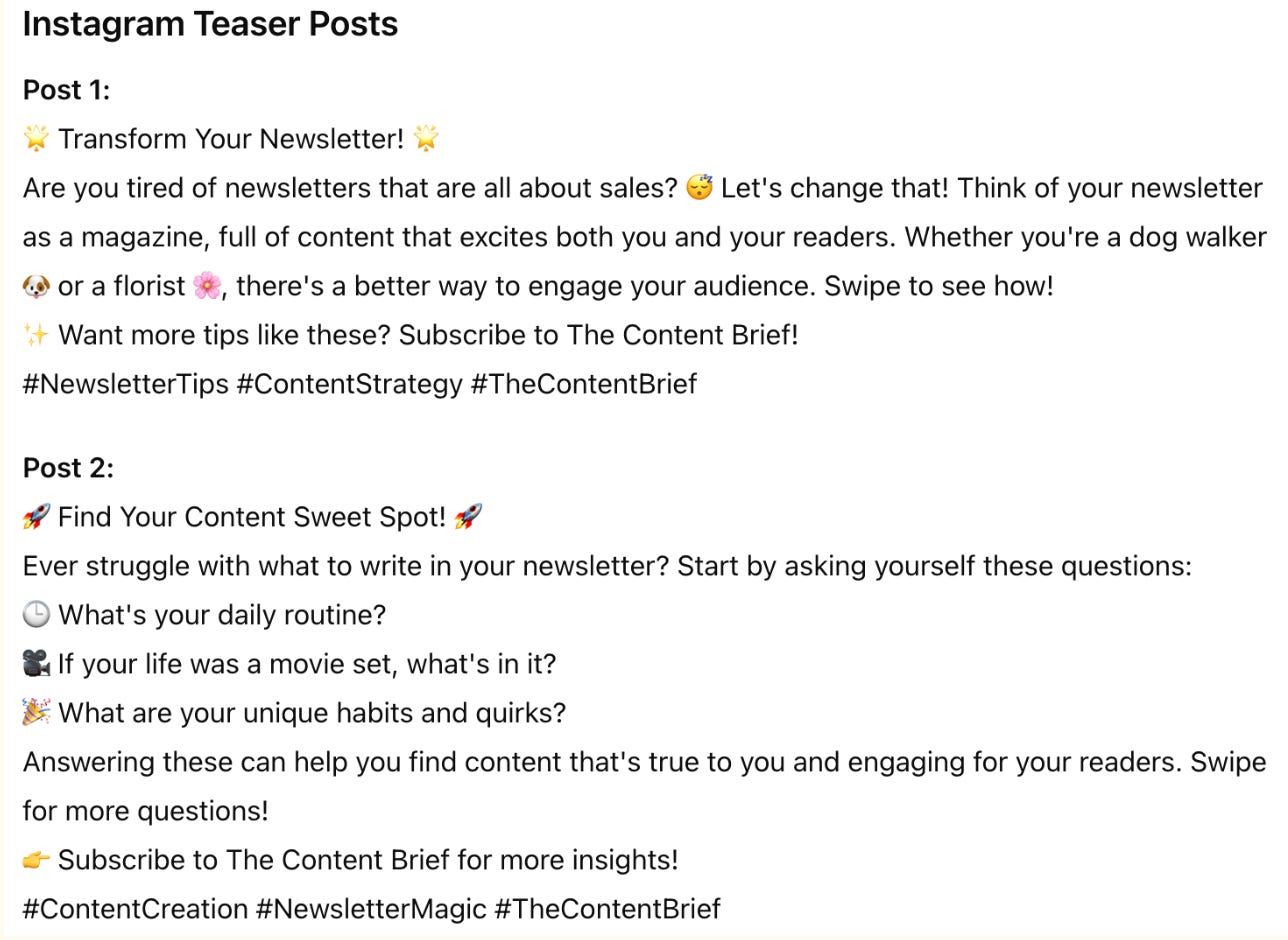
Using that prompt on this recent post of mine, here’s the first two of the five posts it generated:

Not bad for a first pass. I always edit the intern’s work for quality and to sound more like me, but the beauty is you’re not starting from scratch.

Best coffee & coworking in your town?

I haven’t done any local coworking, but my favorite coffee shop to work in is The Boy & The Bear in Redondo Beach, California. It has an aesthetically pleasing dark, earthy, “let’s get to work” vibe and good coffee. Win-win.

Do you have a question for my next guest? 

What do you love about your work? 

Where can readers find you?

Please come visit over at 

The Content Brief!


Check out all the interviews in the Bold Types series.

Categories
Blog Newsletter

The sorry state of social | Issue 153

Desk Notes

(Please excuse the mess…Still building dreams) ✨

I’m experimenting with a new (shorter) format because a) I respect your time and b) I need to get outside and enjoy the early days of summer. There might not be much of it in the UK. And it’s my birthday month!

1️⃣ Went to a Leading Expert talk on the Sorry State of Social Media with Brian Clark – an overview of the evolution of social media from a helpful audience-building tool (Digg and Delicious) to a dopamine-fueled distraction and time suck—with more emphasis on ‘influencers’ and attention than community and connection.

From a business perspective, it’s hard to justify spending time on social media. He’s been experimenting with LinkedIn and succeeding, but “there’s no aspect of fun on LinkedIn.” (I agree—it’s boring AF—what can we do about that?)

Some thoughts on how to fix it: Focus on building your email list and a deeper psychological understanding of your prospects. Test paid ads in other newsletters and/or write guest posts for folks in your niche. The business basics: People and relationships power everythingand that won’t change. He says he’s “lost all techno-optimism,” – noooo! BUT there will be something else—we can’t predict it.

2️⃣ Preparing for Joshi Herrmann NUJ talk on launching local news sites and growing your paid newsletter. Joshi is the founder of 

The Mill, which has just reached a six-figure reader milestone. Exciting to hear they’ve announced a major hiring round (hiring 11 staff in FIVE cities) and are expanding into Glasgow and London (making hay as the Evening Standard goes from daily to weekly). Love the ambition! Bringing deeper narrative journalism to local news. What local news to you read/need? Let me know and I’ll ask him.

3️⃣ Went to a Scaling Paid Subs Mind Meld with Lex Roman. I love her new project, Journalists Pay Themselves, for reader-funded journalists. Sharing tiny experiments and helpful resources in her newsletter and hosts free monthly meets to help folks grow their paid readership. We discussed pricing and tiers and tried to work out why anyone would pick the middle tier!? Plus, a hot-seat publication rundown is super useful. I’m hosting the next session on Monday, July 1. RSVP here. Interview with Lex coming soon!

Nika

PS It’s the Publisher Podcast & Newsletter Summit / Awards on Wednesday. Esther Kezia Thorpe shared this post on what burnout feels like and how challenging event marketing is as a part-time gig and full-time parent. They’re open to ideas re partnerships, investment, or refocusing to work smarter, not harder. The lineup is insane – last chance to grab a ticket here.


Cool Reads

▶️ 12 mind-opening highlights from the panels at the Newsletter Conference [Newsletter Circle] Great summary. Ciler says an AI notetaker is a must next time to stop the hand cramp.

▶️ An AI-powered necklace that remembers your conversations for you [Compass Wearable] Are we entering the post-smartphone era of personal devices? I might be alarmed to hear how much I talk to myself.

▶️ Tiny Marketing Actions: The Six-Week Experience [Pam Slim on Maven] Like this concept. How to execute TMAs on a daily/weekly basis to grow your business with a community of small biz owners.

▶️ Day Trading Attention: How to Actually Build Brand and Sales in the New Social Media World [Gary Vee] on the nuts and bolts of growing your business in 2024 and beyond. I’m enjoying the audiobook as he goes off-piste.

▶️ Fairytrail app redesigned for finding nomadic friends and adventures worldwide! How they’ve pivoted their business post-Covid to address the problem of loneliness as a remote worker.


Work with me

Subscribe, connect, grow with me!

Content that moves: I help founders make a global impact with their stories. Life is too short to play small.

Interested in using compelling writing to grow your business? Fill out this form to get started.

LinkedIn | Substack | Ko-fi | Newsletter Talent Network

Categories
Newsletter

Working-class writer?

Journalism needs writers from all walks of life

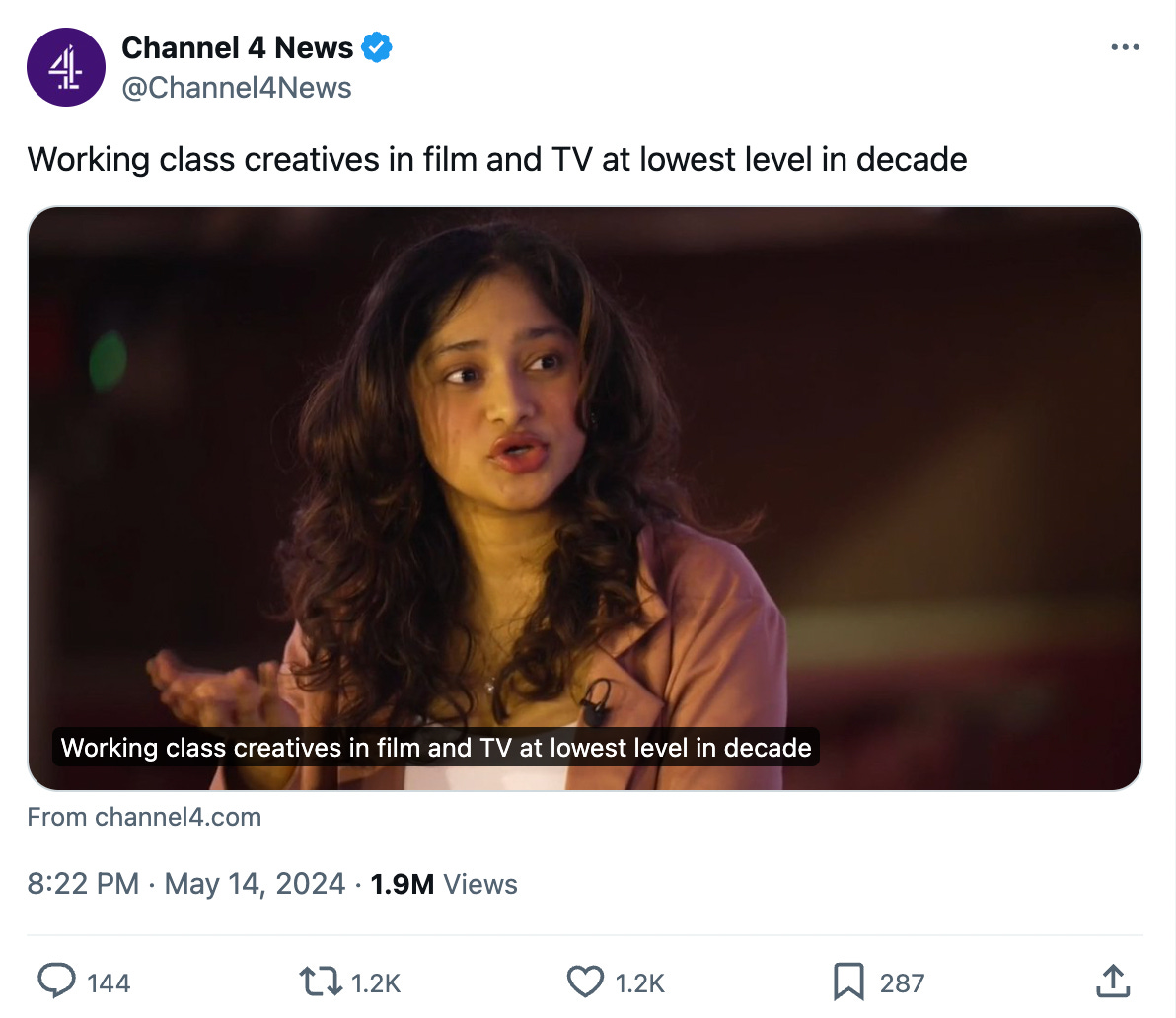
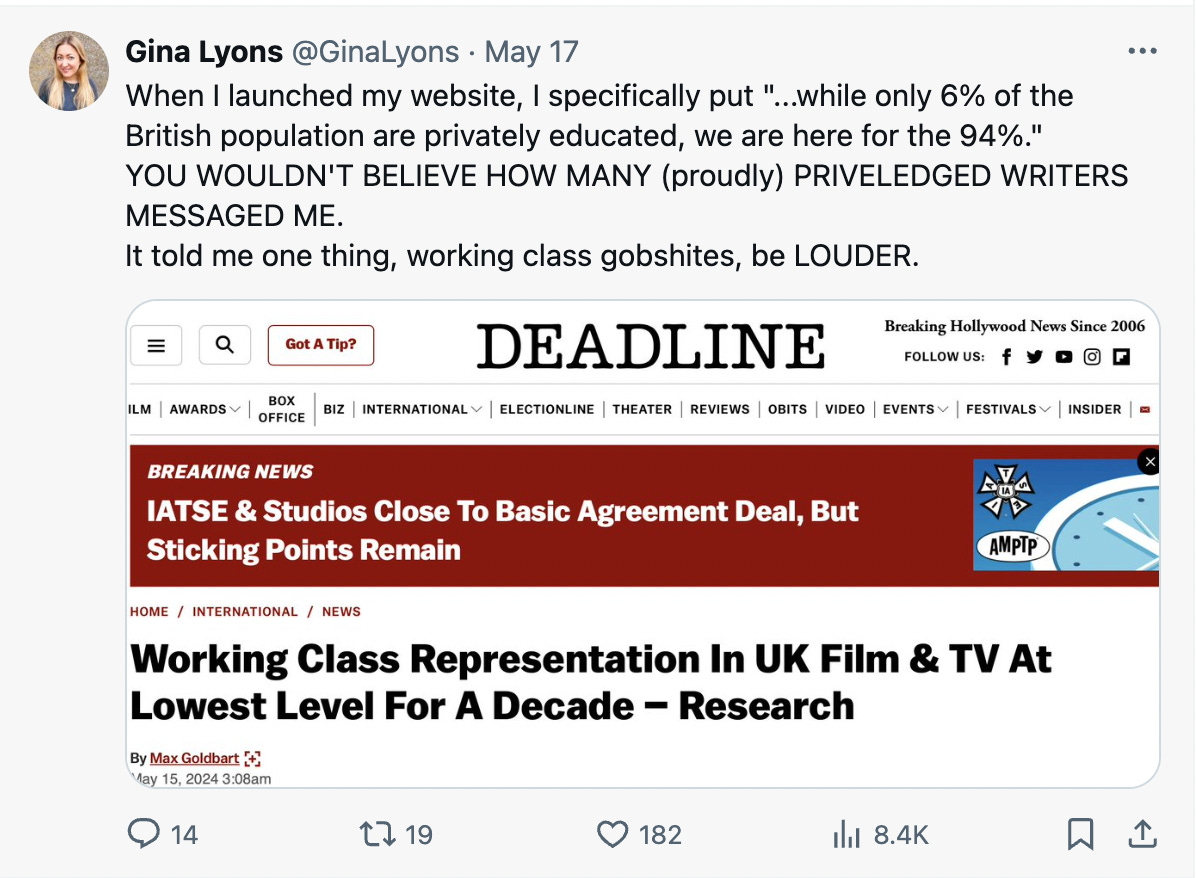
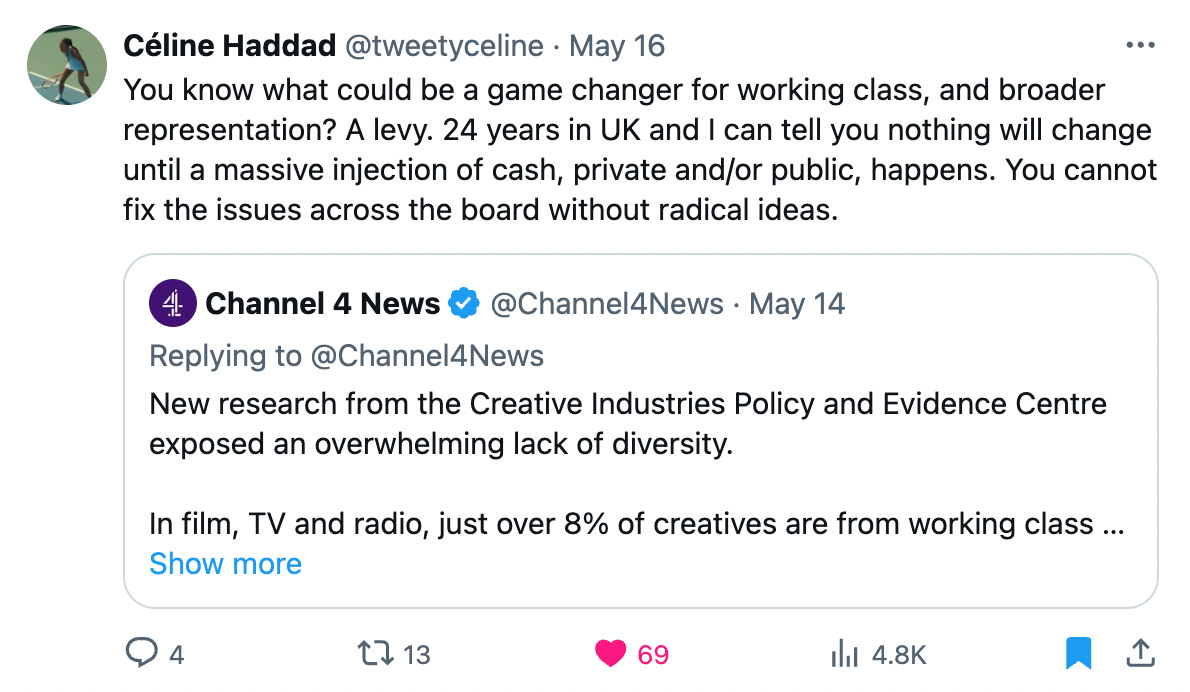
This week, CreativePEC shared new research revealing that the number of people from working-class backgrounds in film, TV, and radio has plummeted to just 8% of the workforce, the lowest level in a decade.

Channel 4 News platformed some young creatives to talk about it. I can relate to Sam Oddie’s comments on mindset and self-belief.

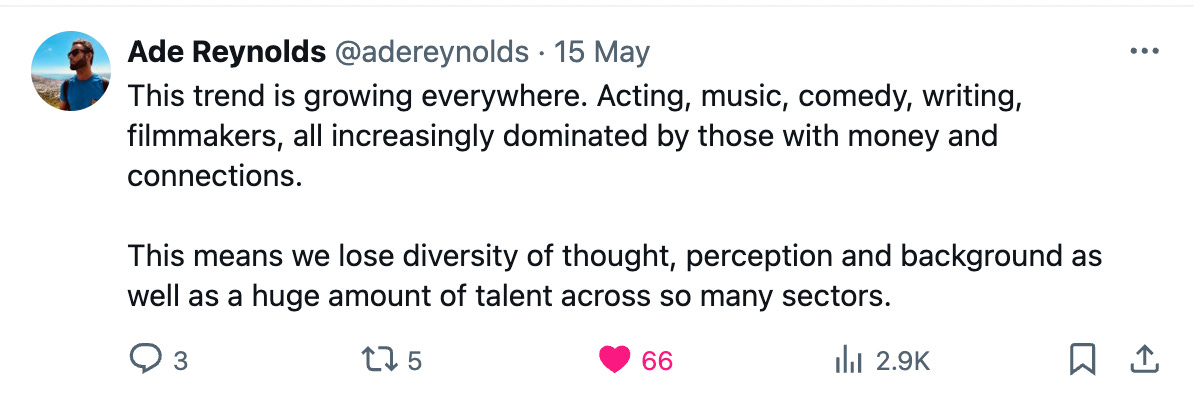
Just read through the comments on X and saw this piece by Tom Walter, Journalism: Occupation of the Privileged?, which he shared ten years ago!! 

Christ, it’s depressing.

Wrote this a decade ago, and I see no change. The idea of working-class lads from former Nottinghamshire mining villages, for example, taking unpaid work experience in London is becoming laughable. The same people again and again in the media. 

I remember being in Mansfield Library (my second home) while doing my A Levels and wondering whether to bother applying for an internship at ITN News. Inner Aggie: “What’s the point? You won’t get anywhere with it, being from round here. You’re at a state school.”

But I’m a stubborn bugger, so I did apply. I didn’t get shortlisted, but you’ve got to try and keep pushing. And that’s been my mindset ever since. 

After uni, I wrote 100 letters to production companies all over the UK and finally got my first job as a runner at Maidstone Studios for £80 a week. My bedsit was £40 a week – quids in! 

Later, I won a scholarship with Emap to study magazine journalism and was over the moon. This was 2000-2001, pre-digital boom, and I knew I had to move to London to get my dream job in women’s mags. But I couldn’t afford to move there without a job and had no family to stay with.

A friend from my Maidstone days had relocated to London, and she let me crash in her spare room in Waterloo for a bit while I was on unpaid work experience at the BBC, Emap and IPC Media. I’m super grateful for that opportunity. I couldn’t have done it otherwise.

Always a side hustle. I had a Saturday job at Penhaligon’s and temped between media jobs to keep myself afloat. But even though I was working all hours I still managed to get into debt in London and spent the next decade paying that off. 

Looking back, it’s a crazy life and a route to burnout. I can see how it’s shaped me: Working with writers’ orgs and a journo union to help freelancers survive and thrive in an expensive city and messed-up media industry. Here for the little guy!

It’s good to see lots of folks commenting on this report, sharing ideas, opportunities and trying to change the status quo. Jackie Oudney has just premiered a short film on exactly this from a female perspective (semi-autobiographical). Well worth watching; link below. 

The 98% Pod has started a chain of working-class creatives to uplift wc voices. Please share if you know someone who needs a leg up with their creative career. 

Levelling up? I am positive but I agree with Celine Haddad on the levy.

As always, it comes down to money.

Read, Watch, Listen

▶️What I Am — a short film written by award-winning director Jackie Oudney 

▶️How and why to make a / now page on your site — a public declaration of your priorities | Derek Sivers 

▶️Substack is completely gutting their business right now — followers vs subscribers | Jeanna Kadlec. And Simon Owens take on it

▶️Welcome to SmallStack! A brand new library for small publications | Robin Taylor

▶️Journalists Pay Themselves — how indie worker-owned outlets are making money to fund their work | Lex Roman 

Nika ✨

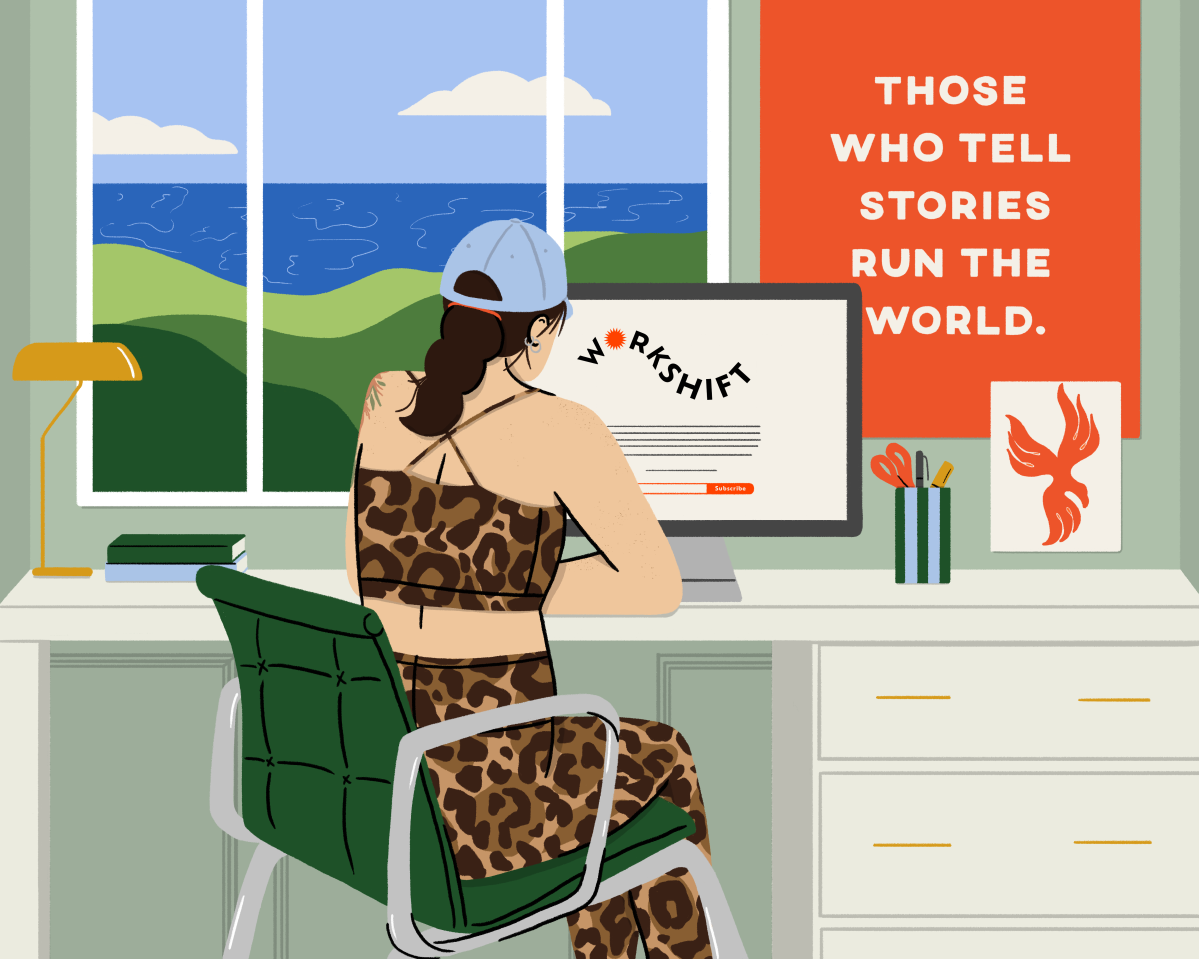
Thanks to Sophie Parsons for the fabulous illustration – it is me and I love it!


Work with me

I help entrepreneurs impact the world with their stories. Life is too short to play small. See my services.

▶️Newsletter Talent Directory! for creative collaborations.

Categories
Newsletter

Build your Google Business Card

I’ve been tinkering around with my Google Knowledge Panel this week. I have an old one from 2007 when I wrote my first book, which is outdated now and looks a bit sparse.

Google still dominates online search results, so I’m keen to grow and improve my KP – it’s your digital business card and the first thing people see when they look you up online.

If you don’t have a Knowledge Panel, you look like a nobody. So, it’s a really good way to push yourself up the career ladder as it were, to be recognised as a leader in your field.

Jason Barnard, the Brand SERP Guy. 

I clicked on the dots next to my name and suggested an edit. I added a a short bio, but they rejected it. That info comes from the Knowledge Graph, Google’s information collection about people, places, and things.

So, back to the drawing board. I have to educate Google!

Google is actually a child, thirsty for knowledge who wants to understand the world. It doesn’t care about notability; it just wants to understand everything.

I’m working through this free guide from Kalicube (Jason’s agency specialising in KP). I’ve updated my website bio (Home/About page) and social profiles (Crunchbase, Journolink, Response Source, Haro, Muck Rack, Substack, and LinkedIn).

He says your bio needs to be clear and consistent (who you are, what you do, who you help), and preferably written in the 3rd person. I’m not keen on that; it’s too formal for me, but I’ll try it for now. I can tweak it later.

Repurpose the same bio across all your social platforms and link back your website to “create an infinite loop of self-corroboration that Google understands”. 

I checked it this morning, and it’s now updated my name and added my social profiles, but there’s no pic of me or bio, so I still have some work to do.

It could take months so I need to be patient, but at least I’ve made a start.

Thanks to Jason and team for this resource!

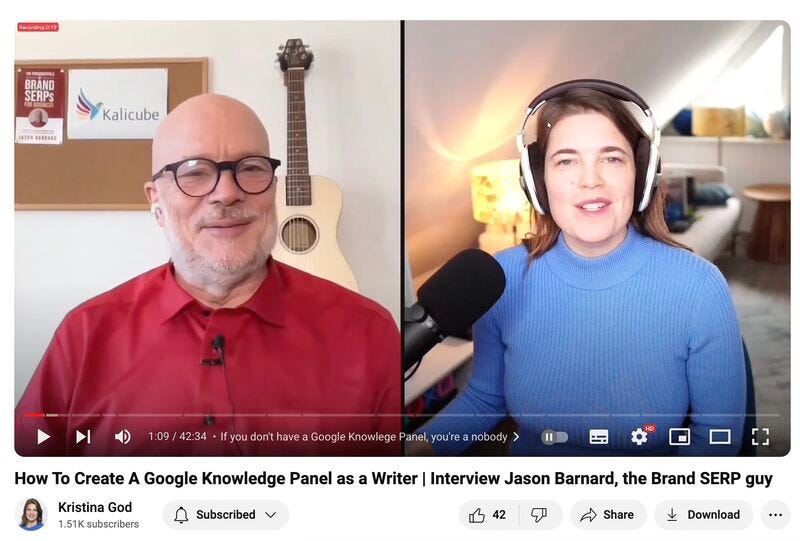
I enjoyed his interview with Kristina God on how to create a KP as a writer (Kristina writes on Substack and Medium), plus they touch on other stuff – how Google is explicitly looking for writers, multimedia content, the importance of visual branding (often overlooked) and whether we should let AI crawl our content (we now have that option on Substack).

If the future of search is about how we educate these smart machines, then we need to understand the knowledge algos and how they function. This is a good place to start!

Also, check the information about you on ChatGPT, etc, to make sure it’s correct. Joe Pulizzi asked it what his favourite colour is, and it said ‘purple’ when we all know it’s orange! 🚩

If you make videos, check the auto-generated captions on YouTube, as they can be inaccurate.

Here’s Jason’s website (like an encyclopaedia!) and Knowledge Panel.

Let me know how you’re growing your Knowledge Panel.

Congrats to Kristina on becoming a Substack Bestseller and getting 100 paid subscribers! 🥳  


Good Reads

▶️It’s not just you. It’s harder now to make a living as a creator. An excellent essay on how the sea has shifted when building an online business. Those who are killing it are mainly marketers selling courses about marketing. I agree; it’s very meta (more Substacks about how to succeed on Substack). I’m in this space, too, and struggling with it. Some advice on how to look forward and innovate. [Alexis Grant

▶️Google’s Helpful Content update – reflecting on what happened. The September ’23 HCU caused thousands of sites to lose organic (SEO) traffic from Google in a few days (there seem to be NO recoveries from this), and the March core update rolls on. Here’s Lily Ray on patterns she’s seen in her work, research, and advice for smaller indie publishers. [Lily Ray

▶️Time to Act. What are publishers doing now? Some industry leaders in the blogging and publishing space have joined forces to create a collective non-profit association, the Web Publishers Association, to inspire change. Tony Hill shares his thoughts on it here [Amy Aitman]  

▶️Joe Pulizzi’s new book, The Content Entrepreneur, is out in the next few weeks. I love the cover of the proof copy – very Gatsby! Direct sales only via their websites, not Amazon etc, so a bold move. I’m interested to see how the experiment goes – not sure how it differs from Content Inc. [Joe Pulizzi