Categories
Newsletter

People buy people, not brands: The human connection

Hello!

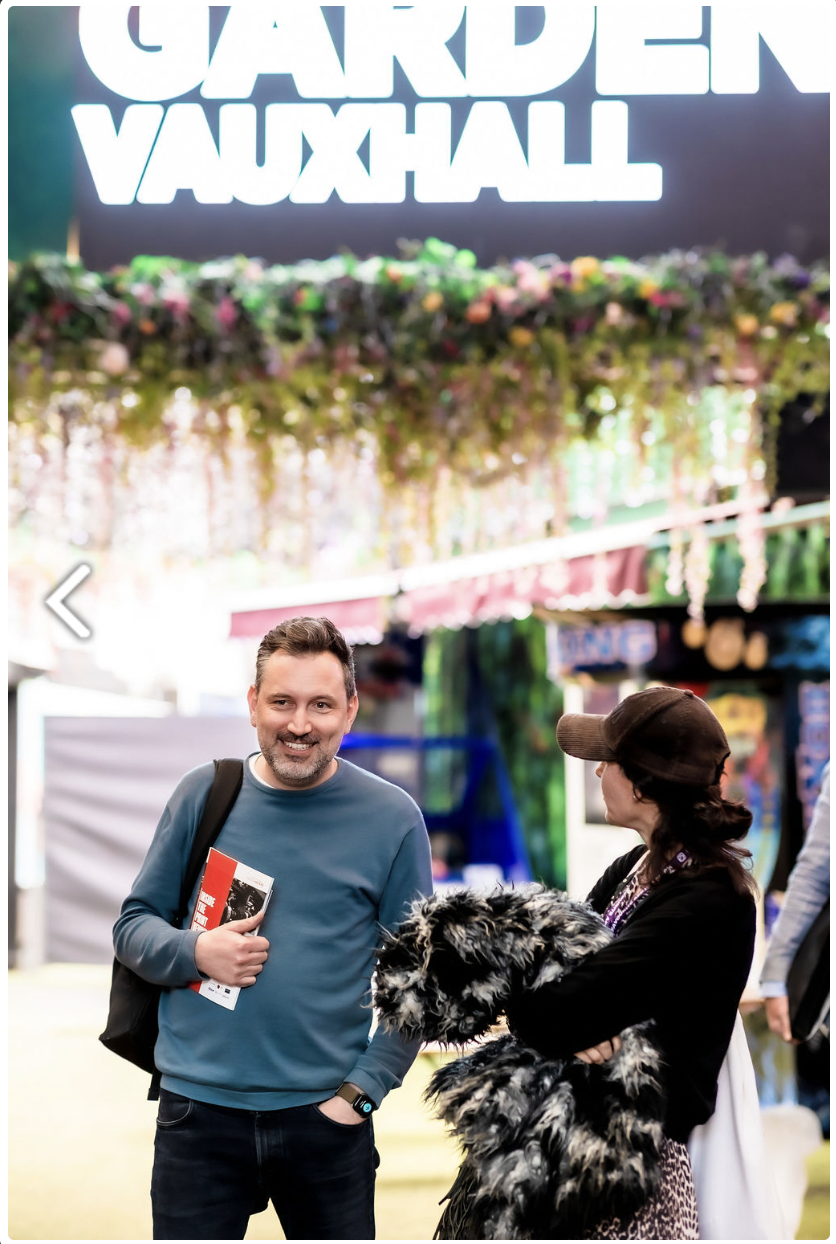
I’m back in St Leonards after two days in London. I interviewed Taha Siddiqui about his excellent new book, The Dissident Club: Chronicle of a Pakistani Journalist in Exile, and went to the Publishers Summits and Awards.

I missed the first two sessions (took the wrong tube to Vauxhall and got lost wandering around the concrete jungle). Thanks to 

Rich Headland who kindly sent me his Inbox to Income workshop slides and some notes.

I did the Newsletter track, which was packed. The Print stuff was on next door at the same time, so I needed a buddy to swap notes with.

Here are some learnings from the sessions. It was very dark in there, so I used my phone as a torch, which ran the battery down (why is there never anywhere to charge up in nightclubs?). I need to bring a power bank and spare pens – it’s very annoying when your pen runs out mid-scribble.

Personality is everything

Much talk about putting a name on a newsletter for growth and loyalty and great to see so many publishers making their staff the stars. We heard from Dominic Rech at The Economist and Andrew Palmer, author of the Bartleby column, on why they’re making their podcasts and newsletters more personal.

The FT’s Sarah Ebner talked about the value of staff-led newsletters for retention and how they use voice more. In Central Banks, Chris Giles talks about what he knows and “readers love the expert voice.” Successful newsletters are where people build a relationship with a writer. Rob Armstrong and Steven Bush are two big voices at the FT.

If you’re worried about investing in a star writer and they leave, build out more big names, not just one person. Columns allow you to have more voices. But “don’t worry about big personalities leaving. Build them up; they’ll probably stay. Or you’ll find new folks.”

Sarah also said not everyone is suited to newsletter writing: “There are some reporters who can’t get round using ‘I’ in newsletters and responding to comments.” It’s not for everyone.

Neil Macdonald at National World shared lessons from their first-ever paid limited edition newsletter series, Scottish Golf Courses You Must Play (I wonder if Trump subscribes?). “Trust your journalist and expert voice with a massive depth of knowledge.” They worked with Martin Dempster, a golf writer who is passionate about the subject. They had buy-in – he was invested and helped create and shape the newsletter’s design.

Rosie Percy said Hearst is leaning more into personality-led newsletters, which helps with conversion. Esquire’s About Time newsletter: “People will read 6,000 words on watches!”. Red Magazine’s Love Red VIP newsletter gives you access to editors, content, and events, e.g. styling suppers, which you wouldn’t get elsewhere.

Henry Seltzer at Bloomberg: “We’re seeing a lot of success with our personality-driven newsletters. We’re seeing value in smaller, more engaged newsletters.” Substack and the rise of the individual newsletter have opened people’s eyes to what’s possible.

Joshi Herrmann at Mill Media: “Substack has made us realise people will pay for low volumes of content as long as they’re differentiated (voice). This is an enormous shift in thinking (and logic of online business models). People can charge more. A very exciting change that will grow a lot.”

Rob Parsons set up Northern Agenda in 2021, bringing you stories from the north outside the Westminster bubble. The newsletter comes from him, not Northern Agenda, and he’s added personal touches because “readers engage with a person better.”

Zoe Paskett at LMAOnaise said her TOV was extremely clear from the beginning – “it’s just me”. She’s carried that TOV across a print publication and digital magazine.

The afterlife of a pop-up newsletter

Publishers are experimenting with this, but what happens after a pop-up newsletter or course ends? Katie Binns at The Times shared some tips & tools to nurture temporary subscribers into other parts of your funnel – from affiliates and subscriptions to other newsletters. She edits Money Mentor, which has run pop-ups like Couch to £5K (no issues using this name!) and Pension Power Up.

She said people stayed after it ended, so “design your pop-up with the next steps in mind. Make sure what comes next leads somewhere valuable. You’re warming people up to go deeper into your brand.”

Great to hear someone so passionate about pensions. “People love pensions; they just don’t know it!” Helpful stuff most of us have our heads in the sand about! I have one but need to up my game.

Neil Macdonald on their limited (but evergreen) golf series. For £9.99, readers get 12 newsletters across two weeks, including ten that each look at a different golf course across Scotland. ‘Quality is paramount’ and ‘Sell, sell, sell – get comfortable with the hard sell!’ Get feedback with reader surveys.

Substack for community-building

Jenna Thompson shared what Reach has learned after two years of experimentation with free and paid newsletters on Substack (they’re also testing LinkedIn). Super smart to take advantage of audience growth and revenue tools on Substack (comments, notes, chat, recommendations) and lean into curated digests around topics.

“The main driver for using Substack is to grow a community.” She mentioned The Valiant (Port FC newsletter) and how reporter Mike Baggaley has made it feel like a ‘shared endeavour’ with readers by spending time in the comments and using feedback to shape future issues.

I like how Reach is “creating a community of newsletter authors” and giving them a space to chat. Very important not to have silos and to create connections, as newsletter writing can be a lonely job.

Good writeup from Charlotte Tobitt at Press Gazette on this session.

The power of teamwork

This was also a big theme. Neil: “Trust everyone” – it’s a multi-skilled team. He also said how nice it was to talk to people (in our breakout group) ‘who get it.’ i.e. our eyes don’t glaze over talking about newsletters. Andrew said the team behind Bartleby make the reach and quality better than as a soloist.

At the awards, most of the winners dedicated their awards to teammates who weren’t there.

It’s bloody hard for solo creators doing everything. Zoe said growth “is a constant struggle. You’re always pushing. You can’t sit back and wait for growth to happen on its own.” Collabs and partnerships are the way to go if you’re solo. Substack is working on tools for this.

A bit depressing to hear Rob and Zoe haven’t had much financial success yet (Rob has Reach’s support, Zoe has no backers). Next year, it would be great to see more money and investment in the newsletter space and hear about founders taking home proper salaries.

Some other tidbits – it takes Steven half a day to write the Bartleby column. 1x hour ideation, 2x hours writing, 1x hour editing.

I chatted with The Sun’s Engagement Editor, who said they’re ‘feeling the pull of Substack, but haven’t gone there yet’. A speaker ‘hates Mailchimp but is resisting Substack because he doesn’t want to be part of the ‘enshittification of Substack.’ Lol 🤞

And a couple of quotes I loved. A reminder from Rosie that being in someone’s inbox is a privilege, and we need to respect that. “I want it to read like a letter from someone I know, not just a series of links.”

Henry on the joy of connecting face-to-face: “When I’ve gone to some Substack events, I’m shocked by how many people show up and how passionate they are. People are just really hungry for in-person newsletter events.”

Thanks to the Media Voices team and sponsors for a brilliant event and making me feel so welcome. They had a few setbacks (the original venue closed, giving them SIX WEEKS to find somewhere new 😳). Host Chris Sutcliffe broke a tooth and needed emergency dental treatment – you couldn’t tell!

Exciting to hear MV have been bought by Flashes & Flames – the global media business weekly which started out as a newsletter so watch this space. I like the scrappy energy though and that it’s not shiny corporate.

Next year, I’d love to hear from more solo creators making money and building without burnout. Some growth tips from the platforms – 

Substack Team, Beehiiv, LinkedIn, and Ghost. And we could build a creator house for collabs and cross promotions.

Great to hear the record shops of Hastings & St Leonards are on Rich’s radar for Record Shop Stories. Just sent him a new one – (bacon) Roll with the Vinyl.

Nika

🏆 See the full list of winners here.

Categories
Interviews Newsletter

The messy middle

Keir Whitaker is a business consultant and coach who supports agencies and app companies in the Shopify ecosystem. Before starting his consultancy in 2019, he spent seven years at Shopify. “It was an amazing run, but I knew it was time for a change and wanted to start my own business focused on helping founders and companies I’d met during that time.”

His initial offers focused on marketing, copywriting, and events. Over time, he also started working with solo agency founders who were looking for someone to support them in their own development as well as their business. “Thanks to my being around the block a few times myself, I apparently had a lot to offer!” 

He hosts an intimate event series called Craft+Work, which brings together self-employed folks to share their experiences and learn from each other.

It’s all about conversations, openness, and helping each other through the ups and downs of doing our own thing.

Coming to London on May 31 (bought my ticket!) and NYC and Toronto later this year.

I was going to suggest postponing our chat as I thought he’d be too busy, but he got back to me, “in the spirit of done is better than perfect.” There have been a few unexpected hiccups, but he seems very chilled about it. As our mutual business coach Ellen Donnelly would say, “Stay Calm and Authority On.” 

I like how he’s found a way to combine consulting, coaching, and events to keep things interesting. Read on for his best advice and tips for dealing with the messy middle (years!) when you feel like you’re constantly experimenting and questioning everything (more on that in the video chat).

Thanks Keir, and apologies for calling Shopify Spotify – all these tech companies sound the same 😉

Nika ✨

What are you struggling with right now?

Upping my own marketing game. Last year, I started questioning my business, what I was doing, who I was doing it for and even if I should change tack entirely. It’s hard to market with confidence if you’re not sure what you’re offering is right. As a result, I kind of hibernated, and things slowed down. 

Thankfully, something clicked earlier in the year, and I’m now in a rebuilding phase and feeling more confident about moving forward. The struggle now is to put the plan into action and build consistency, which has been the hardest part. 

What are you most excited about? 

Growing my event series Craft+Work and working on attracting a few more 1-1 coaching and advisory clients, as well as serving my existing ones. 

After questioning every aspect of my business last year, I have found a renewed interest in my work and feel more positive than in a long while – which is exciting. 

How did the coaching thing happen? Did you train as a coach?

It was a small agency owner based in NYC. We’d met previously, and when he knew I was leaving, he wondered if there was a way to work together. I came up with an amazing proposal (says I) and added a throwaway line: “And we can meet each week for an hour to chart progress.” He came back to me and said, “Can we just do that?” That’s how it began. I started attracting more clients over time.

I’ve had coaching myself over the years and found it very beneficial. I’ve always enjoyed working 1-1, so I’ve gained much experience supporting people’s development. Last year, I did a five-day course focused on Executive Coaching, which was great. 

I meant to follow up with an essay to get the formal credit, but my mother-in-law got diagnosed with cancer, so my motivation was at a low, and the writing bit didn’t seem worth it at the time. Maybe I’ll finish it one day, but I’m okay with not getting the certificate. 

I also read a lot about coaching and am part of a mastermind of other coaches where we share experiences, tools and techniques. 

How do you stay on top of industry trends? 

With difficulty. I’ve always been interested in all aspects of business. As a result, I often find myself going down rabbit holes of learning, which distracts me from focusing on developing core skills or staying up on trends directly related to the services I offer. That said, being a “generalist” has paid dividends over the years, so it’s not all bad. 

When not in a rabbit hole, I enjoy reading the wide variety of marketing, coaching, e-commerce, and culture-related newsletters I subscribe to.

I also have a group of colleagues and friends who act as my unofficial advisory board. They are great for intel, advice, and updates on what’s happening in our industry.

How are you getting yourself out there and selling your services?

I try to attend as many relevant events as I can. Over the years, I’ve been fortunate to meet many interesting people who have become friends and clients at conferences and workshops. 

I also host my own events, which means I have a good excuse to reach out to people I don’t yet know and ask them if they’d like to participate or attend. Even if both answers are no, it often leads to a good conversation and has led to work.

Outside of events, I try to engage on LinkedIn. It’s something I want to improve at, as it often feels like an afterthought and is not part of my daily schedule. 

How do you define success? Balance ambition and contentment?

I consider myself pretty driven but less by money and more about working to create a life where I can take time out to travel, spend time with family and friends, and stay relatively stress-free. It’s not always easy to achieve, but that’s my goal. Overall, I’m pretty content, but my family might disagree! 

What’s the best piece of advice you’ve been given?

It’s tough to narrow it down, but if you’ll permit me three they would be: 

  1. Early in my career, a mentor said, “Focus on getting really good at what you do, and the money will come.” 
  2. Business is all about relationships, so take time to invest in building and maintaining them.
  3. The ability to listen well is a competitive advantage.

How do you take care of your health and prevent burnout?

I’d love to tell you I have a well-thought-out regime, but I don’t. I used to travel so much that finding time to exercise proved difficult, but a few years ago, I started playing tennis with a friend. We’ve been very consistent (lockdowns and injuries aside) in getting on the court since. It helps my mental health and blows out the cobwebs from sitting in front of a screen all day.

I enjoy a good walk, eat well, and try to stick to one coffee daily. If getting older has taught me anything, some form of regular exercise and general moderation in most things pays dividends – possibly dull, but true. 

Where do you live, and what do you love about it? 

I live in Bath, in the West Country. After years of living in London, it was quite a change, but I can’t imagine being anywhere else now (at least while my children are still at school). 

Once you get over the fact that every building is the same colour, you appreciate the city and all it offers. There are great pubs and restaurants, beautiful parks, and it’s only a short drive to the coast. Plus, it’s only 1 hr 20 to London by train, and Bristol Airport is a gateway to Europe. 

Can you recommend any resources for entrepreneurs? 

The Acquired Podcast. I’m going to recommend a podcast where episodes frequently top three hours but hear me out. Oh, and don’t be fooled by the title – it’s not a startup bro fest focused on flipping tech companies. 

Instead, each episode covers the back story of great companies, discusses what makes them successful, and explains how we can apply those lessons in our businesses. Yes, there are tech companies in there, but as a child of the 80s, it’s fascinating to learn about Atari, Sega, and Apple. The episodes on Costco, Walmart, and Hermes are equally fascinating. 

What help or support have you had that’s helped you get where you are today? 

(from Nicola Washington @ Too Much Social).

I couldn’t do what I do without spending the last 12 years in the Shopify/e-commerce ecosystem. I couldn’t have done that without the support of my wife, who was often left literally holding the babies when I had to travel. Don’t worry – I did my share upon returning 🙂 

I’ve also been fortunate to work with several amazing people who believed in me and gave me opportunities that changed the direction of my career. Many became friends and mentors and still guide me today. 

Finally, I’d say the belief that there’s always more to learn and people to learn from keeps me going. 

Where can readers find you? 

Everything is on or available via keirwhitaker.com

Listen to this article now 👇

The Shift is a reader-supported venture. To receive new posts and give me a thrill! consider becoming a free or paid member. Subscribe now

Categories
Newsletter

Rethinking your business

One of my goals for 2024 is to make new founder friends – not just on LinkedIn but in person.

I love virtual events, but there’s nothing like the magic of in-person and travel to lift your spirits. Since Covid, I’ve been mainly wfh, and life can feel a bit small and routine when you’re doing the same things every day, especially if you’re working weekends on a side project.

I mentioned it to a friend (who is also working all hours on her own stuff), and she said, “Yeah, I don’t know what day it is!!” I need to take a tip from the Geishas and change my outfit a few times a day rather than staying in sports gear. Make each workday an occasion because it is. Details matter!

So, I’m on the hunt for events for creative entrepreneurs; the smaller, the better. I’ve bought a ticket for Craft + Work, an intimate one-day event (max 50 tickets) built around personal stories and group convos. I chatted with the founder this week, Keir Whitaker, and what an inspiring story about how this came to be.

If you can’t find local business events that inspire you, start your own! Go, Keir. Here’s his review of the 2023 London event and I love the ambition—he’s also hosting it in New York and Toronto later this year. Having an event scribe capture the day is genius—those goody bags are a keeper!

“Chris was a great addition to the day. He was justifiably “expensive” but it was a bit different.”

As David Hieatt [Makers + Mavericks] says:

Let’s assume the economy isn’t coming to save your business anytime soon.

Think of your business in a new way.
Find a new reason to exist, a new customer.
Get the confidence and the fun back.

We must replace this struggle fest with brave new different thinking.

Your network is your business.

Kicking off with an NUJ London Freelance branch event tomorrow to celebrate International Workers’ Memorial Day (April 28). It remembers those who have lost their lives at work, or from work-related injury and diseases.

No conflict of any size in history has ever been this deadly to journalists so it feels important to gather in person. All welcome. I’ll be there.  

Nika ✨

Media meets for 2024

  • Workers’ Memorial Day Rally: honour the Gaza dead and support the living. April 29, London [NUJ]
  • Magazine Mayday: an afternoon of magazine chat at one of the quirkiest pubs in Macclesfield. May 1 [Grub Street
  • The Newsletter Conference: the first-ever gathering of newsletter professionals worldwide. May 3, NYC [Who Sponsors Stuff
  • Makers + Mavericks Off-Grid 2024: a hackathon for you and your biz. May 4, Cardigan, Wales [Hiut Denim Co
  • CEX: the 2024 learning and networking event for content entrepreneurs. May 5-7, Cleveland, Ohio [The Tilt]
  • Craft + Work: an intimate day built around personal stories and group chat about building better businesses. May 31, London [Keir Whitaker]
  • FIPP World Media Congress: bringing media and tech together. June 4-6 in Cascais, Portugal [Mx3]
  • Publisher Podcast Summit and the first-ever Publisher Newsletter Summit: shape and refine your pod & email strategies. June 12, London [Media Voices]
  • Nudgestock 2024: where behavioural scientists, creative minds, and marketers unite to tackle the toughest human challenges. July 5, London [Ogilvy
  • Ideas Fest: Glastonbury for business. September 12-13, Tring, Herts [Ideas Forums]  

Read, listen, watch 

▶️Find a Female Founder: a new directory to find & buy from women-led businesses launches with its first cohort of 150 service-based founders [Female Founders Rise]

▶️Why finding clients on LinkedIn is such a sh**show at the moment [Lizzie Davey]  

▶️Saving emails is a pain in the ass. We made it easy [Email Preview]

▶️What worker-owned outlets charge for paid subscriptions. I looked at 14 outlets to see what they’re doing [Journalists Pay Themselves]

▶️Italy: the digital nomad visa we’ve been waiting for [The Freelance Informer]

Work with me

Wanted to be Jane Bond but ended up in journalism 🤷🏻‍♀️

I run Firebird, the content consultancy helping entrepreneurs impact the world with their stories. I want to see more female founders succeed. See my services here.

Newsletter Talent Directory! For creative collaborations. Feel free to add your deets here.

Categories
Newsletter

Work Without Limits 2022 🚀

Hey, a quick reminder about the Work Without Limits Executive Summit next week.

It’s a hybrid event bringing C-suite executives together to explore business growth strategies, challenges, and societal changes leading to the breakdown of old ways of working.

Join online on Tuesday 16 August (starts at 4 pm GMT) for insights and actionable advice from executives, thought leaders, and industry experts.

I’ll be on a train to Devon – workation in an eco-lodge next week with six teenagers – bit of an experiment, wish me luck! Will tune in to listen to Scott Galloway on The New Abnormal – our post-pandemic economy and the implications for public companies, startups, and individuals. 

Looking forward to hearing his thoughts on remote work, the attention economy, loneliness, community, and the importance of making the most out of each moment.

Also, Tim Sanders (Upwork VP of Client Strategy) on how leading companies are redesigning how teams are constructed, how they collaborate, and how work gets done.

Should spark a few ideas for collaboration.

For a full debrief, tune in to How The Future Works with Barry and Eleanor Matthews at Open Assembly. My favourite podcast!🍷The format works brilliantly – a mix of news, talk show, and insightful interviews on open talent. Barry will be at the summit, so it will be interesting to get his take on it.

Have you used Upwork to find clients? I’m not drawn to platforms like this as they tend to favour the client over the freelancer. Being graded, reviewed and competing with other freelancers isn’t my thing, but I know some people have made good money there.

If you’ve used it to find clients, let me know your thoughts.

RSVP for the free virtual event

Get in touch if you have a project to share, a link suggestion, or just want to say hi 👋

Buy me a coffee

The Shift is a reader-supported publication. To receive new posts and support my work, consider becoming a free or paid subscriber.

Subscribe now

Categories
Newsletter

Interview: Lisa Sweeting, Green Sense Events

Lisa Sweeting quit her full-time job in March and went freelance during the lockdown. She has now set up her own company, Green Sense Events, focusing on sustainability. I asked her what’s she’s learned so far, and her top tips for going freelance.  

TS: You went freelance during the lockdown. What was the catalyst for setting up your own company?
LS: I’ve worked in Events for 15 years, managing a mix of corporate celebrations, weddings, private parties, and mass participation sports events. I’ve toyed to go freelance for about 10 of those years! The thought of having ultimate flexibility, financial independence, fitting work around a family etc, but the comfort blanket of a regular income, paid holidays and sick pay always kept me in my job. When it’s not just you anymore, and you have the responsibilities of a mortgage, and mouths to feed, it’s not a simple decision. 

However, I often felt like I compromised my creativity by working for someone else. I was bored of following a system, of doing the same thing year in, year out. Everyone who knows me knows that I love variety and learning new things. I’m a real get up and go person, and yet somehow, I felt stuck, and I lost some of who I am, which affected my confidence.

I love working with new people which is why I love events, collaborating and connecting with like-minded individuals and I felt so busy all the time just juggling work and home life that I had no time to network with others. One of the biggest drivers was that I felt like I couldn’t implement any ‘change’ in a big organisation. After looking at jobs with event & marketing companies mostly based in Bristol and Bath, both an hour’s commute away, and getting frustrated with the lack of home-working opportunities, I finally decided enough was enough. 

I handed my notice in at the beginning of March, and then lockdown happened. Two months later, having worked my notice period, I had no job, and no prospects, so why did I still feel amazing, like I could finally breathe again! First, I could focus on my children and homeschooling, while my husband worked full time in our home office. I was also ready to connect with a few people I’d lost touch with—albeit virtually! I joined some Facebook groups, thanks to a friend in the know, and started communicating with people, and I loved it. Given that we were spending so little, I felt I could relax a bit and use the time to work out what I wanted to do. 

I went freelance despite no prospect of any events on the horizon, and then I set up a sustainable events company: Green Sense Events. Focusing on sustainability was something I’d wanted to implement while employed, and we had done it as an organisation but nowhere near enough. I soon realised that if it was important to me, then I’d need to incorporate it into my business from the beginning, so it was at the heart of my work and not just a nice to have. 

What have you’ve learnt so far?
Social media can overwhelm. I joined lots of Facebook groups, networking events, and digital events which were all great, but at one point, I had to step back and work out a plan of action, write a business plan, edit and update my social media profiles, just to focus my mind. It’s easy-to-read everything on social media and sign up to every digital event, newsletter and training session going, which is fun and can be useful, but it can also exhaust. It’s essential to work out what is actually helpful to you to upskill and raise your profile. 

I’ve learnt to treat my peers as a community rather than competition. I’ve found that pretty much everyone I’ve spoken to whether they have their own sustainable events company, are a supplier or in a different industry altogether, has been supportive and happy to suggest other contacts and useful top tips. The more you connect with like-minded individuals, the more it leads you to other valuable connections, and it’s a great way to learn. 

Any tops tips on freelancing? 
I’d love to offer top tips that will allow others to gain work, but the current climate means there just isn’t much work around. Things are coming back, and it’s great to have some actual dates for when events can start happening again. I’m using the time to get myself set up properly on social media and finishing my website for the company. Educating myself on the areas that interest me—which is sustainability, learning from similar event companies, and looking at what Tokyo Olympics are doing, for example, to be more sustainable. Building my network of suppliers and networking with others as much as possible. 

Many of the traditional networking events have moved online. So, there are still opportunities to network online instead of ‘in person’, everyone is a potential client even if they aren’t looking to organise an event right now. I hope that people will think about planning events from now on, even if they can’t happen just yet. I also plan to start a blog once my website is up and running. There are lots of interesting articles out there on sustainability, and I’d love to share it with my network. I think it’s also a good way of engaging with people. 

I am interested to see how digital events affect the industry so exploring different platforms to see what’s possible in this field. Digital is a fantastic way of lessening our impact on the environment, so it’s an important area to look at and experience. I think even if you’re not hosting a virtual or hybrid event, look out for virtual events that you can attend as a participant, so you can at least talk from experience. 

Useful Facebook groups: #Eventprofsforchange, Delegate Wranglers, Get Ahead in Events, UK Live Event Freelancers Forum.

Anything you need help with?
I am keen to hear from anyone who is a sustainable supplier or venue, and I’d also to hear about what people think about sustainability. I worry that we could move backwards slightly with all the use of plastic PPE, and restrictions on the use of re-useable cups. But equally, I feel that businesses might do more online and perhaps not hold events for the sake of it as much as they used to. 

lisa@greensenseevents.co.uk