Categories
Newsletter

Working-class writer?

Journalism needs writers from all walks of life

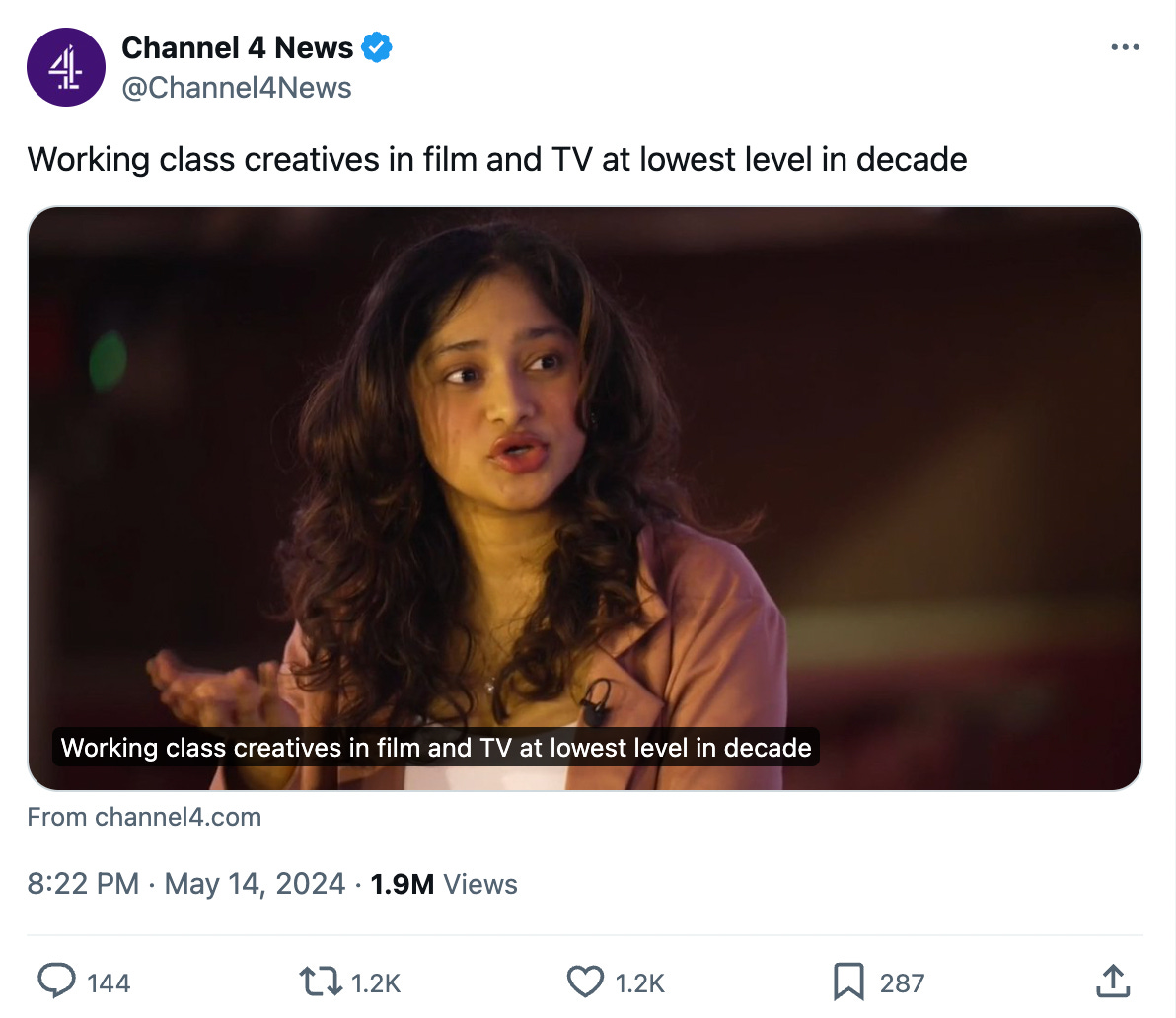
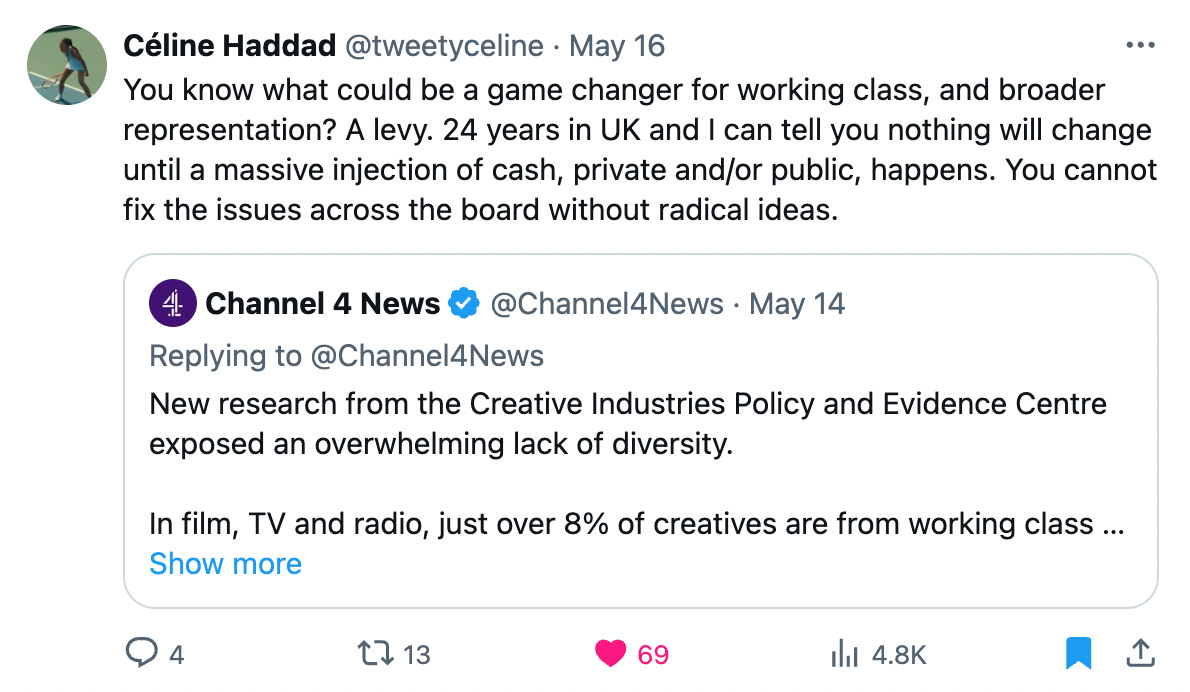
This week, CreativePEC shared new research revealing that the number of people from working-class backgrounds in film, TV, and radio has plummeted to just 8% of the workforce, the lowest level in a decade.

Channel 4 News platformed some young creatives to talk about it. I can relate to Sam Oddie’s comments on mindset and self-belief.
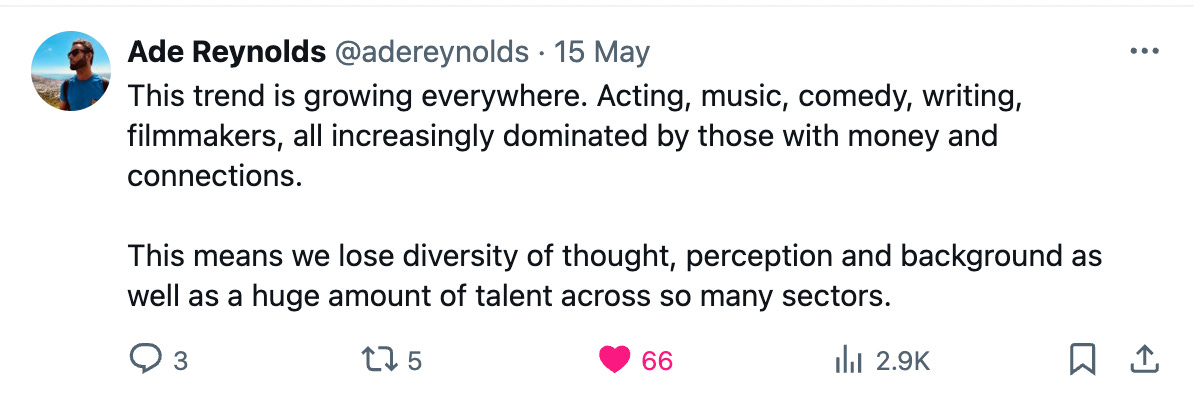
Just read through the comments on X and saw this piece by Tom Walter, Journalism: Occupation of the Privileged?, which he shared ten years ago!! 

Christ, it’s depressing.

Wrote this a decade ago, and I see no change. The idea of working-class lads from former Nottinghamshire mining villages, for example, taking unpaid work experience in London is becoming laughable. The same people again and again in the media. 

I remember being in Mansfield Library (my second home) while doing my A Levels and wondering whether to bother applying for an internship at ITN News. Inner Aggie: “What’s the point? You won’t get anywhere with it, being from round here. You’re at a state school.”

But I’m a stubborn bugger, so I did apply. I didn’t get shortlisted, but you’ve got to try and keep pushing. And that’s been my mindset ever since. 

After uni, I wrote 100 letters to production companies all over the UK and finally got my first job as a runner at Maidstone Studios for £80 a week. My bedsit was £40 a week – quids in! 

Later, I won a scholarship with Emap to study magazine journalism and was over the moon. This was 2000-2001, pre-digital boom, and I knew I had to move to London to get my dream job in women’s mags. But I couldn’t afford to move there without a job and had no family to stay with.

A friend from my Maidstone days had relocated to London, and she let me crash in her spare room in Waterloo for a bit while I was on unpaid work experience at the BBC, Emap and IPC Media. I’m super grateful for that opportunity. I couldn’t have done it otherwise.

Always a side hustle. I had a Saturday job at Penhaligon’s and temped between media jobs to keep myself afloat. But even though I was working all hours I still managed to get into debt in London and spent the next decade paying that off. 

Looking back, it’s a crazy life and a route to burnout. I can see how it’s shaped me: Working with writers’ orgs and a journo union to help freelancers survive and thrive in an expensive city and messed-up media industry. Here for the little guy!
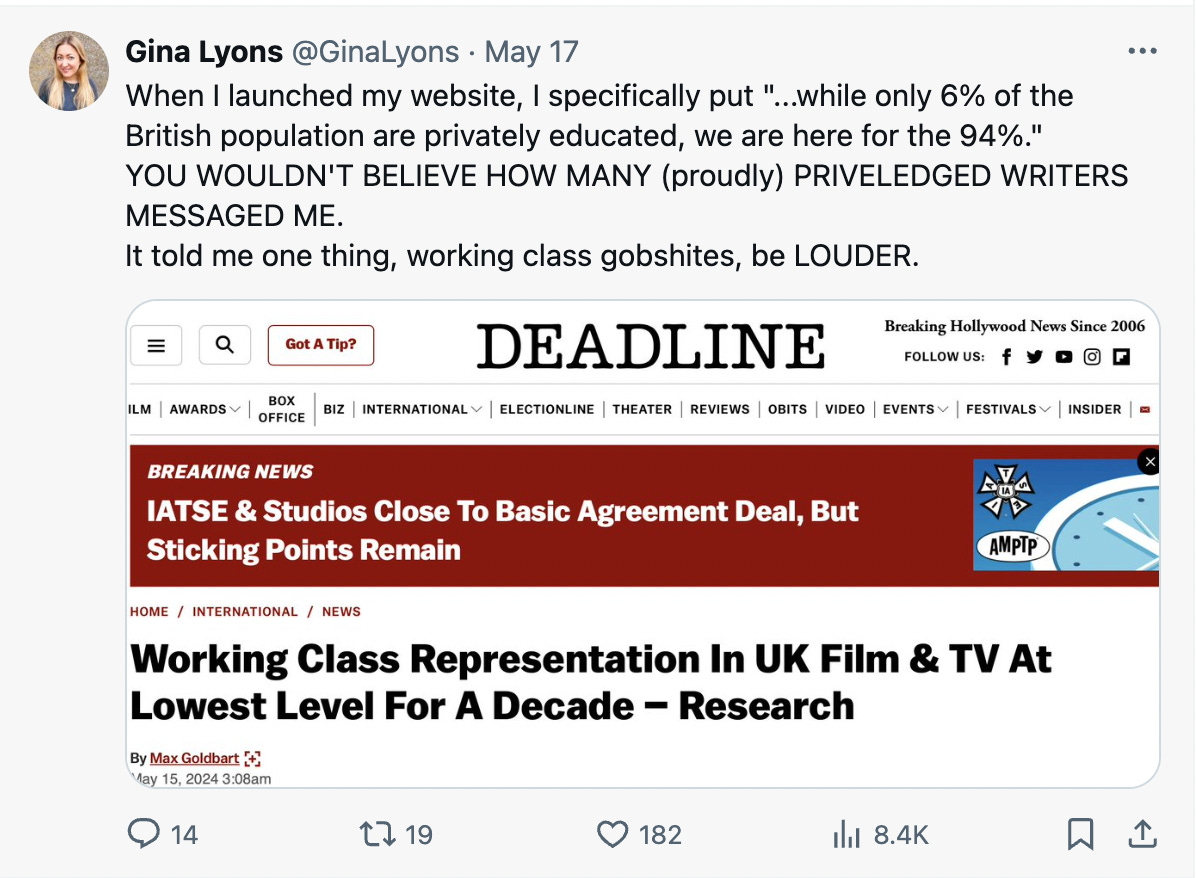
It’s good to see lots of folks commenting on this report, sharing ideas, opportunities and trying to change the status quo. Jackie Oudney has just premiered a short film on exactly this from a female perspective (semi-autobiographical). Well worth watching; link below. 

The 98% Pod has started a chain of working-class creatives to uplift wc voices. Please share if you know someone who needs a leg up with their creative career. 

Levelling up? I am positive but I agree with Celine Haddad on the levy.

As always, it comes down to money.
Read, Watch, Listen

▶️What I Am — a short film written by award-winning director Jackie Oudney 

▶️How and why to make a / now page on your site — a public declaration of your priorities | Derek Sivers 

▶️Substack is completely gutting their business right now — followers vs subscribers | Jeanna Kadlec. And Simon Owens take on it

▶️Welcome to SmallStack! A brand new library for small publications | Robin Taylor

▶️Journalists Pay Themselves — how indie worker-owned outlets are making money to fund their work | Lex Roman 

Nika ✨

Thanks to Sophie Parsons for the fabulous illustration – it is me and I love it!


Work with me

I help entrepreneurs impact the world with their stories. Life is too short to play small. See my services.

▶️Newsletter Talent Directory! for creative collaborations.
Categories
Newsletter

You have no idea how lovely you are, Berlin – Dorothy Iannone – review

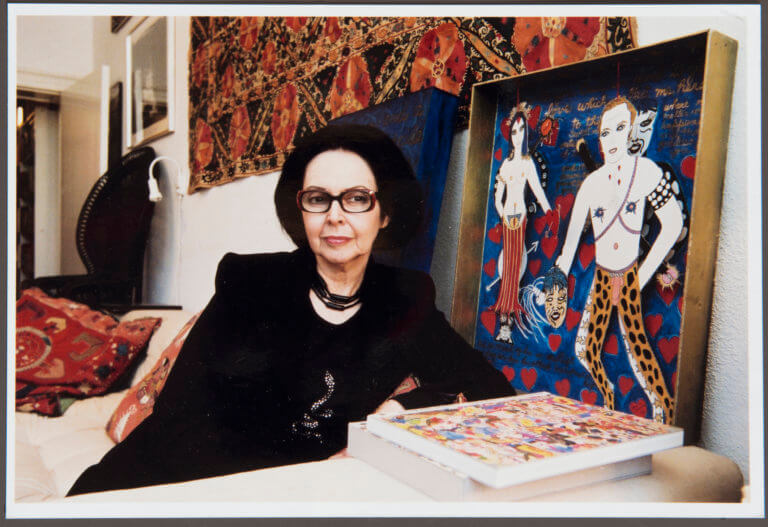
Since the 1960s, Dorothy Iannone has been seen as a pioneering spirit against censorship and for free love and powerful female sexuality, yet ‘pornographic artist’, ‘foxy lady’ and ‘orgasm woman’ are all terms I’ve encountered while researching her work. Critics have questioned whether she’s a feminist and her work has frequently been censored due to its alleged pornographic content. She has been criticised for including genitalia over clothing in her work and for the use of relationships as subject matter.

A new exhibition at Berlinische Galerie hopes to challenge preconceptions by presenting a retrospective of her life’s work – Dorothy Iannone: This Sweetness Outside of Time – Paintings, objects, songs, films and books from 1959 – 2014. Iannone is a self-taught American artist who has travelled extensively and lived in Berlin since 1976. The main themes running through her work are ecstatic love, the power of intuition and self-development, and she draws from her life experience as a travelling artist to create powerful and absorbing work.

The exhibition is divided into sections to give a flavour of her influences and experiences since 1959 and draws from Eastern religions, Buddhism, Tantrism and 17th Baroque erotic poetry. She is funny and dry and some of the paintings made me laugh out loud: “Sometimes men have to submit too.” (man bending over while woman flogs his bottom), the recipe section in A Cookbook (1969), which explains how to prepare a juicy duck (and how it will make you feel when you eat it). I also loved the quote to Danton, an idealised lover in Berlin Beauties (1977/8) – her advice is to create your own ideal lover if he/she’s not around and preferably one that doesn’t stray, “But listen, Danton, if you fell in love with another woman after having met me, I might take her for a walk in the mountains and make her disappear. Either her, anyway, or you.”

In 1966 she created a body of work called People. “I made a few hundred wooden cut-outs of everyone in the world I could think of, real people, imagined people, mythological people, invented people, and I always included their sexual organs even if they were fully dressed.” It was a productive period where she created books and prints, paintings and singing boxes themed around love and sex. The images showed visual genitalia, which was frequently censored.

The most powerful piece for me was An Icelandic Saga, a visual storyboard across one wall which explains her guilt over the breakdown of her marriage to mathematician and artist James Upham after meeting Dieter Roth on a boat trip to Iceland. Reading it took a while (it’s handwritten in felt) and it’s like going on the journey with her physically and emotionally. Certain passages made me cry, her message being that it’s okay to be vulnerable, take a risk and follow your heart. After the trip she left her husband and returned to Iceland to be with Roth, spending eight years with him and went on to create her Dialogues to express her joy during this time.

I Was Thinking of You (1975) is a hand-painted sculpture box which incorporates a video showing her face during sexual arousal and orgasm. In an interview with the curator Massimiliano Gioni she explains her motive for putting herself at the centre of it. “To say that it contributed to any sexual or artistic revolution isn’t really my line. I wanted to give a glimpse of, let’s call it the soul, which at the moment of orgasm, passes fleetingly over the face. I don’t think I ever gave more of myself in my work”.

“You have no idea how lovely you are, Berlin”. 

Dorothy Iannone: The Next Great Moment In History Is Ours, 1970 Courtesy die Künstlerin, Air de Paris, Paris, und Peres Projects, Berlin, Foto: Joachim Littkemann

Berlin Beauties is a poetic invocation of a fictional lover (what to do if your ideal lover isn’t around…) and a declaration of her love for Berlin. At the time she was angry at a country she perceived to be materialistic and patriarchal and set about to “reform Germany” through art and debate, creating her interpretation of mythical figures like the White Goddess and Cleopatra as a strong voice for the women’s movement of the time. I was also moved by the paintings of mother and daughter when she talks about the creative stuff her mother did with her as a child (a reminder that I want to spend more time doing fun stuff with my daughter rather than fretting about work and money). She was two when her father died and so was raised by her mother Sarah Nicoletti Iannone.

From the 1990s onwards the main focus of her work is the ecstatic union between a man and woman and how this transcends individuality. The Movie People depicts painted cut-outs mounted on wood showing scenes from her favourite films about unconditional love or what happens when you sacrifice your happiness for a lover’s (Brokeback Mountain, Lolita, Les Amants, The Piano…)

This is a big yet intimate exhibition that will make you think, laugh and cry and I do feel I know the artist a little bit better after spending time absorbed in her work. To pigeon-hole her as a pornographic artist or question her role as a feminist misses the point: she is a passionate woman who celebrates love, life and sex and who isn’t afraid to take a risk and follow her gut to be happy and authentic. It is a call to action and has an urgency in its expression which I’m still thinking about three weeks’ later.

A rather different subject matter to Ai Weiwei’s Evidence, which I saw in the same week, but they share similar goals in using their life experience and politics to create art.

Dorothy Iannone: This Sweetness Outside of Time: Paintings, Objects, Books 1959 – 2014 until 2.6.14.

Berlinische Galerie Alte Jakobstraße 124 – 128 10969 Berlin.

In Berlin? Tonight the actress Eva Mattes will read erotic poems of Renaissance and Baroque and modern-day prose including extracts from Erica Jong’s Fear of Flying and 16th-century French odes to the female body.

Photo: Thanks to Markus Spiske on Unsplash