Categories
Newsletter

🕵🏻‍♀️My first week on Clubhouse; 5 tips; their new ‘Creator Pilot Program’, nuggets

The Big Idea 💡

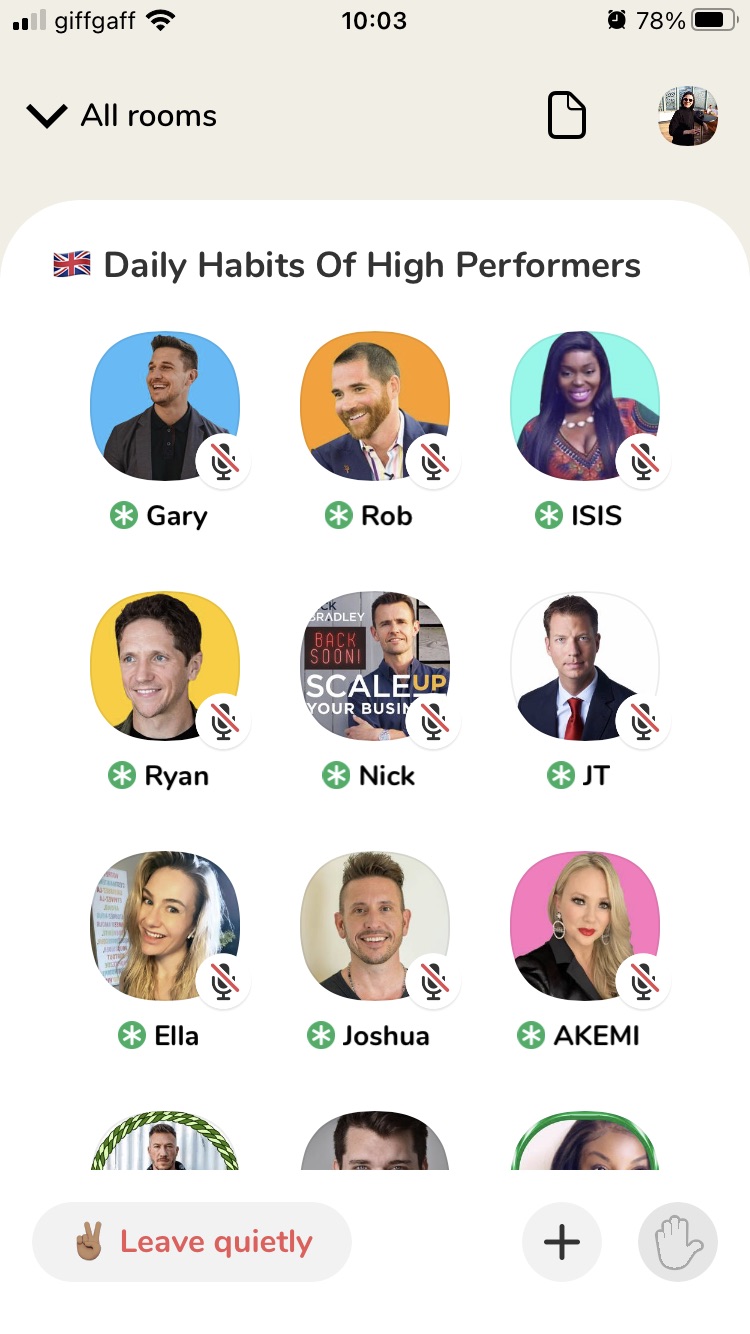
Clubhouse 👋 – A buzzy, invite-only audio, social media app.

A new type of social product based on voice [that] allows people everywhere to talk, tell stories, develop ideas, deepen friendships, and meet interesting new people around the world.

In May 2020, it was valued at $100 million in beta despite having just 1,500 users. By December, it had 600,000 users. A cross between an audio version of Twitter threads, live podcasts and a party – the next step up for podcasts.

I’ve been on it every day this week and loving it. It’s fun, vibrant and organic – I learn something new every time I tune in. They’ve hosted events on the tech exodus from Silicon Valley, Covid-19 and the gut, a beginner’s guide to Cryptocurrency, the pros & cons of 5G, & live performance of Antigone.

I can see why it’s flying during lockdown. We’re desperate for human connection and conversation and something that’s not Zoom. You can give your eyes a rest and have it on in the background – great if you work alone.

There’s a room for every topic under the sun

Millionaires Answer Questions; Be a Real Estate Boss; Music Networking No Egos; The Power of Social Media; Tech Talks, Womxn in Business – it’s US-heavy right now but growing fast. One guy said he’d just finished hosting an 8-day property room (he sounded manic). There’s also celebrity talk shows, live music, stand-up comedy, speed dating, political discussion, and performances. The Lion King had a 5,000 audience, 41 cast members and narrators, profile pics changing the scenes – a great opportunity for the theatre industry. And a 30-day festival coming up…

I prefer smaller rooms as they’re more intimate and you get a chance to speak. The larger rooms have a very different energy, some are heavy sell, lots of egos & too many mods – who can choose who they want on stage. Rooms full of men have different energy to those led by women. I’m enjoying Relaxed Business Networking, every day at 10.30 am – we had a good chat this morning about financial planning for women. You can pitch your business, ask for help, build your network, mentor others, hear diverse perspectives.

Getting started on Clubhouse – 5 tips

1/ Do your bio. The top three lines are important as they come up in the search so use keywords and emojis related to your field. You can’t add links to your bio, but you can link Twitter and Instagram and respond to DMs there (they’re working on a chat function). People are finding ways to monetising their bios – Cash App, tip jar, CH tip sheets to get you on their mailing list…

Be wary of gurus and experts. I don’t think anyone’s a CH expert yet, not even the founders 😉

2/ Be strategic and intentional. What info do you want to receive? What do you want to be known for? You don’t need to get all your updates from one platform. Be selective in who/what you follow. Curate your space & who you follow for a better feed, and exit rooms that give you a bad vibe.

3/ Get stuck in. Raise your hand even when you don’t know what you’re going to say. Start a room (it can be open to all, your contacts or private). You need to host three rooms to apply for a club, and people have suggested applying for a club first as there’s a backlog.

4/ Join the Clubhouse Town Hall on Sundays, 5 pm GMT – updates, best practice, and ask the founders.

5/ Keep a notebook handy – audio is fast and fluid, you’ll want to write down names, contacts, books. I’ve heard so many nuggets this week, a thread below👇

Clubhouse ‘Creator Pilot Program’

Where’s the money at? Right now, we’re not paying to enter rooms which has democratised it, but this will change. CH has said they won’t monetise it via ads which is a smart move, but there are other options: ticketing, tips and subscriptions.

It will be a platform for content creators to make money. They are testing an invite-only ‘Creator Pilot Program’ with more than 40 CH influencers including regular meetings with one of the founders and early access to special tools. Interesting to read that several of the people in the pilot programme are in their 40s and 50s and may not have big followings on other platforms – “not the Gen Zers and millennials most people imagine when they think of influencers.”

It seems tech investors are warming to the idea that being a content creator is a legitimate form of business – analysis from tech reporter Taylor Lorenz.

I feel like something has palpably shifted in the past year among investors, and it seems like everyone is talking about the creator economy now and investing in creator tools. Li Jin, founder of Atelier, a V.C. firm investing in the influencer economy.

Creators are passionate and take their businesses seriously. Serving them is a good business strategy.

The murky world of moderation  

If they want to keep users happy, CH also needs to be a safe space that’s well moderated. What are they doing to tackle hate speech, racism, misogyny and trolling? Here’s Tatiana Estévez on the recent issues and harassment of Taylor Lorenz, and the challenges of setting up an effective moderation system that protects women & other marginalised groups.

I’ve been at the CH Town Hall and they are responsive to comments and adding to their to do list. According to their Community Guidelines, rooms are now being temporarily recorded so they can check complaints, and you can ban and report users.

Maybe have CH users vote someone on to the board to deal with data/privacy issues – for transparency and to show you are committed to users’ views. It would be a good way to demonstrate bottom-up leadership.


The beauty of Clubhouse is that it’s live and easy to use. Please don’t add too many features – I’m really not bothered about messaging on the app. Being able to hop off onto other platforms during an event is a strength and keeps it sticky.

Please take off the follower count! It’s about adding value, not how many followers you have.

Brand accounts and podcast recordings – seen ‘em! Not sure how they fit in but keep them separate.

Those who are hearing and visually impaired aren’t being catered for now – live transcription would help.

It will be interesting to see what happens over the next six months. There’s much talk about whether it will lose exclusivity if it gets too big. I don’t think so. It’s different from existing social platforms and serving a need: human connection. Business networking is changing. I’ve heard many people say they prefer online events as they’re more accessible & affordable. We may not want to go back to the travel and expense post-pandemic, so this will be super useful.

As Li Jin said, creator platforms flourish when they provide opportunity for anyone to grow and succeed.

Ps, they’re hiring (Android launching in March) – apply here.


Toolkit 🛠

💻 The Verge: The $100 million start-up is learning the hard way that content moderation comes first.

👩‍🎨 New York Times: How tech investors are embracing the creator economy.

🗺 SignalFire’s market map to give you a deep view of the creator ecosystem.

💡 Li Jin on building the middle class of the creator economy.


The Advice 💬

Clubhouse nuggets…

The quality of people on this app right now. The networking is fucking amazing. It’s helped me so much with my public speaking.

Focus on energetic exchanges rather than monetary. Seeing the wealth that comes from compassion over sales. Shifting the conversation from monetary seems critical.

The best thing about Clubhouse: Not getting a suntan from the fridge lights. Before, I was spending a lot of time in the fridge. Now I’m spending it on Clubhouse.

The first real app that allows true interactivity. It’s revolutionary for the way we speak to each other.

I heard some techies talking about future of CH, people will come on with different voices.

I’d describe Naples as Liverpool with a suntan. They are very similar cities.

The world is full of amazing people. Any single mums on here? Struggling? Give us your PayPal email, and we’ll transfer some cash.


Welcome to my bookshop! 📚

I’ll be sharing books in my bag and recommended reads on Bookshop.org here. They pay a 10% commission on every sale and give a matching 10% to local bookstores, an integral part of our culture and communities. Please spread the word and help support the high street.


Work with me 🙋🏻‍♀️

Leopard print, always. Worry less and rock a red lip. Internet person, global citizen, flâneuse, problem solver.

💡 Thoughts, ideas, feedback? Leave a comment or email nicci@niccitalbot.com.

☕️ Tip me!

📩 Subscribe to The Shift here.
Categories
Newsletter

🕵🏻‍♀️Building a country on the internet

The big idea💡

Could we build a country on the internet?

Sondre Rasch, CEO, SafetyWing spoke about this at Digital Nomad Summit 2020 and has just launched Plumia, an unrecognised country on the internet. Their core product is global health insurance – a ‘social safety net’ for remote workers but their long-term mission is building a digital country as a membership product.

A fast-moving and software capable, technology-startup that is build from the bottom up like a company selling products.

Exciting idea.

I’m not sure if a private company is best placed to do this but then someone has to build it, and that’s probably going to be a tech startup with a global workforce. They have the education and motivation to do it. They can create a portal, start the movement and bring others on board. But they can’t do it alone.

Now is the time. Covid-19 is accelerating things and remote working has gone mainstream. As Satya Nadella, Microsoft CEO said, we’ve gone through two years of digital transformation in the last two months. Brexit is finally done 😿 And we’re back in lockdown so it’s a good time to be learning online, developing ideas, and doing the groundwork.

Here’s a summary of his key points – watch online here.

A nation of borderless workers

There are 150 million remote workers worldwide with estimates of 25 million digital nomads living abroad – predicted to rise to 1 billion by 2035. This is the size of a large country and growing fast. We have a nation of borderless workers with the same needs as everyone else, which aren’t being met. We also have remote-first companies like Gitlab and Zapier showing you can build big enterprises as remote first, paving the way for others to follow.

But while the internet is like a global city, the infrastructure is not. Infrastructure is usually built along geographical divides. We have a social safety net in our home country but we can’t take it around the world. Which is why they started SafetyWing.

Not having this is a barrier to equal opportunities and freedom. The internet and remote work mean people can apply for jobs anywhere, start remote companies, and be freelancers earning a living online. But there are many grey areas e.g. where to pay tax.

5 reasons why

1. Geographical borders are obsolete and impractical. Built at a time when it made sense that people were based in one place – i.e. agriculture and making a living off the land. The internet has already removed borders – you can earn your income elsewhere.

2. A lot of countries are really bad – see the Corruption Index and you get little back for what you contribute. Common problems aren’t being solved. Can we build a better country on the internet?

3. People want a tribe and they don’t have one. People to talk to and rely on when they’re in trouble. Fun and meaningful connections. Societies are atomised – we have less identity from corporations and work – especially freelancers who work on projects.

4. The internet and technology open up the possibility to create better countries. The infrastructure will be faster-moving, with less red tape, and we can adapt quickly. There’s huge potential for improvement on what we already have.

5. Innovation and competition in citizenship are good for people. Governments will have to compete for citizens, they can’t take people for granted. They will have an incentive to improve their services. Until now, countries have had a monopoly but the balance of power is shifting back to the individual.

How do we do it?

We can either lobby to be recognised as a new country online or do it in partnership with forward-thinking countries like Estonia (e-residency programme) to solve shared problems. The first country on the internet has to be built as a membership that’s recognised by other countries. It should protect its citizens from theft and exploitation – using encryption. And have the benefits of a tribe and a legal framework. It should aim to be 10x better than the existing alternatives.

It makes sense to build on the existing infrastructure rather than trying to reinvent the wheel – those ‘60s communes didn’t work.

I’m excited about this – it’s a great idea. It’s time to rethink how and why we do things and look at what’s not working. People want meaning in their work – work/life integration. Why retire at 67 if you’re doing project-based knowledge work that’s not hard physical labour? Most people want to contribute to society, build connections and stay active – and they have tons of experience and a world view. I have a real problem with brilliant brains dying and that info not being downloaded. Loneliness is also a huge issue across all age groups.

Do we still need annual holidays if we work remotely and can travel more often? And why do we have restrictive visas that mean digital nomads have to country hop? People would stay in a place for longer and contribute more to the local economy and community if they were allowed to. Why should you pay all your tax to your home country if you’re based in other places throughout the year – and those places don’t benefit from your stay? There are lots of problems to solve – and we’ll see more digital nomad visas being introduced.

Join the movement

They are looking for leaders and contributors in remote work and nomadic space to get involved. There’s not much on the Plumia website yet but they will be sharing more info in early 2021. It needs to be transparent so we can see the business model.

We have a network among founders and politicians to make a real difference in the world, and we need a global presence, great leaders, and a large number of citizens to make it happen.

There’s also this initiative to create the world’s first e-nation (beta) and private network of global digital nomads.

National and cultural identities are great but there is a need of an additional ‘complementary’ global identity that transcends national borders, solves global challenges and presents digital nomads’ agenda to the world. This is not a replacement of any existing identities, culture, heritage or overriding ancestors. We have a huge respect for those identities. We are just addressing a need of global citizens and our new digital world.


The Advice 💬

Why Information Grows: The Evolution of Order, from Atoms to Economies, by César Hidalgo.

Humanity is unique in that we accumulate information in the form of new products.

What makes humans so special is our ability to “crystallize” information, to create something from seemingly nothing but our imagination. A computer or a robotic leg are things that don’t appear in nature but had to be imagined before they could be created.

But crystallizing takes a lot of effort. When we want to create a new physical order, we need to push the limits of reality, and this can rarely be achieved by one lone individual.

Thus people work together to develop new products with the knowledge they’ve collectively acquired from older products made by other humans.


Toolkit 🛠

👩‍💻 Plumia: An unrecognised country founded by thought leaders and entrepreneurs in the remote work space

🎧 Conscious Culture: Rebuilding Infrastructure For The New World

📑 SafetyWing: 13 Reasons Why We Should Soon Expect The First Country on The Internet

📹 Digital Nomad Summit 2020: Building a Country on The Internet

📱 Digital Nomads Nation App: First e-nation and private network of digital nomads


👋 I’m on Clubhouse nosing around. It’s a drop-in audio chat social network where you can meet new people, listen to conversations and join groups. The perfect place for Plumia to nest! I love audio – it’s intimate, empathetic and you can join from anywhere – no need to dress up, write anything and you can quietly leave the room when you’ve had enough. It’s like being in a swanky hotel bar and eavesdropping on conversations – Gary Vaynerchuck! This will fly. Well done to the founders. Great marketing – they’ve been everywhere this week with people scrambling for an invite.

You can join the waitlist here.

I’ll do a proper review next week.


Welcome to my bookshop! 📚

I’ll be sharing books in my bag and recommended reads on Bookshop.org here. They pay a 10% commission on every sale and give a matching 10% to local bookstores, an integral part of our culture and communities. Please spread the word and help support the high street 🙏


Work with me 🙋🏻‍♀️

Leopard print, always. Worry less and rock a red lip. Internet person, Croissant co-working, global citizen, flâneuse, problem solver.

💡 Thoughts, ideas, feedback? Leave a comment or email nicci@niccitalbot.com.

☕️ Buy me a virtual coffee every now and then – Ko-fi page here.

📩 Subscribe to The Shift here.

Categories
Newsletter

The new lexicon of work for 2021; The boom in Zoom towns; The greatest migration in human history; How to manage a remote team

Happy 2021.

It’s been a Covid Xmas — I’m in recovery. Julieta tested positive at the hotel just before her flight to Italy and then tier 4 came in so flights from the UK were cancelled anyway. We came home for 10 days of self-isolation. Covid knocked me out — headaches, fatigue, loss of taste and smell, brain fog. But no cough or breathing problems thankfully, I just needed to rest. It feels good to be on the other side and let go of my anxiety about catching it and whether to have the mix-match vaccine (no thanks!) I enjoyed my mini-retirement, binging on Walter Presents, and want more of these in 2021.

I don’t do new year resolutions but it’s a good time to reflect on last year, be intentional and build on the positive habits started during lockdown — or ‘stacking’ as James Clear calls it in Atomic Habits. The New York Times Well team has a 7-day challenge for 2021.

If ‘unprecedented’ was the word of 2020, this year we have two: Flexibility and work from anywhere (WFA).

McKinsey’s research: Independent work: Choice, necessity and the gig economy reveals 20–30% of the working-age population in the US and Europe, or up to 162 million individuals are engaged in some form of independent work. The UK government has a Good Work Plan with advice and skills for people going self-employed to help them succeed. The DWP is hiring loads of work coaches to help with this with a focus on self-employment.

With remote work going mainstream, people are already fleeing big cities for a better lifestyle and we’re seeing a boom in Zoom towns around the world. Pieter Levels, the founder of Nomadlist, says we’re on the verge of the greatest migration in human history… not nomads travelling perpetually but millions of people relocating semi-permanently to places better fit to their way of living.

Here’s the new lexicon of work to get you set up for 2021:

Work-on-demand, Work from anywhere (WFA) 💻

There are more online platforms to find remote work — We Work Remotely, Remote OK, Upwork, Toptal, People Per Hour, Freelance Writing Gigs, Yuno Juno, Remotiveio, Hoxby, Teachable, LaborX (crypto jobs), Kolabtree, Nomadlist, The Dots (LinkedIn for creatives). More people are using The Dots to apply for projects so it’s worth watching their webinar on how the algorithm works to get to the top of the search results. Pip says tech is booming so to think about pivoting to work for a startup/tech company. There are loads on the site. They’ve also added a remote work section so you can filter projects. I’m seeing lots of articles about the best remote companies to work for and top freelancers in various places which shows the market is maturing.

EdX: Online learning 📚

Doing a three-year degree at 18 in a brick and mortar institution (and getting into debt) is no longer appealing or relevant. We need lifelong learning and affordable training we can do from anywhere. More platforms are springing up to cater for this: Coursera, Udemy, LinkedIn Learning, Khan Academy, FutureLearn, Lambda school, EdX to name a few. I’ve signed up for three courses: CitiesX: The Past, Present and Future of Urban Life with Harvard University, anthropology of current world issues at the University of Queensland, and how to manage a remote team with Gitlab and Darren Murph. These are free and I can pay for certification if I want it. For nomad parents, there’s lots of innovation happening in this space e.g. Galileo global school.

Community, collab and co-working 🤝

The best work platforms are helping freelancers to grow and develop their skills and connections rather than just listing jobs. We’re seeing more reward & recognition for loyalty, e.g. you’re more likely to get to the top of The Dots’ algorithm if you engage regularly, ask questions and help others. They have handpicked mentors/ambassadors and encourage you to credit a team member for project work so you both get recognition. Several Slack groups have Ask & Offer walls/Opportunities so you can find hidden jobs that aren’t advertised. They are offering training, education and events — like a one-stop-shop. We’re also seeing a rise in flash freelance teams coming together to work on projects. Work is coming from a range of sources not just employers.

Digital nomads, slowmads, flexpats, and subscription living 🌏

It’s predicted there will be one billion digital nomads by 2035 and the term will become less relevant as more of us work remotely, relocate and travel more. The rise of 5G, 6G and remote work visas will make it easier for people to stay in one place for longer and give back to local communities i.e. teaching tech skills. Countries like Georgia, Portugal, Estonia, Bermuda and Barbados are leading the way and governments will need to compete to attract the best talent. As Matt Mullenweg says, the smartest people will want to work this way so companies need to keep up.

We’re also seeing more startups and hotels offering flexible accommodation and subscription living, e.g. CitizenM and NomadX. I’d like to see a shift from westerners travelling to developing countries to live better lifestyles without giving much back to local communities to people from all countries being able to travel and work — so we need more flexible visas or an international visa that’s open to all. See One Way Ticket, the digital nomad documentary, which explores the pros and cons of this lifestyle.

Tools 🛠

I wrote this in Roam Research — a notetaking tool for networked thought. Just having a play with it to see what’s possible and liking it so far. Daily notes, journaling, articles, to-do list, bi-directional linking, a mindmap graph. A bit of mind gardening — it’s your second brain. It will be a great tool to help with workflow and research. I quite like writing in bullets — it speeds things up (you can disable this). Lots of beginner tutorials on YouTube.

Thanks for spending part of your Sunday with The Shift 🙏

See you next week — Nicci.

Hi, I’m Nicci 👋 — a journalist and writer. I write The Shift, a newsletter on the future of work, creativity, and travel. If you like it and want to read more, please consider becoming a paid subscriber here. Or if you prefer, you can buy me a coffee here. Find me on Twitter @niccitalbot.

Categories
Newsletter

The Shift: #29

How to do your own performance review

In December, I do my annual review and create a roadmap for the year ahead. I don’t make new year’s resolutions, but I find this process helpful for planning and setting goals. When you’re freelance, you don’t have a linear career, pay rises and performance reviews (they don’t work anyway) so this is a good habit to get into. It’s more fun and will make you feel excited, energised, and in charge of your career.

Given the year we’ve had it feels more relevant now than ever – and it’s an opportunity to build on all the good habits you’ve created during the pandemic and beyond…

You will need: A hot drink, notebook and pen, 3-4 hours’ peace. You can do it by yourself or with friends. Think about all areas of your life – work, money, health, relationships, spiritual… What do you want in ‘21? Aim high and think big. Then add specific, measurable goals to help you get there. What skills do you need to learn? Who can help you?

I’ve found some great resources. Squiggly Careers/AmazingIf – 20 questions to ask yourself. And this free booklet by YearCompass – am sending everyone a copy for Xmas. If you prefer to do it online check out Chris Guillebeau’s spreadsheet template here.

Two questions to get you started

• What went well this year and what didn’t?

• How was your time best spent or wasted?

Here are my answers. 

What went well 

• I finished my book project, The Science of Growing Up Happy. 8-months intense work and had its challenges, but I enjoyed the process, teamwork and have an end product. I want to work on more projects like this next year.

• I had my best financial year of self-employment.

• Joined Peloton – daily exercise helps with everything else.

• Started this newsletter and learning/tweaking as I go.

• Did some mentoring and enjoyed it – want to do something more formal.

• New meds have improved my RA. I’m less tired and have more energy.

• I found a good therapist.

What didn’t go well

• Precarity – Being at the whim of agencies who want you to be set up in a certain way, i.e. limited company and now PAYE/umbrella for clients. I wasn’t eligible for government support this year. So, I’ll simplify my set up, do more on the #FairDeal4Freelances campaign to protect freelancers, and develop other income streams for quieter periods.

• I’ve isolated myself working at home. I was shielding at the start, so not my fault, but I can make more of an effort to network online. I’d love to do some experiential/immersive events so will use Eventbrite to find things. I want to broaden my social circle and mix with people of all ages. As they say, you’re a by-product of the five people you spend your time with. Who inspires and energises you? Who do you want to spend more time with next year?

• I signed up for a language learning app and haven’t started it. Ditto for other courses. This is a pattern – I try to do too many things at once then feel overwhelmed.

• Scrolling and swiping. Bits and bobs. It can fill a day and you’re not sure what you’ve done at the end of it. Less time on social media. I also love the idea (thanks Squiggly!) of a Goal-den Hour – one hour of deep work a day with no distractions.

• I read tons of articles but haven’t read that many books lately – and when I do, they’re usually business books. So, to read more widely and for pleasure again – not just for work, like I used to do as a kid.

I’m not travelling to see the fam for Xmas this year – too far to go for a short period of time and I don’t fancy being on packed trains. It’s a bad idea! So, I’ll have plenty of time for this.

Once it’s done, keep it somewhere you can see and review it regularly. Your priorities will change, and things will drop off. Every quarter I treat myself to an away day – book a hotel/spa break and give myself time to think. You can also email it to your future self via Futureme.org to review this time next year… 

“They say that time changes things, but you actually have to change them yourself.

Andy Warhol

Things to do

💪  What’s your curiosity profile? Harvard Business Review. I’m an unconventional thinker. I question authority and have an independent thinking style. Intellectually hungry, like to learn, seek new experiences and relationships.

🤨 Are you an extrovert, introvert or ambivert? Ted. I’m an ambivert – an excellent place to be. I know when to talk and when to listen.

🎧  20 career questions from AmazingIf – episodes #114 and #115.

✍️  YearCompass – The booklet that helps close your year and plan the next.

📹  Grit: The power of passion and perseverance Ted – Angela Lee Duckworth’s theory of ‘grit’ as a predictor of success.

🙇🏻‍♀️  24 Big Ideas that will change our world in 2021 – LinkedIn’s annual review. Lots of food for thought here to help you shape your work and ideas in ’21. Share your thoughts with #BigIdeas2021.


My Bookshop

📚 I’ve set up my shop on Bookshop.org, an online bookshop with a mission to financially support local, independent bookshops and authors. Great to have an alternative to Amazon – please support it! Bookshops connect communities and help keep our high streets shining – we need them more than ever right now. I’ll be posting my recommended reads here


Thanks for reading!

👋 Hi, I’m Nicci – a journalist and writer based in the UK. I write The Shift, a newsletter on work culture, creativity + tech trends. If you like this and want to read more, please consider becoming a paid subscriber here. Or if you prefer, you can buy me a coffee here. Find me online @niccitalbot.

Categories
Newsletter

The Shift: Issue #28

NUJ #FairDeal4Freelances – a 10-point plan; Calls for a Freelance Commissioner; Free creative training courses.

The NUJ has published a freelance charter as part of its #FairDeal4Freelances campaign.

It calls for:

1/ Trade union collective bargaining to improve T&Cs for freelancers side by side with staff.

2/ Fair written contracts for asserting your rights.

3/ Respect for their creators’ rights and unwaivable moral rights.

4/ Equal rights with employees: sick pay, maternity, paternity and parental leave, unemployment benefit, full access to benefits.

5/ Choice over how you freelance and are taxed, with an end to advance tax payments.

6/ Work free from pressure to operate on a PAYE basis or through umbrella companies.

7/ Equal health & safety protections including training & insurances.

8/ Fair fees and terms and prompt payments.

9/ Dignity and respect at work, free from bullying, harassment or discrimination.

10/ Equal professional rights, including the right to protect sources, seek information and uphold ethical standards. See more.