
Categories
Newsletter

Building a buzzing (+ kind) community

This week: Community polyamory. Ness Labs’ success – how to build, grow and nurture your network; creating deeper connections; the evolution of digital behaviour; how the use of the internet is causing us to lose empathy; Freelance Business Month: the future of work as open talent.

Happy October! I’ve signed up for Sungod’s Strava challenge – runs or rides every Sunday in October to get as much daylight as possible before the clocks change on 31 October 😱

Excellent performance sunnies and a growing online community – a brand to watch.

Speaking of communities, I’ve been exploring as many as I can lately, and the one I keep coming back to is Ness Labs. It’s inspiring to see how Anne-Laure has built a buzzing, kind community and worth a look at why it works. Read her AMA with Product Hunt here.

Growing a newsletter and a website to 35K subscribers and 100K visitors per month in 2 years. AMA👇

Ness LabsEvidence-based content around productivity, creativity, mental health and knowledge management. 2K community members.

AL now has two full-time employees and hires freelance writers via Upwork. Her main source of revenue is sponsored interviews and paid memberships. She does a bit of 1:1 coaching but says that’s negligible. 

It’s interesting to see how she’s done it in a crowded space of personal development and productivity. Some thoughts on why it works…

Building a kind community 

  • A personal journey: Anne-Laure loves learning in public and shares her successes and failures openly. She’s active in the community with regular Q&As. I’m curious to follow her progress and happy to support a creator. Personal onboarding is a nice touch, and sharing content on a closed platform gives a sense of psychological safety. It’s interesting to see most people have their cameras on during workshops, which creates intimacy.
  • Great value for money: it’s ridiculously cheap compared to other online communities. I paid $35 to access a growing library of content and community. AL says the biggest surprise was people writing to her telling her to increase the price and gifting memberships. 
  • Values of kindness and pay it forward: People are engaged, generous and want to be seen, and it’s down to the topics she’s exploring – personal development, mental health and creativity. It’s not overly self-promotional – there have been a few posts lately from coaches, so she’s created a coaching directory/channel where they can promote their services at no extra charge.
  • Content-first approach: I like the Circle platform – it’s simple, easy to use, minimal friction. The focus is on high-quality content that’s easy to find. It’s organised by channel so you can follow your interests, contribute topics and connect with members.

    *Creator Spark* is a new space where members can host a talk or moderate a panel in a safe, supportive space (people said they felt shy about sharing their stuff). It’s a shame we’ve been conditioned to see sharing our work as boasting and bragging – it causes so many hangups. You have to get your work out there on different platforms: 50% writing, 50% marketing.

    Emotional and informational content works!
  • Online and offline meetups around the world. I’ve signed up for the London event on 18 October, so meeting some of the community in person will be interesting.
  • The zeitgeist – Ness Labs has grown organically during lockdown – we all need connection. It’s also tapping into the current mood – the great resignation, a power shift to the creator, working smarter, not harder, and mental health and burnout at work.

People have set up sub-groups on and off-platform – a sign of a healthy community. I’ve joined the Newsletter Mastermind – an active Twitter group and weekly Zoom.

My only criticism is there’s too much good content in the newsletter! I don’t have time to read all the articles in one go, so I bookmark stuff to come back to (my Pocket is sagging) This can be demotivating – sometimes less is more. I’m mindful of that with this newsletter and being respectful of people’s time.

What communities do you find useful – and how do you make the most of them? 

I carry a notebook around with me for ideas, quotes and things I’m curious about so I can build up a bank of content. I need to get ahead rather than writing last minute. Taking publishing breaks in August and at Xmas gives me time to catch up.

I love online communities but I need my local tribes too. I’m on a mission to turn Hastings into a tech hub. I left London 14 years ago – part of the second wave of regeneration and we have the third wave with the pandemic. It’s good to see new faces, startups and energy – I love all that. Hearing a few moans about how “it’s all gone too far” and property prices…


🔗🖐5 Things 

☁️ Rosie Sherry on how communities are cool again and everybody wants to own a (profitable) one. The tools exist to make it happen but it gets complicated, messy and fragmented pretty easily. I’m using WordPress and Substack and have held back on the community aspect for this reason. I don’t want to complicate things with more platforms. The best and most impactful communities are custom-built like Nomadlist – something we need to talk about more.

🌱 Building, Growing & Nurturing a Kind Community: Q&A with Anne-Laure from Ness Labs. Whether you run a community or are thinking of starting one, here are some solid community-building tips and strategies based on her experiences. Friendliness, the personal touch and psychological safety are important and interactive events that bring people together.

🕵🏻‍♀️ Tribes, Flocks, and Single Servings – the evolution of digital behaviour by Rahaf Harfoush. Nice work creating a visual framework to help her capture the spaces she’s tracking. The interesting bit is the overlap and changes that occur. Rahaf is my go-to for digital culture analysis – Hustle & Float is excellent.

🤔 How the internet is causing us to lose empathy by Eli Baum – written in 2014 but still super relevant – why are we not talking about this more in MSM? Empathy is valuable and the fact it’s declining is alarming – we need people skills, useful products and deeper connections. We can’t slow down tech but we can get the story out to promote change and be mindful of it in ourselves – do the EQ test.

👩‍💻 Freelance Business Month – the largest global event for freelancers. Talks on the future of freelancing, starting and growing your business, freelancing in Europe, the future of work as open talent and more. Learn new skills, speak, and connect with the community – founded by the amazing Elina Jutelyte who is totally on it and open to collaboration. Programme and registration here – there are a few free tickets left.

I’ll be there!

Nicci


I’m a digital writer studying UX and content design – a badass life path 🙂

My mission:

• Making delightful digital products that improve people’s lives.

• Bringing more humanity and creativity to business and technology.

• Solving your problems using better communications – data-driven writing and design thinking skills.

The Shift is my lab where I explore digital culture, creativity, mindful productivity and independent work. I have a ‘pay what you can’ model – you can buy me a coffee or make a regular contribution to support what I do via my Ko-fi page.

Want to talk? Find me online at Polywork, Twitter @niccitalbot or email nicci@niccitalbot.io.

Help me build a forest! To offset the carbon emissions of my online work, I plant 12 trees every month via Ecologi 🌱 🌳

Categories
Newsletter

What if a robot could write your copy?

– The Shift: A weekly-ish newsletter about our work-from-anywhere future and making money online.

– Get your free subscription to The Shift, a weekly letter about our working from anywhere world—and how to make money on it.

– Learn from industry experts as they share their stories, tools, and resources for building a location-independent business.

Jarvis AI

That was written by AI – not bad, eh? 

I gave it a few words about my newsletter as a prompt – and it wrote that in seconds.

Jarvis is the latest AI writing assistant I’ve come across – thanks to Marianne Lehnis, who suggested it. These tools have been around for a while, but the new AI GPT-3 based writers go a step further and help you write long-form copy – ad copy, sales pitches, emails, product descriptions, social media and more. 

I’ve used it for client work and content pieces, and it’s a very cool tool. Fun to use: it’s made me laugh, surprised me, given me ideas, and saved me time. I’m trialling Boss Mode (the most advanced package💲) and have barely scratched the surface (53 templates, recipes, commands, long-form content), but it’s given me a sense of how powerful it is. 

I asked Jarvis to rewrite my bio:

I am a woman of many hats. I am the author of Remote: Office Not Required and Chief Tingler at Tingler Inc.

I’m Nicci. I write about remote work and building an online business. My favourite thing to do is go on adventures, make friends with animals, and take long walks in nature.

Spot on, Jarvis!! 

Open AI’s GPT-3 is described by Marketing Brew as ‘kind of a big deal’ – among the most advanced language models in existence.

Large language models are powerful machine learning algorithms with one key job description: identifying large-scale patterns in text. The models use those patterns to “parrot” human-like language. And they quietly underpin services like Google Search—used by billions of people worldwide—and predictive text software, such as Grammarly.

Emerging Tech Brew’s Hayden Field.

The goal is to humanise AI and help you write smarter, faster – and get over Blank Page Syndrome. The better you describe what you want to write, the higher quality content Jarvis will help produce.

Super useful for content marketers, digital agencies, and anyone who needs to generate a lot of content. The long-form option (Pro + Boss Mode) is a game-changer – interesting to see on Facebook that people are using it to write books.

It won’t steal your writing job. You get well written generic copy, the first draft as a base to tweak from. It’s not for complex articles, fact-checking or emotional aspects. This post by Danny Veiga, a digital marketer, was written by Jarvis – he told Marketing Brew Jarvis wrote about 80% of it, with 20% fact-checking. 

I see it as part of my writing toolkit. It’s helped me generate ideas, perspective, given me a creative boost and saved me time. Jarvis is a workhorse! 100% remote and 24/7 *shoulders drop*. Forget the threat – embrace the tech and use it to sell your services and promote yourself – 5 x your content in minutes! Read this now! 

Jarvis has over 30,000 users from companies including Shopify, Google, Canva, Zillow, Airbnb, Stripe, lots of positive reviews, and an active Facebook community. Learning in public – good to see them flagging issues and solutions, responsive to feedback and improving the product.

You can sign up for a free five-day trial here (Nicci on steroids – gives me a few more credits to play with) – I promise not to send you five newsletters next week 🤖

Have you tried Jarvis or any other AI writing tools? I use Grammarly Pro, but this is in a different league.


🔗🖐5 Things  

💸Twitter Tips – their latest experiment now lets you tip anyone with cash or crypto (via mobile). Twitter seems to have gone mad introducing new features to try and get up to speed with other networks – rolling stuff out to see what sticks – at least they’re experimenting in public. But if the content is freely available, where’s the incentive for users to pay? Good overview by TechCrunch.

🎙Burnout and exhaustion while working in content – you’re not alone (Content Rookie). I love this podcast. Interesting chat with Jane Ruffino and Candi Williams on setting boundaries at work and moving the conversation from productivity to burnout. How scale (scarcity mindset) shouldn’t drive a company over growth and community (abundance mindset). ‘We shouldn’t have to constantly perform ambition to do well.’ There’s a pressure to upskill – especially in an emerging field like UX.

👩‍💻Letting go of perfection – I wrote a piece for The Portfolio Collective on the rise of perfectionism as a cultural issue and how we can keep it in check – some strategies that have helped me. One of the members, Zarir ‘Zed’ Vakil said: “One tip I use for avoiding toxic perfectionism is being outcome-focused and always taking action. This avoids procrastination and rumination.”

🕵🏻‍♀️Reinvigorate your career by taking the right kind of risk – inspiring piece by Whitney Johnson on taking smart risks. Exploring underserved areas of your industry and crafting a new role for yourself, staying in your current job and inventing a new product or service or switching industries. Finding the gap – what no one else is doing – and creating opportunities – businesses don’t disrupt, people do.

📕Free book! Collaborate: Bring people together around digital projects by Ellen de Vries (Gather Content). Content is about people and collaboration – how to think about the work you do as a collaborator in your day-to-day life – and some practical activities to test out. How to work with others online efficiently – this will be helpful to anyone in digital, not just content people. Via the excellent & new Working in Content.


The future of work is now

Let’s build it. The Shift is your guide to running a small but mighty business. Start living and working on your own terms. Supercharge your solo work🚀

Your weekly-ish dose of inspiration, ideas and solutions.

• Question or comment? Email nicci@niccitalbot.io

• Enjoy reading this? Buy me a coffee

• Did someone forward this? Sign up here

Help me plant an Ecologi forest! To offset the carbon emissions of my online work, I plant 12 trees every month via Ecologi. We’ve got 10 years to sort this out – no time to waste.

Categories
Newsletter

Polywork: for multiplayers

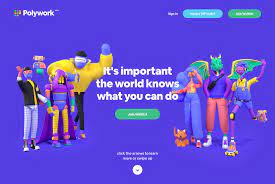
I joined Polywork last week, a new kind of professional social networking site that’s taking on LinkedIn.  

Polywork

It’s a year-old startup that’s raised $13 million in a round led by Andreessen Horowitz. Investors see it as a long-awaited replacement for LinkedIn (19 years!). A digital resume and a highlights reel that helps you show the world what you can do, share work in progress, find collaborators, paid gigs and opportunities. 

Polywork is still in beta and invite-only, but it’s grown from 1k to 22k in the last three months, see the Twitter Love

Peter Johnston is the founder & CEO, a Belfast-native and a former designer at Google and M&C Saatchi London. Check out his profile to see how he presents himself online, his vision for the product, challenges they’re facing, and the changing nature of work. 

A different kind of storytelling

We believe the world can be more productive if we know what people can do and who they did it with. This is the other side of design – storytelling – how do we help people tell their story and unique path? 

This is a different kind of storytelling. There are no clichéd likes or followers, which turns social media into an anxiety-ridden popularity contest. We’ve gotten used to that over the last 10 years, but the internet used to be a place to express who you are; it was more innocent in the earlier days.

Then likes and followers arrived, and a lack of focus on building communities. We may be excited to express ourselves online, but then we’re judged for it, so the result is a polished glean – a version of the truth we tell the internet – Fireside chat.

Big challenges. How do they give people the dopamine hit they’re used to when there are no likes or follower counts? We’re already invested in Twitter and LinkedIn. But LinkedIn doesn’t resonate or feel authentic, so I’m spending less time on it. 

A digital journal

I’m cracking on with my profile. It’s a good-looking product, like entering a new world: colourful, thoughtful design, minimalist, avatars. It’s a nice feeling to see everything in one place and you can share work in progress. It awakens the generalist in you – there is so much pressure to niche down and be a focused expert.

Discovery – you can add badges – founder, storyteller, parent, build in public etc. so people can search by topic. Get to know the AI bot that will send opportunities your way. Mark yourself open for interviews. Explore the Space Station and find speakers, investors, mentors, designers, content creators and more to collaborate with. 

Helpful tip from Peter on how to maximise your profile: use the tags – posts with a full description are ranked higher.

It’s solving a problem for me: how to condense 25 years of work into a one-page resume. A digital home for personal and professional achievements and a place to distribute online work. It helps with imposter syndrome – you realise how much you’ve actually done – interesting to hear Peter say he’s been crippled with that his entire life.

Also, a great way to document what you do for your kids. In years to come, they might appreciate it.

On #Ship30for30, we talked about the issue of investing in writing, but not distribution (50:50), and why it’s important to share your work online in entirety rather than adding a link. People want to stay on the platform. The trouble with personal websites: no one will ever find it, and it takes ages to maintain. Sriram Krishnan is using Polywork as his custom domain. 

Hitting the zeitgeist 

It’s an interesting time for identity. Peter points to the dramatic power shift from boss to talent during the pandemic [Digiday]: “We are seeing the largest shift towards entrepreneurs in history.”

Personal choice and a desire for professional growth, but also inflation and necessity! The rising cost of living means a side hustle is necessary, not a luxury for many. And employees wear multiple hats, which don’t fit into one job title or description.

I like what they’re trying to build: a healthier social network for the creator economy. A more straightforward way of representing yourself online that empowers people to have multiple income sources.

I’m excited to see how it evolves. If you want to check it out, here’s a code to skip the waitlisteatmorecake

Free to use – they’re working on a premium version so you can share more.

See you in the multiverse! 


🖐5 things 

💌Steph Smith: Writing for a seven-figure paid newsletter. On finding her dream remote role that bridged her love for data, writing, and entrepreneurship; antifragility at work – creating things online when people aren’t watching; free vs paid newsletters; the writing: distribution ratio, and how they hire talent at Trends [TheHustle].

🤯Sari Azout on building emotional capital. How a healthy mind is an entrepreneur’s biggest competitive advantage; practices and strategies for bolstering your mental health; how good work comes from slowing the fuck down, and ways to support this: building an asynchronous-first written culture, inspired by Amazon’s written culture.

🎗Refugees At Home: a UK charity which connects those with a spare room to refugees in need of somewhere to stay. We were talking about Afghanistan and how to help at September’s NUJ meeting – a colleague took in a 20-year-old Vietnamese boy who was trafficked as a teen to work on a cannabis farm. A brilliant initiative.

🤓Smart glasses: a brief history. Can Facebook’s new Ray-Ban smart glasses succeed where Google Glass and Snap Spectacles failed? Front-facing cameras for photo & video (and Bluetooth speakers in its frames to take calls) for $299. No Facebook branding – avoiding the curse of his predecessors: the ‘Glassholes’.

🇪🇸Spain’s new digital nomad visa – small towns are ready to host you! Around 30 towns have decided to to join the National Network of Welcoming Towns for Remote Workers scheme, which aims to attract nomads with a new 12-month visa. You can connect with a host who will introduce you to the locals.


The future of work is now

Let’s build it. The Shift is your guide to running a small but mighty business.
Start living and working on your own terms.

Your weekly(ish) dose of inspiration, ideas and solutions every Sunday.

• Get in touch: nicci@niccitalbot.io
• Enjoy reading this? Buy me a coffee 

To offset the carbon emissions of my online work, I plant 12 trees every month via Ecologi. We’ve got 10 years to sort this out – there’s no time to waste 🌍 ✈️

Categories
Newsletter

How to be a thought leader

Thought leadership is a bit of a marketing buzzword – vague and cringey, and unlike lead generation, hard to measure.

There’s no recipe for success. 

What does it mean on a day-to-day level for your business – and how do you do it well?  

The Portfolio Collective have invited me to speak at an event on ‘Raising your flag and becoming a thought leader’ and share my experiences on how I’ve done it with the future of work community and wider audience.

Thought leadership is about how people in your industry (and your customers) perceive you. 

  • James Clear (the habits guy) 
  • David Perell (the writing guy)
  • Pieter Levels (the nomad guy)
  • Amy Porterfield (the digital marketing gal)
  • Rosie Sherry (the community gal)
  • Bret Contrevis (the glute guy)
  • Ben Legg (the portfolio career guy) 

A niche focus makes you memorable.

One of my clients, a property agent, wanted to be the No #1 international agent in Berlin. So we positioned him as the ‘Berlin champion’, and put his face on the side of their black cabs so he was visible across the city. He wasn’t afraid to criticise government policy and say why it was harming the housing market so had a reputation as honest and trustworthy. Many of their leads were long-term clients.

How to be a thought leader

Think about your overall strategy and take a high-level overview before you decide on the content mix. What problem are you solving with your product/service? How are you going to get people from A to B? 

Some food for thought on the three types of thought leadership:

  1. Industry (a point of view on news, trends + the future)
  2. Organisational (company culture, talent development) 
  3. Product (how-to, best practices, strategy)

Do all three if you can, and if relevant: develop your point of view and then create content. If you’re overstretched (companies have teams working on this stuff), focus on one area and do it well. It can feel overwhelming for solopreneurs, so start small and be a thought leader for your clients and customers first, to build trust. 

Look at engagement over metrics – time on pages of your website and how many articles people read is more important than views and impressions. 

Thought leadership takes time, energy, consistency and authenticity, but it’s hugely rewarding and can transform your business. It’s not about self-promotion. As Alexandra Galviz (Authentic Alex), #LinkedInLocal co-founder, says: 

It’s not just about sharing your ideas; it’s also about inspiring others into action. 

Thought – give yourself time to think, observe, and horizon scan. Don’t fill every nook and cranny of your day. 

Leadership – have a point of view and don’t say the same as everyone else. 

I disagree with David Soloman, Goldman Sachs CEO, on remote work being an ‘aberration’, but I respect his opinion, and he’s been quoted everywhere. 

Some good advice from Tammy Ammon, Director of Thought Leadership at Acxiom, after a year on the job. 

She spent the first few weeks defining the role and mapping existing pieces of content. Content creation is a huge part of it – a passion for storytelling and strategy. Move through the organisation at all levels to have a broad view and perspective to share with your audience. 

Listen in on meetings, network on LinkedIn, and have monthly chats with your team about issues, no agenda. Manage your time – know what topics need your input and what you can delegate. You can’t do it all. 

Good books: Dorie Clark’s Entrepreneurial You – insights from building a high six-figure solo consulting business, and Malcolm Gladwell’s Outliers: the story of success

What’s working for you? Come and share your experiences at the Fireside Chat on 12 November.

Nicci 


🖐5 things

✍️How to create a Wiki in 9 simple steps – a guide and template. Every company needs a Wiki! It helps keep communication open with remote teams. I’m building one for myself – mission, vision, values, culture, tools and processes, passwords, resources for personal development. Great for onboarding, speeds up the day-to-day and focuses your mind.

💸Mirror.xyz – a new tool for writers working on crypto and blockchain. I’ve seen a few posts about this, but not many reviews, so I got on Reddit and Medium – good articles by Tim Denning and Casey Botticello on how it differs from traditional publishing platforms, and how you can make money on it. Exciting! I’ve been trying to sign up but having issues with the website.

💌Newsletters could be the next (and only) hope to save the media. As the journalism industry collapses, writers are turning to newsletters to make money and launch publications. Premium subs are still a tiny part of the market, and writers make money in other ways. I can’t see people paying $10/mo for several newsletters – these little things add up. I subscribe to Every – a bundle of newsletters on work and productivity – like a magazine.

✈️Africa is calling! Cabo Verde has launched a nomad visa to attract 4000 remote workers over the next three years for its DN programme. Ten sunny islands to explore – they’ve had virtually no tourism since 2020. See the best of Cabo Verde on Insta here. The national drink is Grogue, a rum at 60%, which will blow your socks off.

🎧Ways to make working remotely less lonely. It’s not talked about enough, and it’s among the biggest challenges faced by remote workers. Switching off is my biggest challenge, but this is a close second. My clients are global, so there are no team events. My networking is online so I’m going to start a local remote worker group. The team at Flexiple share some creative ways to deal with it – personally, at a company level, and in your community.


Categories
Newsletter

The future of education is community

Hi,👋

Welcome back! I hope you’ve had a reset and some family time.

I’ve been juggling a UX project with a 30-day writing sprint, posting daily atomic essays on Twitter via #Ship30for30. I’ve done a few Cohort-based Courses and this one stands out because of the community, fast results, and learning in public. I’m on Day 21/30 – here are my thoughts so far.

Positives – shipping daily is powerful. It stops you from overthinking, over-editing and being a perfectionist. The aim is to get stuff out there and analyse your data, so you can see what’s resonating and go all-in on that. Progress over perfection.

Personal stories resonate the most, and work/travel content. I’ve had the most interaction on essays about digital nomadism, Smart Villages, and dealing with negative feedback.

300 words is tight, so it focuses your mind on short, powerful ideas. Constraints help creativity. Typeshare adds a visual element and reader experience. The curriculum is packed and fresh – internet-based courses can be updated quickly. And it’s more affordable than longer training – incredible value for what you get.

Visibility, accountability and community – you’re doing it under your own name and growing your Twitter followers, so there’s a personal benefit.

It’s a transformational experience and a rite of passage. At the kick-off, Nicolas Cole said, “See you on the other side.”

Challenges – there’s a lot of course material to digest, weekly live calls, and an accountability buddy I’ve not managed to speak to yet. It’s a large cohort: 200+ people, so a fair bit of reading and feedback. I can’t do it all, so have focused on the essays and engagement. I’ve read Nicolas’ (excellent) book, and I’ll catch up on the coursework and replays.

What’s happened organically is smaller breakout groups with people in the future of work and nomad space. We cheer each other on and will Zoom after the course.

Some people have done several cohorts, which is a testament to the power of CBC’s.

The future of education is community.

Maybe we’ll see a wedding onboard soon🚢 👰🏼

Have a great week.

Nicci

🖐5 things

🗺 How digital nations like Plumia are giving digital nomads wings. I had a chat with Leanna Lee about Plumia, an online movement advocating for and protecting remote workers. A good overview of the latest research on the growth of location-independent work and the remote work problems we need to fix to be free to roam. Check out the Plumia Speaker Series and join the community for a borderless world.

🇪🇸Digital nomads are here to save Spain’s ghost towns. 30 dying villages across Spain have joined the National Network of Welcoming Villages for Remote Work scheme. It aims to attract remote workers with a new 12-month work visa. It’s not sun, sea and sand, but tranquillity, nature – and a chance to experience the ‘real Spain.’ Brilliant. They also need to focus on the cultural heritage, history and food, glorious food!

👩‍💻Future of Work documentary (PBS) – a six-part docuseries chronicling six mid-career adults as they navigate the shifting work landscape. It covers the rise of the precariat, gig economy, remote work, working to live, digital nomads, UBI, new opportunities, and more. All the videos are on their YouTube channel. And there’s a virtual weekly event series exploring the FOW.

🎧Fadeke Adegbuyi on the On Deck podcast chatting about her recent article on Study Web and her experience joining Every, a writer collective (I’ve applied to join). The article is also mentioned in this Think With Google report on what YouTube culture can tell us about the changing future of video – the accelerated trend for ‘slow living’ and how we’re creating community through company.

📚Global Natives: The New Frontiers of Work, Travel, and Innovation by Lauren Razavi. I’ve pre-ordered a copy via Holloway (many excellent books, including a free one on using Twitter). It explores the origins of digital nomads and location-independent work, and how the internet has changed our relationship with place. Knowing Lauren, it will dig deeper than the hype and tired nomad beach photos.

🌎The future of work is now

Let’s build it. The Shift is your guide to running a small but mighty business. Start living and working on your own terms.

Your weekly(ish) dose of inspiration, ideas and solutions every Sunday.

• Question or comment? Email nicci@niccitalbot.io
• Tip me – this is a one-woman labour of love; all donations gratefully received
• Book a Classified Ad

To offset the carbon emissions of my online work, I plant 12 trees every month via Ecologi. We’ve got 10 years to sort this out – no time to waste🌍 ✈️