ALSO: An interview on marketing without social media | #121
Have you left Twitter for Threads yet? 😉 I played for a couple of hours on launch day.
Instagram has over 2bn monthly active users, which explains why Threads has exceeded 70m sign-ups in less than 48 hours.
Very smart move letting you port your existing audience over (stop, think. Do you actually want to!?). The worst thing about joining a new social network is starting from scratch with zero followers.
Initial thoughts – it’s fast, clean, light, good UI. I like the simplicity – no fancy features yet, fun for now. Good vibes – it feels like Twitter c2008. It is the first-week flurry and novelty factor, but people seem to be enjoying it.
Threads collect the same data as Instagram, Facebook and WhatsApp. From Znet: “Threads collects users’ physical addresses, health and fitness data, and sensitive info like biometric and ethnic data. Twitter does not collect these types of data.”
It’s unavailable in the EU for now – privacy nightmare, but people are finding ways around it – a tip here from Jens Joseph Mannanal, co-founder of Passionfroot.
Future versions will integrate with ActivityPub, a decentralised social networking protocol, so you could potentially take your content elsewhere. The friendly fediverse as it’s called – interoperability is where the industry is heading.
Early days, but I think it’s worth your time, especially if you used to enjoy Instagram.
All this talk about strategies to win on Threads already. Ugh. Chill, keep it light, and reconnect with long-lost friends! Mine will be tiny threads as I hate typing on my phone. There’s no desktop version yet.
LinkedIn is still my main social platform, and I’m trying something new over there – themed weeks focusing on specific topics. So, this week it’s ‘newsletters’, and how to market yourself off-socials. Timely!
Meta has chosen a name that the Germans can’t pronounce very easily, which seems bizarre in their quest for world domination.
Expect to see even more puns on the platform. Stitch is a serious contender.
At least it’s not Threadz… 🙀
Listen to a special episode of the Hard Fork podcast with the head of Instagram, Adam Mosseri, on why the company now wants to take on Twitter.
Interview: Johanna Renoth, founder of Bye, Social Media!
“Say Bye to Elon and Mark!”
Johanna Renoth is the founder of Bye, Social Media!, an agency for marketing without social media. She helps small businesses, creators, and solopreneurs thrive away from the algorithms.
In this interview, she shares her insights into moving her marketing off all social media, how her PhD on social media inspired her to make the move, and what she’s learnt in the past year of pursuing this avenue.
Food for thought here – enjoying your marketing is important.
I have mixed feelings about this. I agree with a lot of what Johanna says, but social media is a gift and we’re lucky to have it.
I don’t take it for granted – it is a great time to be a creator. We can share ideas and connect with others for free.
The Write to Roam | Ethan Brooks. An inside look at how 6 & 7-figure writers make money, and on their own terms (via the Copyblogger podcast).
Chenell Basilio | Build In Public podcast on what newsletter creators are doing differently to grow to 50K subscribers. “Find the thing that feels like torture to others and a gift to you. And do that thing!”
Trible offers a no-code platform that lets experts, coaches, and content creators easily build their own branded websites and mobile apps to deliver & monetise courses, content, community memberships, and coaching services. Get started here.
Get smarter with expat money. Our friends are publishing Money Abroad, an excellent resource for expats to learn about building wealth while living abroad.
Money Abroad shares fresh tips about money & wealth that you can learn in under 10 minutes. Plus, it’s free. Sign up here!
Johanna Renoth is the founder of Bye, Social Media!, an agency for marketing without social media. She helps small businesses and solopreneurs thrive away from the algorithms.
In this interview, she shares herinsights into moving her marketing off all social media, how her PhD on social media inspired her to make the move, and what she’s learnt in the past year of pursuing this avenue.
Much food for thought here – enjoying what you do with your marketing and being self-sufficient is so important.
I have mixed feelings about this. I agree with a lot of what Johanna says, but social media is a gift and we’re very lucky to have it. It is the best time in history to be a writer and creator.
So it’s about being intentional with it, using your time well and using platforms that you enjoy and get value from.
Tell us about yourself and why you started Bye, Social Media!
I’ve always been an ideas person. I live in the realm of “Wouldn’t it be cool if…” Curiosity and enthusiasm led me to many career paths, including journalism, startups, VC, art, and photography.
Ultimately, I’m a creative at heart. The best occupation for me is at the intersection of business and creativity.
The story of Bye, Social Media! starts with my frustration about social media. I hated promoting myself on socials and found no success in it. My curiosity led me down a path of trial and error in figuring out off-socials marketing for myself.
When I realised others were also struggling with their disdain for socials, starting Bye, Social Media! was an organic next step. It’s been very fun so far.
Who are you serving? Target audience and niche?
I currently serve solopreneurs, creatives, creators, and small businesses. I offer consulting on marketing and create off-socials marketing strategies. I also offer to write my clients’ newsletters and grow their audience.
This niche is interesting because it’s not defined by an age bracket or industry. The common denominator is business owners’ frustration with social media marketing. They come to me because they want to get off the hamster wheel of creating content for socials and feel more free as entrepreneurs.
For many, socials feel disingenuous, as if they had to fake a persona to make it on there. I recently received a message from an exasperated designer who said they only wanted to do their work, not pose as a content creator. I empathise with that very much. It’s challenging for social business owners or CEOs of small companies when much marketing hinges on them.
Marketing always takes time and effort. It shouldn’t consume vast amounts of energy or emotion because you are on a platform that doesn’t work for you.
You’ve done a PhD in Social Media – did this inspire you to move off socials? What have you learnt?
Yes, it 100% inspired me to move off socials. I never enjoyed using social media for work. I signed up because people at various stages of my career recommended I use socials. I got Twitter as a journalist, Instagram for photography, and LinkedIn as a founder.
The PhD highlighted that not only did I not enjoy social media for work, but it was also at odds with my values. I didn’t want to build my business using the services of companies whose business models I found unacceptable. I don’t think you can find success that way. And if you did, it would always raise the question of the price tag of your values.
Did you sell them for 1K followers? 10K? 500K in revenue? It’s a question I didn’t want to have to ask myself.
Fundamentally, technology should serve humanity and not the other way around. This is especially relevant now, as we’re entering the age of AI.
With social media, that is not the case. Its purported benefits (connection, economic opportunity, self-expression) come at the expense of mental health, the robustness of democratic systems, widespread data collection & analysis, and manipulation through algorithmic feeds and nudges that undermine the autonomy of our minds.
We’ve been using social media for almost two decades now. Its long-term effects are tangibly becoming visible. We’re atomised, disconnected, and distracted. How we’ve been using social media has incentivised people to turn themselves into or present as these singular, branded nodes. Yet, the fabric of humanity is interwoven and complex.
How we perceive ourselves and our role in the world has changed since the advent of social media. This is especially noticeable in the conversation around personal branding. There’s a social expectation to build a personal brand on social media. The discourse surrounding it positions it as the best track to clout, fame, and success.
Yet, what happens when you distil the many faces of personhood into branding?
Being human is complex and messy. Meeting other people requires nuance, understanding, and grace. Social media and branding culture flatten that. We’re incentivised to show bland versions of ourselves in a professional setting – and overshare even the most minute details of our lives in a personal context.
The algorithm magnifies both effects when it rewards certain sharing and posting behaviours with views and engagement – all in a battle for attention on the internet.
I explore what happens when people as brands come together for communication in the public sphere, among other things. Doing so chips away at the open, messy, and sometimes challenging nature of public discourse that is so important for democracies. Personal brands don’t find compromise. They don’t need to. People do. Consider that representation is a central tenet of democratic systems.
What happens when social media shifts the cultural paradigm to presentation, for example, an idealised version of the self on social media?
Meta has almost 4bn monthly users. It’s important that we reflect on whether we feel comfortable with a company controlling communication and information streams for half of humanity with their algorithms and in their data centres. The companies who own these algorithms have tremendous amounts of power. The scale of their influence is mind-blowing. This is neither desirable nor healthy for democracies.
Much marketing in the creator/online business world focuses on social media. There’s a gap in information and inspiration for alternative systems.
What channels and strategies do you suggest for people who are fed up with socials? How can we do things differently?
I’m very frustrated by the groupthink in marketing and entrepreneurship.
I understand there are people who enjoy making content for social media. The mono-focus on socials helps nobody, though. This is also a function of the algorithms. We see more of the same type of advice about social media marketing on social media. It pays off to produce more of the same kind of content.
LinkedIn, for example, recently changed its algorithm. It now prioritises posts that share knowledge and advice – whatever that means. You can expect a deluge of repetitive content in your feed now. Yay. How boring is that? As unengaging as it is to consume that kind of content – it’s also not fun to make it.
What are you even doing if you’re not having fun with your business, at least occasionally?
I’m even more frustrated by the standard advice around social media marketing: Get over it and just do it. It implies that if you don’t like to perform this type of marketing, you’re the problem and need to work on your attitude.
I wish business owners would spend less time figuring out how to game the algorithm and more time on how they can serve and delight their target audience with their marketing.
From a strategic point of view, marketing without social media requires a mindset shift from ‘me’ to ‘we’. Business is a collaborative endeavour. We buy and sell from people; we’re connected to others through our products and services.
Marketing without social media reverts to the communal and social aspects of business. At its core, off-social marketing is an investment in people rather than algorithms and platforms.
Here are four things to consider if you want to leave or cut back on your social media.
Find your strengths and build your marketing around them. That’s the prerequisite. Social media marketing has stuffed everyone into the same box. If the algorithm wants videos, videos you must make.
Any sustainable marketing strategy for solopreneurs and small business owners leverages a person’s strengths and likes. If you like to write, write. If you enjoy speaking, explore podcasts. If you cringe at the thought of networking events, give yourself permission to stay at home.
Please do yourself a favour and stop forcing something that’s not yours because that’s the trend or sounds smart. That’s a recipe for burnout and failure. Nobody connects to marketing that’s borne from misery. We’ve all seen a deluge of mediocre content that somebody made because they felt they had to.
Joy, fun, authenticity, and candour are much more engaging and refreshing. Good marketing comes from the heart, not the head.
Secondly, be creative with your marketing channels. If you hate writing, why not send a video newsletter? If you have no time to do an original podcast, why not record your newsletter to make the experience more personal and intimate?
Thirdly, explore collaborations. Offer cross-promos on your blog or newsletter, be a guest on other podcasts, and connect with people who are synergistic with you. Weave a net of people around you and support each other.
And lastly, social media is fleeting with constant algorithm changes. If your business is going through an earthquake because the algorithm sneezes, you must make changes. Whether you want to be off socials entirely or partially, guide people towards a channel you own. This could be your website or a newsletter.
I like to imagine a marketing strategy like an octopus. Where does all activity point to? Whether you collaborate, have a podcast, network, or speak at a conference – it should direct people to what you define as your octopus’ head.
What have you learned over the past year of your business? You ran a solo podcast for two seasons.
I went through a steep learning curve over the past year or so of my business. I learned two things in that period: that business is an inner game and to have a bias towards action.
I was a freelancer for a long time before I started brands and businesses. As soon as I began to sell my own ideas, services & products, a lot of conflicting beliefs, protective inner parts, and resistance revealed themselves.
I felt like I was taking one step forward and two steps back for a long time. I needed to work through and release much of that before I began seeing traction in my work.
The inner aspects of doing business deserve attention.
Bias towards action doesn’t mean hustling or forcing things. It means cultivating a willingness to start imperfectly. I still question my instincts and have perfectionist tendencies. Yet, I know now that I’ll be the most content with myself when I act on my ideas.
The solo podcast is a great example of that. I didn’t have perfect equipment and decided to record it, anyways. It feels imperfect, and I want to cringe at my insights from a year ago; I’ve learned so much. I’m still glad I recorded it with my phone.
What’s the best piece of advice you’ve gotten on creativity and entrepreneurship?
Two things helped me find my own path in business: Human Design, a holistic tool, and the book The Slight Edge. The former helped me meet myself at my essence and free myself from thinking I had to do things in a certain way, THE WAY™. The latter is a very grounded approach to getting things done calmly and collectedly.
If I may share two words of advice: Speed and growth have their own rhythms. The entrepreneurship and creator space places a great emphasis on speed and growth. Instead of chasing six figures in six months, ensure that what you’re doing is enjoyable in the first place. Your goals will unfold more easily from that sentiment than from forcing growth because that’s the cool thing to do.
The other thing is to be clear on whether you’re more creative or an entrepreneur. It helps to know which side of the continuum you’re on. Some people are more entrepreneurial with a glaze of creativity; others are the other way around. When I understood that I’m more of a creative than the entrepreneur I thought I had to pose as things shifted immediately. It was such a relief!
It’s very cool to be an entrepreneur right now. You’re still cool and successful if you don’t chase that title. You do you!
Any recommended tools and resources?
The person worth knowing is you. I’m aware this sounds very cheesy. Outside advice and input can, of course, be a catalyst for growth and success. If you don’t know yourself, your work as a creative entrepreneur will stall.
Business gurus on the internet can make it sound like they have the perfect formula to solve your problems. Those external inputs are only band-aids until you embark on the quest to know yourself and your values.
You may read this interview and think it’s the best idea to leave social media for your marketing. Until you ask yourself why you want to go and how you would like things to be, there’s only so much my work and I can do for you.
Other people’s newsletters, podcasts, and books can be excellent sources of inspiration and intrigue. If you hope they will deliver that one thing that will fix your life or business, examine that desire for input first.
Also: input can feel like you’re doing something. But knowledge is only as great as it gets you to do what you want. The magic is in doing, even if it’s messy and imperfect.
There is no one magic book you need to read and no guru to follow. There are so many paths that can lead you towards your goals. In the bigger picture, it doesn’t matter which you choose.
What does ‘success’ mean to you? And what will change when you get there?
The momentum I’ve built around Bye, Social Media! feels very exciting. It’s like I’ve hoisted a pirate flag in the land of marketing and business. Doing so feels deliciously mischievous.
Lately, I’ve also been thinking about how fun it would be to grow this business into an agency – the only one of its kind in the world.
I’d love to see a big company or start-up lean into off-social marketing as a bold, visionary, and counter-cultural move. I’d be thrilled to help them through it – especially with a team that shares the light-hearted, disruptive spirit behind Bye, Social Media!
Success to me is feeling spaciousness personally, emotionally and financially. I used to think I wanted to work only a few hours a week, Tim Ferris style. Then I realised that wanting your work hours to be gone fast is like wishing away time in your life.
Recently, I’ve become aware that I crave a sense of spaciousness in my days and a work schedule that accommodates my fluctuating energy levels.
I like to feel that I’m playing, exploring, learning, and connecting daily and have ample time for rest and flow. I want to feel vibrant and inspired as much as possible in my days. I’m happy when what I do has an impact.
Also, I’m determined to have a fantastic time with whatever I do.
All that to me is success, and I can have that at any moment, not only when I get there.
What question do you wish I’d asked you?
What my favourite dish is, and why it will always be Schnitzel. Just kidding! Not.
Visit byesocialmedia.com to learn more about Johanna’s work. You can sign up for her newsletter here.
Great article this week by Mark Schaefer on ‘How to beat ChatGPT and the new wave of Content Shock’. Thanks to Mark @YATM for sending it on – it is a motivating rallying call for summer 2023. Read it here.
We’re all becoming 80% replaceable with AI.
“If you’re a creator just starting out today, the amount of content in the ChatGPT Era must seem like a major hurdle to success. It is. And there is only one solution: Focus on the 20% ChatGPT can’t touch.”
It’s an update on his original article (2014) on why covering the world with content isn’t a long-term sustainable strategy for businesses. “The global warming of content marketing is in view.”
Fast forward a few years, and we’ve had panic publishing with Covid-19 – businesses whacking up website content, over-communicating via email, and digital event overload to try and stay connected.
Gerry McGovern talks about the ‘Invisible Crisis’ of managing and storing all this data. It’s mindblowing that 99% of data has been produced in the last ten years. The Cloud is on the ground, and digital is still physical… yet no one is talking about this.
Now, with the introduction of ChatGPT and AI, the cost of creating content has been reduced to almost nothing. A tsunami of new content is rising. And the quality of the output will only get better and better.
Welcome to the new wave of Content Shock.
Is there hope? Or should we give up now and go off-grid? What can creators do to survive and thrive in the AI Era?
Focus on the 20% that matters, he says. The personal brand.
The only thing that can save us in a world of commoditised content – writing, editing, and consulting.
It all boils down to your premise, as Jay Acunzo describes it. Your why and mission. Justin Welsh’s is to build an army of one-person businesses, and he’s getting there. Inspiring folks every day on LinkedIn.
What problem are you solving for your clients and customers? Worth thinking about in a world of generalised expertise.
Mark is going to share his thoughts on what we can do in a Content Shock and ChatGPT Special in the YATM Club on Tuesday, 11 July, at 7pm BST. A chance to ask questions and go deeper on “the most important article of 2023.” Sign up here.
Dave Harland knows the power of humour. His Tweets always make me chuckle – a daily reminder to laugh more and not take life too seriously. Latest creation: #ConfuseTheScammers
The Brand Called You. Tom Peters on what it takes to be CEO of Me Inc (Fast Company, published in 1997!)
Next issue: An interview with Johanna Renoth on finding the joy in marketing and growing a thriving business with ease – socials optional.
I like the idea of giving yourself a total blackout on content consumption for a week – emails, podcasts, socials. Not sure I have the discipline – love reading, love podcasts. Strap me to a massage table and maybe.
Summer Retreat! Now there’s an idea. See what I come up with when bored out of my brain.
“I think you just need to put yourself out there a bit more.”
Advice from my massage therapist based on conversations we’ve had over the last few months (treatments have turned into therapy sessions, she’s very intuitive).
I was a bit taken aback and jumped in – I am online. I post on LinkedIn regularly, I chat to people. I’ve been working on my niche, positioning, strategy, studying… She just looked at me. Yeah, I know, it sounds ridiculous.
Good thing about massage – it helps with creativity and gets things moving. Nothing like a good stretch to free the mind/body. There’s also accountability with monthly sessions as she checks in. Active therapy, which I like.
We have a lot in common – she’s a self-employed mum who works from home (big shed in the garden), but we are in different worlds. Her work is physical, she sees clients for a set time, and she’s tuned in to what’s happening locally.
All her clients come from word-of-mouth referrals. Facebook page, that’s it.
All my work is online, remote clients, solo, knowledge work, which never ends.
A woman I co-work with said the same thing the other day – “We need to get you out there. Have you introduced yourself on Loomio yet?” I said no, then realised I’ve been there for six months and not pitched my services to other businesses!
I’ve been stuck in the overthinking trap – strategising – tweaking – planning – website – pricing phase. Thinking about packages I can offer and how to productise my services. What I can offer and want to do versus what the market needs.
Worrying about how things will land and be perceived, when I just need to be making and doing – daily. Which is the fastest way to talk yourself out of anything!
NOBODY is looking at my work as closely as I am.
When I feel stuck, I turn to YouTube… Always something to move you along.
Really glad I stumbled across this video on personal branding by Gary Vee. Think he’s spot on – a brilliant explanation of what most creators struggle with.
“I’ll give you the biggest tip when it comes to content creation. Document. Don’t create.”
It is an absolute monster of a concept and a big shift.
“People aren’t starting. They’re just not making. They’re thinking, they’re pondering, they’re strategising, they’re debating. The difference between people like me and the far majority is that I’m doing at all times.”
“Don’t go fancy. Build a habit of daily documentation – share your process, observations, and conversations from the place you’re at rather than where you wish you were”.
“I think it’s much smarter for you to talk to the world about your process of going through this than the advice you think you should be giving them. That’s where people are struggling.”
Yes. Very easy to get caught up in the ‘expert’ label and feel like you need to have all the answers, be polished online and have achieved a certain level of (financial) success for credibility. Analysis paralysis.
“If you want to be respected and known, show the fuck up. There’s no excuse for not talking to the world. It just doesn’t have to be your thoughts and words all the time.”
If you can’t create – curate, distribute, facilitate, interview. There’s value in sharing others’ work and adding your spin.
Helpful tips on content strategy, too – creating from the top down rather than the bottom up. It is hard to create on demand. Setting constraints and thinking of each day as a ‘mini show’ where you focus on one thing only. So, you don’t have to think too much.
Vida Vegana’s comment 👌
Appreciate you, Gary – thanks for documenting and sharing.
It is refreshing to feel this way – there’s a lightness in letting go. Be an explorer, not an expert. Social media marketing and personal branding can feel heavy – as Ellen said, like you need to craft the perfect post.
Couple of things. I’ve signed up for Josh Spector’s Skills Sessions (regular jams, ask what you want) and asked him for feedback on the interview project. Thinking about different ways to format them for the NL.
I’m also doing Ben Meer’s new course, Creator Method – loving his LinkedIn – systems thinking for smart living.
Ben says he hates self-promotion – there’s a little video of him in the corner of the lessons, but he’s putting himself out there to share his ideas.
Excellent so far, a holistic approach to the creator economy. I’m sure it will fly – he has an interesting background and expertise.
Marianne’s Tilt trophy arrived – what a beauty! A daily (visual) reminder of how far you’ve come is motivating.
Shift Hot 5 🔥
The Necks – Travel
How to get unstuck – with Adam Alter | The Prof G Pod with Scott Galloway. What to do about feeling stuck, choosing when to explore vs exploit your career options, and why he thinks Lionel Messi is the greatest soccer player ever. Excellent episode.
The Nuclear Effect | Scott Oldford has helped thousands of entrepreneurs scale their businesses to 6 & 7 figures. Sharing his 6 Pillar approach to success in this ebook. Grab your free copy via The Saturday Solopreneur.
Word of mouth not cutting it, and not sure where to turn? Drum up new clients in one afternoon with this rapid course from Lex Roman. Use code THE SHIFT for 5% off.
Missed CEX? Get access to ALL the recordings, on demand, with a Digital Pass. Over 40 hours of keynotes and breakout sessions to help you build and grow your content business. Use code [nikanikatalbotio] and save $100 here.
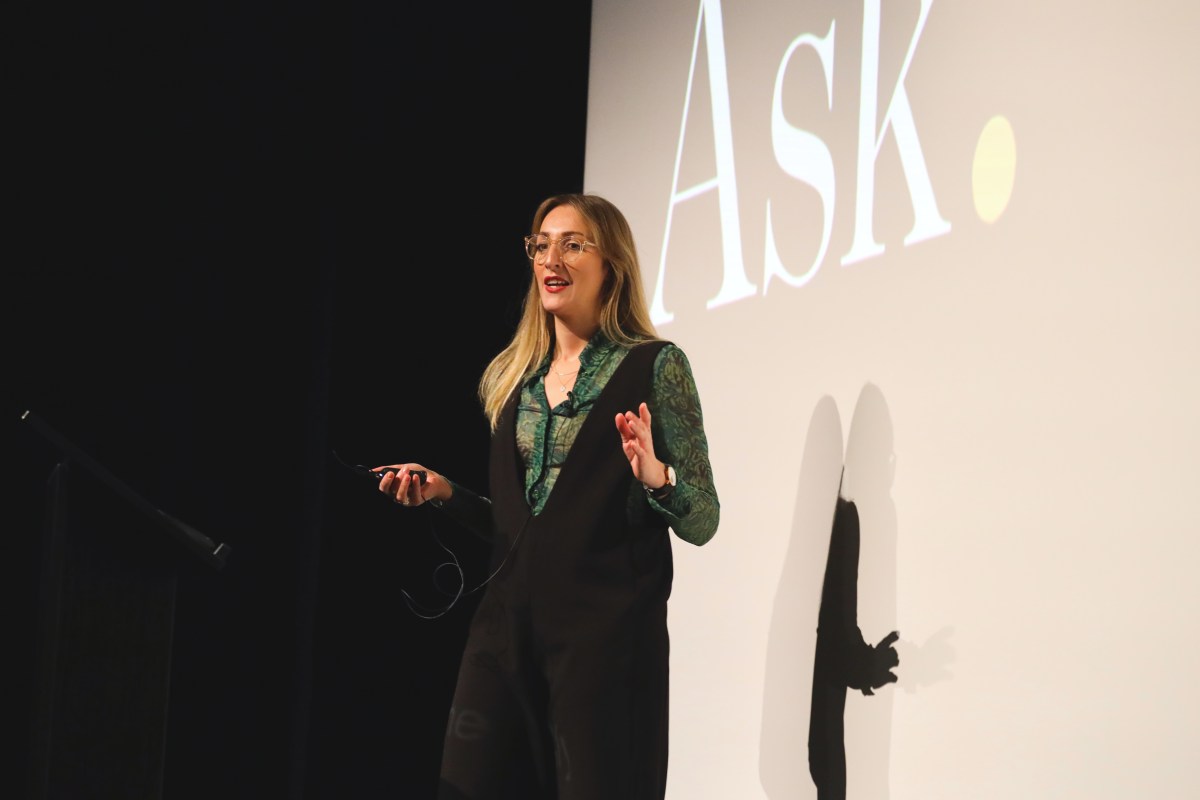
Ellen Donnelly is the founder of The Ask. Her shift to solopreneurship? Training as a career coach, building her dream role, newsletters, and a north star bracelet guiding every step.
Ellen has built a six-figure coaching & content business, changed career paths (twice), travelled and worked remotely living on four continents, and advises VC-backed startups on talent strategy.
I went to her Talent to Money virtual summit for founders in 2022 – an excellent event.
Great to catch up again last week and chat about newsletters & branding. She likes ‘The Shift’ as a name; I’m happy to hear. I’m sticking with it as it’s about inner transformation and fulfilling our potential. Enough angst!
These are her best tips on building a profitable business around yourself…
Tell us about yourself and why you started The Ask
After supporting entrepreneurial professionals with their startup careers as a headhunter and Head of Talent, I observed a generation of people confused about navigating professional decisions.
We live in a world of infinite options, changes, emerging innovation and starting a business has never been easier. The most ambitious people are keen to succeed, but the confusion often gets in the way of their success.
I saw how coaching and education could guide people to make better career decisions, and myself wanted to find a better path. Three years on, running The Ask has been my most fulfilling career experience yet!
Who are you serving? Target audience and niche?
My niche is now tightly focused on those who want the next chapter of their professional lives to be working for themselves. They are working out how to piece the self-employment puzzle together in a fulfilling way that also brings in a sustainable income.
This is achieved through a coaching approach I’ve designed that helps clients to tap into their existing skills and expertise (I call this their ‘Unique Contribution’) and then take the action that builds a business around doing what they love.
I believe a one-person business model is the answer to finding your own entrepreneurial calling and doing the work you were meant to do. Here’s the process and how it all comes together!
Your newsletter powers your six-figure coaching business – how did you get your first 1K subscribers?
Early on, I recognised the importance of email in online business building (I thank the book Content Inc for that!) and was fortunate enough to discover Substack in March 2020, just as the world shut down and poured my creative energy into my newsletter as a channel.
The more I wrote, the more I loved it. Growing the list became secondary to simply putting ideas out there, but the more coaching clients came in, the more I decided to double down on newsletter growth. This then became about trying lots of things and some shameless self-promotion!
Today there’s 3,700 readers, which mostly organically grows by its own accord. I shared these tactics to reach the first 1K in a year in this post.
Your business has an educational, content-rich angle – you do the creative work and the strategy. How do you manage your time & avoid burnout?
Part of this is mindset, as I never see marketing or content as separate from running the business. It’s also an avenue towards clear thinking, as long-form writing has helped me consolidate my thinking and observations gained through coaching.
Then there are the practical decisions, such as focusing on quality over quantity and keeping two days free of calls weekly. These days, it’s about content creation and admin, and this boundary has been essential for me to maintain balance (no one wants to work with a burned-out and stressed coach!).
Marianne Lehnis said that successful entrepreneurs have an 80/20% focus on sales compared to everything else. Do you agree?
That’s interesting. My perspective is that if the content is doing its job, it’s creating sales, so these are one and the same thing.
The importance of selling can’t be underestimated, as it’s the lifeblood of any business.
In coaching, many new entrepreneurs avoid sales like the plague, afraid of seeming ‘pushy’ or feeling unclear about HOW to sell. I love supporting people’s confidence in selling as it’s a huge self-growth journey, as it’s very often all about having a supportive mindset and self-belief.
I can say this, having sold hundreds of thousands of pounds of work now, but at the start, finding the entire process a minefield and source of angst! We aren’t taught to sell unless we join the sales department when it should be a life skill!
What’s the best piece of advice you’ve gotten on creativity and entrepreneurship?
There is a huge overlap between entrepreneurship and art – a lot of ego and vulnerability is tied up in each. This became clear early in my entrepreneurial journey when I read two formative books about creativity: The Artist’s Way and The War of Art.
The advice in both books taught me the importance of putting the PROCESS above the outcome, aka creating without any expectation of what will happen. And removing the fear and resistance we face to control how our work is perceived.
We can’t predict outcomes, virality, or other people’s tastes, but we can control showing up consistently and putting the work in. That’s been my philosophy.
Tools & Resources for one-person businesses…
Not exactly an unknown tool, but I couldn’t live without Notion for powering almost every aspect of my business!
I am also a fan of communities where you can meet like-minded people who share your same goals and frustrations but where you might ALSO meet your clients and supporters. These have always been worth the £10/month or whatever they charge in the business and enjoyment created in return.
The Business of Expertise by David Baker is great for anyone running a client-led, expertise-based business.
What’s your top tip for personal branding on LinkedIn?
Try and enjoy it! I previously got too caught up in having the perfect post format, style, or strategy and then gave up.
Now, I am back on it, and I post what feels true and authentic in that given moment, provided I can relate it back to my services in some way. That’s taken a lot of the heaviness out of it.
Not everyone can create on demand, so I suggest finding 2-3 talking points and content pillars with my clients and experimenting with different ways of writing about them!
Keep adding to your own ideas bank. Then you can compound your ideas and posts and be memorable in the process due to the repetition.
You spoke at YATM Creator Day 23 – any takeaways to share? What are some of the challenges the creator economy is facing?
I talked about doubling down on your uniqueness regarding your one-person business model and doing the work you were meant to do in this world – letting the noise and distractions fade away in the process!
The entire day had a similar theme around authenticity and honing into your core beliefs.
For creators, there is no alternative to knowing yourself and your skills well and focusing on doing exactly that, becoming the go-to person for your thing.
The creator/one-person business model world is crowded and will only become more so, but no one can be more ‘you’ than you can or take this away from you. Own it!
New YouTube channel! ‘To say this has been a steep learning curve is an understatement.’ How’s it going?
YouTube was a learning curve for sure, and whilst I am proud of the quality of videos created, I have decided to pause it for the time being. It’s a LOT of work (10-15 hours per video), and with a full coaching practice, I couldn’t maintain it and justify the time investment.
The lesson has been to be more realistic with my time in the week and consider my target clients’ needs – many aren’t looking to YouTube for the things I support.
What are your plans for The Ask in 23? Where would you like to be this time next year?
In one year, the goal is to have a more widely established authority as a coach for one-person business owners who want to build a profitable business around themselves (without investors, a big team, or overheads).
That will include different services and IP to meet people where they are on that journey: exploring, starting out, or pivoting.
To read Ellen’s writing and learn more about her work, head to The Ask.
Book a coaching consultation and get a bonus ‘Personal Brand Audit’ session if you sign up for a coaching programme (mention The Shift).
Her book Happiness Becomes You is about her spiritual journey and ‘like reading sunlight.’
The Classifieds
Word of mouth not cutting it, and not sure where to turn? Drum up new clients in one afternoon with this rapid course from Lex Roman. Use code THE SHIFT for 5% off.
Missed CEX? Get access to ALL the recordings, on demand, with a Digital Pass. Over 40 hours of keynotes and breakout sessions to help you build and grow your content business. Use code [nikanikatalbotio] and save $100 here.
The Artisan’s Way writing course – a five-week journey for writers ready to break free from average. Connect more deeply to yourself and your craft and ship the best writing of your life.





 Nika
Nika 