Categories
Newsletter

The Shift: Issue #28

NUJ #FairDeal4Freelances – a 10-point plan; Calls for a Freelance Commissioner; Free creative training courses.

The NUJ has published a freelance charter as part of its #FairDeal4Freelances campaign.

It calls for:

1/ Trade union collective bargaining to improve T&Cs for freelancers side by side with staff.

2/ Fair written contracts for asserting your rights.

3/ Respect for their creators’ rights and unwaivable moral rights.

4/ Equal rights with employees: sick pay, maternity, paternity and parental leave, unemployment benefit, full access to benefits.

5/ Choice over how you freelance and are taxed, with an end to advance tax payments.

6/ Work free from pressure to operate on a PAYE basis or through umbrella companies.

7/ Equal health & safety protections including training & insurances.

8/ Fair fees and terms and prompt payments.

9/ Dignity and respect at work, free from bullying, harassment or discrimination.

10/ Equal professional rights, including the right to protect sources, seek information and uphold ethical standards. See more.

Categories
Newsletter

The Shift: Issue #26

Sole trader vs limited company or umbrella – what’s best? IR35 changes; Parliamentary debate on the future of work; Seth Godin on creative practice.

I had to set up a limited company last year for a new contract role via an agency. My tax status only came up after I’d done the interview, a written test, and been offered the role. My agent said, “oh, we don’t work with sole traders.”

It was a chunky project – a six-month contract to write a book for a big brand and they were happy to pay my day rate, so I went for it. I set up a limited company via Companies House – fast, no-nonsense, and costs £12. I had to sort out business insurance (took much longer), an accountant, and a business bank account with a UK address for IBAN (EUR) payments.

A bit of hassle for one contract but that was the deal. And I wanted the job, so I did it but not happily. I’ve been a sole trader since I started freelancing back in 2002 and was gifted a limited company once (we broke up, I wasn’t ready; I have commitment issues). I don’t think individuals should operate as companies unless you’re employing someone. Nor should agencies and companies dictate your set up. These roles are often last-minute so you’re under pressure to act quickly or someone else will get the gig.

Anyway, the project went well – a good challenge and I learned a lot. Great to work with a team and have a physical product at the end of it. The contract was due to be extended in February to finish the editing, but this fell through with lockdown. Things have been pretty quiet on the contracting front since. Companies have cut budgets this year, which tends to hit freelancers first, and bigger clients are preparing for IR35 changes next April which will bring private companies into line with the public sector. Many have now banned the use of limited company contractors which is the way most contractors have operated up to now. See more.

Categories
Newsletter

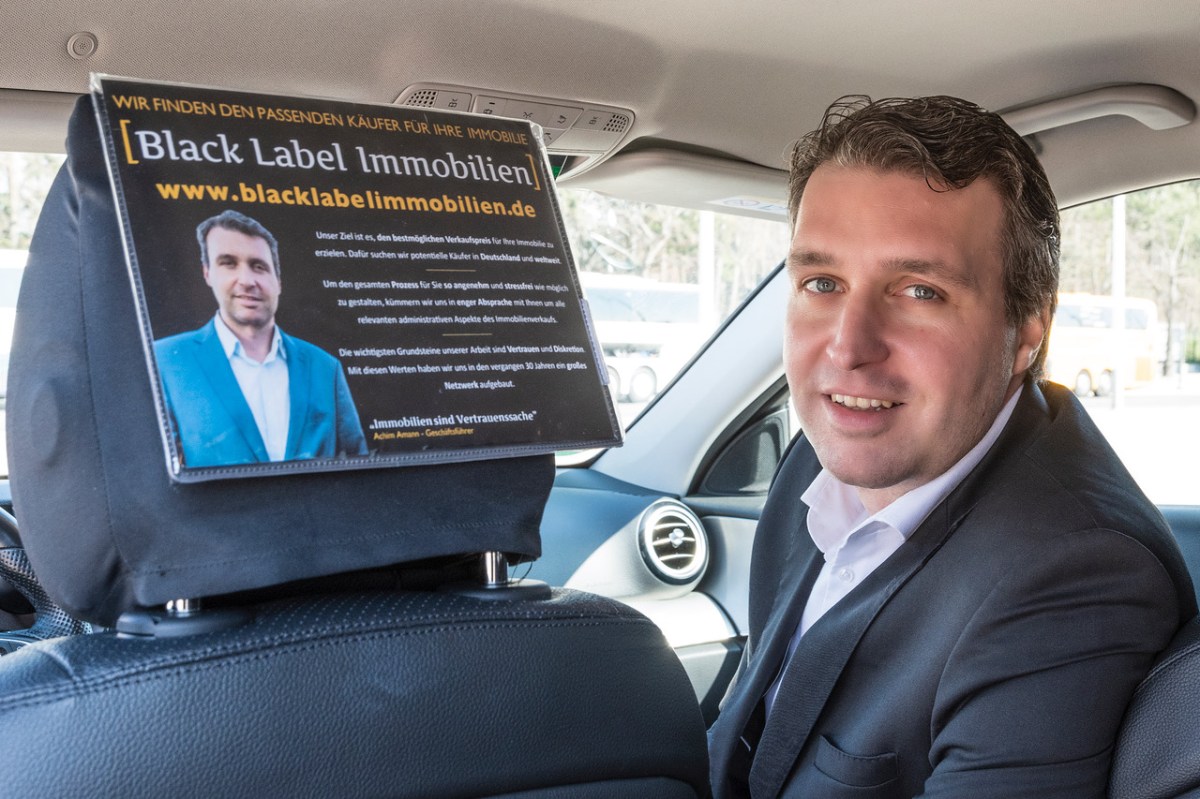
Interview: Achim Amann, Black Label, Berlin – “The state has a lot of credibility right now. They decided to help the economy by giving freelancers 5k and small companies up to 15k.”  

Germany has had twice as many diagnoses of Covid-19 but a much lower number of deaths than other countries thanks to mass testing and a fast lockdown. The state has also asked humanities academics to advise on ethical and human approaches to the lockdown. The 26-strong working group – historians, philosophers, and teachers – pulled together this report, working quickly via Zoom. The government of North Rhine-Westphalia, its most populous state, has also enlisted an eclectic mix of experts – businesspeople, telecoms executives, and legal advisors to share their views on the lockdown exit strategy.

I asked Achim Amann, co-founder of Black Label Properties in Berlin, how the pandemic has affected the real estate industry, and what support is available for freelancers & startups in the creative capital.

Germany has had a much lower number of deaths than in other countries. Why do you think this is?
As I see it, the main reasons are the mass testing approach and better organisational skills – one of the strengths of our culture plus a general acceptance of the shutdown measures. We do test a lot of people, but we still need more testing. If one hospital doesn’t have enough capacity, patients are being transported to the next one. Also, our lifestyle is very different from countries like Italy and Spain. We have fewer people per household, and elderly people live in their own apartments. 

What measures have been taken in Berlin for the lockdown? Massive state surveillance or self-responsibility?
The state closed schools, kindergartens, cinemas, and cancelled events. There is less public transport, and people are working from home where possible. They closed down all shops that don’t offer food and drugs, etc. We don’t have massive state surveillance like Austria, and there is a lot of self-responsibility. Most people follow the rules I would say.

Do you think the state has handled the emergency well and fast enough?
Yes and no. Well enough – yes, but not fast enough. Our government wasted time in January and February when we could have done much more. Helping other European countries has only just really started. This should have been done much sooner, for example, with Italy. But since the government made their decisions, we all feel a lot better. The state has a lot of credibility right now. Especially when they decided to help the economy by giving freelancers 5k EUR and small companies up to 15k EUR – that was a sage move that helped to keep people calm and happy. 

How has it affected the real estate industry?
We are fully operational. We have fewer vendors and buyers than last year but a higher quality of leads – there are fewer tourists out there as we say. Business, in general, is very good in our industry. We have decided that everyone should work from home if they don’t need to be in the office physically. We have implemented Zoom in our team meetings. We wear masks to do viewings and practice social distancing. With legal appointments, we make sure there’s enough space between the parties. We have cut costs on portal marketing and invested more into our own website and marketing team instead. The only real negative we can see is the lower speed of banks financing our clients. But they are still financing them, and we’re getting deals closed and exchanged.

What has the government done to support Berlin’s fast-growing startup scene?
They have given 5k EUR to one-man shows and up to 15k EUR to small businesses. This is generous plus tax reliefs and other advantages such as the government will cover up to 80% of employees’ salaries so the company is only paying 20%. It’s a very fair deal and much better than firing people.

Were you prepared for this – will it change how you operate?
Yes and no. We have a strong business and reasonable cash reserves. No, as we’ve invested a lot into new marketing on social media and Google. We wouldn’t have spent as much on a third party. We haven’t laid anyone off, but we have cut costs on two freelancers. So far, we are safe. We reacted very fast in January as our Chinese Sales team told us what was coming. So, we had an extra two months to get prepared.

Do you think China should offer some kind of financial compensation to other countries?
There is no point in finding a scapegoat. Actually, the Chinese are now bringing a lot of business to Europe. They are investing a lot in the German economy as well as in property. To start trade wars as the Trump government has doesn’t help.

www.blacklabel-properties.com 

Categories
Newsletter

Corona Diaries: Workers Who Fall Through the Cracks

Thank you, Harriet Harman!

The Labour MP for Camberwell & Peckham has written a letter to chancellor Rishi Sunak on behalf of self-employed creatives who fall through the cracks re government support for coronavirus.

Picture 1

“I am writing to ask what further provision you are considering for these self-employed people who fall between the two schemes and to register my backing of Equity’s proposals to address this issue.

“I am concerned that many self-employed people, those working on a series of fixed-term PAYE contracts and those operating as limited companies are not eligible. This will disproportionally hit those in the creative industries.” Well said 🙏.

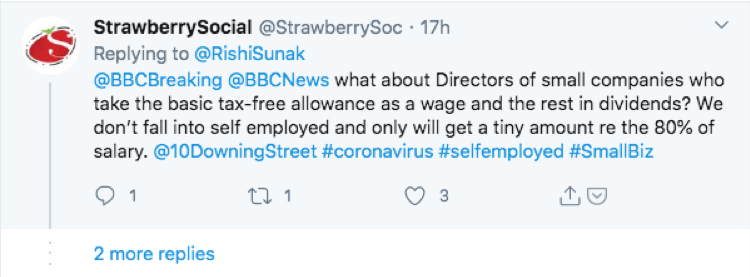
The government has done a fantastic job pulling support schemes together at speed during this crisis. Inevitably there will be holes and not everyone is eligible. As a sole director/limited company, I fall through the cracks. I was due to start a second contract via an agency which has now been withdrawn. See this thread on LinkedIn from workers who fall through the cracks. “I’ve been working for a year. I don’t regard myself as new.” – a PR/comms consultant messaged me.

Picture 2If you’re in the same boat, here’s Martin Lewis, MoneySavingExpert.com. More advice in his guide here.

Picture 3So, you may be able to furlough PAYE pay – i.e. get 80% of salary up to £2,500 a month. This isn’t likely to be huge as most earn more via dividends (no help there), but it’s something, and you can combine it with universal credit. But only if your PAYE scheme was created on or before 28 February 2020. And with Universal Credit, what happens if you have money set aside in your business account to pay tax/running costs and are over the savings threshold? Are you then ineligible for support? I’ve asked for clarification as many contractors will be in this position.

If I do furlough myself then technically, I can’t work for ‘the firm’, I can only perform statutory director’s obligations e.g. official legal filings. That’s not practical. I can’t not work for three months – I’ll have no business. I’m constantly pitching ideas, networking, marketing myself online, applying for contracts etc. Am I supposed to write letters to  ‘furlough’ myself and then ‘employ’ myself again? It sounds bonkers! It’s also unfair that sole traders are eligible for a grant AND can carry on working but the same rule doesn’t apply to sole directors. Many of us have no option other than to incorporate as Ltd to get agency work. This is one thing that could be changed along with abolishing the savings rule for Universal Credit for the interim, and including dividends in PAYE income. IPSE has some good ideas here.

The other option is to apply for a Business Interruption Loan – open from 6 April 2020 and now expanded to include SMEs who didn’t meet the criteria before. This is the last resort as I’m debt-averse these days. I don’t have an overdraft and I wouldn’t be eligible as I’m paying off debt and can’t take out credit.

So, it looks like it’s Universal Credit or nothing – if I’m eligible. As Harriet Harman points out in her letter: “Current government advice is [for her] to sign up to Universal Credit which doesn’t cover her monthly rent, let alone bills or food.

“There can be no justification for self-employed workers to not receive the same level of support as employed throughout this Coronavirus crisis.

“The creative industries contribute over £100bn to the UK economy and are vital for our culture and global identity. When this crisis is over, we will need this industry to be strong and at the forefront of our economic recovery.”

Thank you to Harriet Harman, Tracy Brabin and the many other MPs and business leaders who are lobbying and campaigning to give self-employed creative workers a voice. It is much appreciated.

Have a question for Rishi? Use the hashtag #AskRishi on Twitter. The best way to engage with MPs and government is via Twitter.

Picture 4

Picture 5

The Guardian: Millions in UK ‘could slip through virus wage safety net.


Categories
Newsletter

Corona Diaries: Government Package for the Self-employed – are you happy with it?

Rishi Sunak, the chancellor, has just announced outline details of the rescue package for the self-employed.

Here’s a summary of the key points from Daniel Barnett Employment Law:

  • a newly self-employed income support scheme will pay self-employed people a taxable grant worth 80% of average monthly income, capped at £2,500pm
  • income will be calculated by taking the average income over the last three years
  • self-employed people can claim these grants and continue to do business (so, it’s not the same as furlough leave, where employees have to remain at home)
  • the scheme is open to anyone with trading profits of up to £50k (this covers 95% of self-employed people). Self-employed people who earn more will not qualify
  • the scheme is only open to those who make the majority of income from self-employment; if you are employed but have a ‘side job’ which is self-employed, you will not be eligible
  • the scheme is only open to those who have submitted a tax return for 2019 (to minimise fraud). However, those who did not submit their tax return by the due date of 31 January 2020, and have not yet submitted one, can still submit a tax return for 2019 within a further four weeks from today
  • there are no steps to take. HMRC will contact eligible self-employed people directly and pay the grant straight into their bank account after inviting them to fill out an online form
  • the self-employed income support scheme will be open to people across the UK for at least three months. However, the scheme is unlikely to be up and running before the end of June, so it will not help with immediate cash flow issues

Seems like a fair and generous package in line with what’s being offered to employees, but not all freelancers will be eligible.

Initial thoughts from my NUJ colleagues:

“I’ve just watched Sunak’s briefing, and am relatively pleased with what has been announced. It doesn’t go far enough to help those at the bottom of the freelance earnings scale, but the timescale for payments notwithstanding, by large it seems fair and reasonable.

Sunak claims that the scheme will benefit “95%” of the self-employed and stated clearly that the remaining 5% are those with profits of over 50K/year who won’t be ineligible for the income support grant. But what about those who, say, became self-employed in the last tax year, and have savings? They cannot claim Universal Credit. Sunak’s 95:5% ratio cannot be correct, and I suspect a significant number of self-employed will suffer.” Dr Francis Sedgemore, Chair, NUJ Freelance Industrial Council

“Sky News reported that only a third of freelancers could be eligible, something to do with them paying comparatively less tax.

Ltd companies are apparently not eligible, those who already received top-ups from Universal Credit, moved to UC from existing benefits like Working Tax Credits, (I know of several freelancers in this position) not eligible.

Twitter is already full of a lot of people who became self-employed since the beginning of the last year tax year who are ineligible, there seem to be a lot of these around, possibly a higher number than anyone imagined.

The money will be with freelancers by the beginning of June, backdated, but what are freelancers supposed to do until then?

Those who earn very slightly more in employment than in self-employment in the last tax year are also ineligible.” Matt Salusbury, NUJ London Freelance Branch Chair, Deputy Editor, The Freelance

“It’s certainly more complex than the headline leads us to believe. I’ve seen a lot of people express concern that that due to starting freelancing recently or having time out for caring/illness that they will miss out on this package.

Some photographers will have high overheads for studio/office rent, equipment lease fees, insurances and software.” Dr Natasha Hirst, Photographer, Freelance Industrial Council  

NUJ statement here.

And from Caroline Norbury, CEO of the Creative Industries Federation and Creative England:

“We are seeking urgent clarity for those creative workers who may be most in need and fall between these schemes including those who commenced self- employment after April 2019, recent graduates, those paid in dividends, temporary workers and those short-term contractors normally paid by PAYE. We must ensure that these packages are truly comprehensive and accessible to all.”

Lots of chat about this on Twitter – the main concern seems to be that nothing will be paid until June. What do people do until then? Can you apply for Universal Credit to tide you over? What if you’re above the savings threshold? Newly registered as self-employed? Or a contractor or a sole director/small limited company like me – and therefore not eligible? Not all sole directors are like Boris’ mates!

I asked my accountant Elaine Clark for advice and she sent me this post. Martin Lewis is on the case finding out about sole traders who are a Ltd company and whether they can get help through the Government package. In the meantime, let’s keep making noise on Twitter.

Send your questions/comments to @NUJOfficial @NUJ_LFB @Bectu @Creative_Fed @EquityUK @CarolineNorbury @TracyBrabinMP @IPSEWestminster @RishiSunak and tag me @niccitalbot.

It’s Friday. It’s spring – don’t forget the clocks go forward. Enjoy the sunshine and have a relaxing weekend.  

Photo by Andrew Neel on Unsplash

Enjoy reading this?

Clear messaging (& tone of voice) is crucial at all times – not just during coronavirus!

If you need a little help with your marketing activity in the coming weeks – get in touch today. Nicci@niccitalbot.com.