Categories
Newsletter

Eat well: how to go on a content diet 🍕

Weekly curated tools + resources for writers – thinkers, makers and builders ✍️

I set myself a goal at the beginning of the first lockdown to do 100 days of fitness and get out every day for a walk or run. I paid for the Peloton app, bought new running shoes and set my goals on Twitter. I’ve been on a gluten-free diet for a couple of years to help reduce inflammation in my body. I’ve prioritised my physical health and made exercise a daily habit, and I feel much better for it. 

But I can’t say the same about my content diet. I’m not addicted to working, but I have an information addiction – a thirst for knowledge and curiosity about what I don’t know. I like learning new skills, going down internet rabbit holes, discovering online communities and parallel universes. I spend most of the day on my laptop and justify it as necessary as I run an online business and do social media and content for clients. It’s my job to keep up-to-date with what’s going on in the world.

I’m happy to put the hours in as I love working for myself and building digital products that scale – working towards my end goal of financial freedom. I also love the internet and enjoy working with cool people 🙂 

‘I’m just pottering in the garden’ has become ‘I’m just pottering online’. I actually said that to my sister last night 😳

The downside of knowledge work and all this scrolling is the feeling that I’m never done. The treadmill never stops. It leaves me with low-level anxiety – have I done enough research on this topic to publish it? Could I have tackled that situation in a different way? It can leave you feeling drained even though you might not have much work to show for it (internet browser history aside!) There’s also homeworkers’ bum🔻 and mouse arm syndrome – I asked Siri to scroll a website for me this morning, but she didn’t understand. And with smartphones, work is in your pocket.

The information superhighway – we’ve never been so connected, but the irony is there’s not that much information out there on how to manage all this information.

Grow a bigger brain and have better thinking 

Polina Palinova wrote a brilliant piece last year on how to improve your content diet and says, ‘what you eat is who you are, what you read is who you become’. We spend a lot of time talking about food and celebrity chefs but far less about our information diet. She quotes NYT columnist David Brooks and his ‘theory of the maximum taste’ – the idea that your mind is defined by its upper limit – the best content it consumes and that exposure to genius has the power to expand your consciousness. You’ll grow a better brain and sharpen your thinking.

You’re not the average of the FIVE people you surround with. It’s way bigger than that. You’re the average of all the people who surround you. So take a look around and make sure you’re in the right surroundings – David Burkus.

So, the first step…

1/ A content audit – where and how am I consuming content?

Some digital gardening required.

  • Gmail inbox – I’ve spent hours pruning it, but it’s now back up to almost 3k emails
  • Social media feeds – Twitter, Clubhouse, LinkedIn, and YouTube are my main channels. Also: Reddit, Indie Hackers, Product Hunt 
  • Newsletters – direct to my inbox and via Substack Reader
  • News websites
  • Podcasts/music/film – Apple Podcasts, Spotify, Netflix, iPlayer 
  • Slack/Discord communities – many! Bookmarked on my laptop 
  • iPhone – notifications are off, but I’m usually connected 

2/ Setting goals

It’s not about doing a digital detox but having a better balance and a higher quality information diet. I want to read more long-form content, books, newsletters, podcasts and spend less time scrolling news feeds and Twitter – not a relaxing user experience. 

3/ Paying attention to my habits and how I’m feeling

I walked to work in a cafe this week, had a massage at lunchtime, and bought a magazine, which gave me a lift. What I miss about newspapers is the feeling that you’re done – there’s nothing more to read until the next issue. I’ve printed out all my UX coursework to relax and read offline (all course material needs a print button). I’m also craving podcasts which I listen to when I’m walking. This tells me my information diet needs some work.

4/ Using Mailbrew
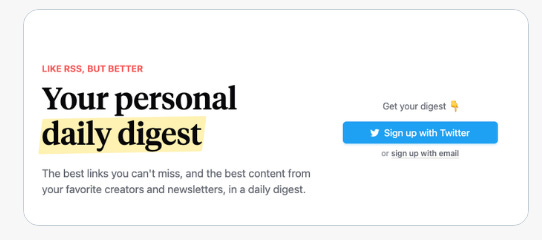
build your own digital newspaper

I’ve been experimenting with Mailbrew this week. Tagline: Like RSS but better. I’ve been looking for something like this for a while – Feedly is great for RSS; Substack Reader and Stoop for newsletter curation, but the UX is a bit fiddly. Mailbrew is a pleasure to use – a simple interface and easily customisable. It’s like building your own digital newspaper. I can put all my feeds in one place – calendar, RSS, newsletters, tweets from people I follow or Twitter lists – and read it as a daily digest in my inbox at 9 am. I also like how the emails are numbered, Digest #2.

I’m not the only one who’s excited about this product. David Heinemeier Hansson, the founder of Basecamp says he’s leaving Twitter to use Mailbrew. But then he’s using Twitter as a content feed more than for social interaction.
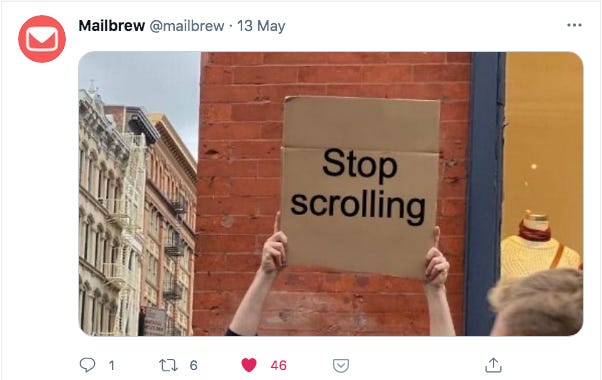
Of course, it’s an artificial construct – I can jump online at any time if I want to be social which is what ‘social’ media is for after all, but let’s see if it recreates the sense of finishing and gives me back more time and control.

Thinking about UX, I’m trying to design my day and curate my environment for better ideas and creative thinking. To be more intentional with my time and habits, and use the internet as a tool more than entertainment – hard when you’re using the same devices for both. Roll on the tiny inbox – from 🍕 to 🍉  and a sharper 🧠

A friend ditched her iPhone for a Doro flip phone – she loves the simplicity and accessibility of the design, and the satisfying snap – DONE. She said she feels more relaxed during the day. In his book Digital Minimalism, Cal Newport talks about an underground movement of executives that use dumbphones like the Doro. For the most part, in finance, i.e. hedge fund managers are moving millions of dollars in high trades every day. Hence, it helps to shield yourself from distractions of market information that could bias decisions and cost money. 

Not ready to give up my iPhone, but I can see the benefits of switching between the two or using separate devices for work.

I’m also going to buy a wall planner and stick work and personal goals on it so they’re visible – something Steph Smith talked about last week which made me think. We’re great at creating to-do lists for work, but how often do we track our personal goals?

How are you going to improve your content diet this year? 

Goings-On(line)  

Projects + pieces from around the web.

🗞 Your personal daily newsletter(Mailbrew – my affiliate code) – free to use with premium features.

🍉 How to go on an information diet(Ness Labs). This is the first time in history that humans have been exposed to such a constant flow of information and our brains can’t cope with it. Simple ways to deal with overconsumption based on the Michael Pollan Diet: ‘Eat food, not too much. Mostly plants’. For information: ‘Seek. Not too much. Mostly facts.’ 

📬 How to improve your content diet in 2021(The Profile). One of the biggest discoveries I’ve made in the last few years is simple but overlooked: What you eat is who you are, and what you read is who you become.

📚 The Information Diet(Clay Johnson) on the role information has played throughout history. How to stay smart, productive, and sane. He managed the online part of President Barack Obama’s first campaign for the White House.

📹 The challenge that fixed how I consume online content(My Student Voices) – Diogo Lança’s extreme experiment to tackle his YouTube binging.

Playlist of the week 


The future of work is now

Let’s build it. The Shift is a newsletter celebrating writing, good design, creative independents, remote working, growth, and technology. If you enjoy the content, please share it with friends or on social media.

Work Better. Live Smarter. Be Happier.

Question or comment? Email nicci@niccitalbot.io.
Was this helpful? I run on caffeine and Amaretti biscuits.
You can listen to this post here.

Categories
Newsletter

Geriatric Millennials + your digital body language 🤔

Ever heard of geriatric millennials? This Medium article explaining the term went viral last week and hit the headlines. It says kids born between 1980-85 are ‘best positioned to lead teams that will thrive in the hybrid workplace’. They spent their formative years on both sides of the analogue and digital divide, and have a crucial role in helping bridge the gap between ‘digital adaptors’ and ‘digital natives’. 

There was internet outrage – we like to fight about labels. Some people had fun with it, adding #geratricmillennial to their handle and asking about discounts. Others were offended by the term and suggested a name change. Can we have a sexier name? How about Elder Millennials or Xennials? I find that a bit sad. If we don’t like the term geriatric, we need to rethink how we view older people.  

Of course, labels are silly – a marketing ploy to put us in boxes and sell us stuff, but the argument she’s making is right. ‘The speed of technological adoption makes it wrong to see an entire generation (spanning almost a 20-year difference) as being the same.’ Geriatric Millennials straddle the digital-adapter-native divide and are often able to live in two worlds – they are comfortable with both communication styles. 

Age plays a partial role. We’re individuals – there are ‘Millennials’ who hate Zoom and love their phones and ‘Gen Xers’ like me who don’t answer calls and prefer texting and Slack. It shows the benefits of having a diverse team – we can all learn from each other. 

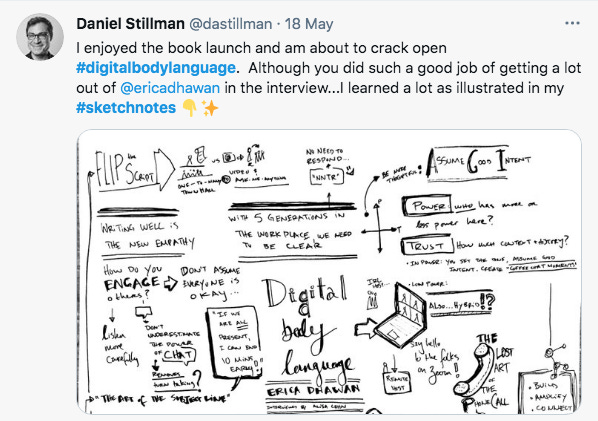
Anyway, great PR by Erica Dhawan, who wrote the article to promote her new book, Digital Body Language. She used a provocative term to spark conversation, identifies as a geriatric millennial and explains why they’re great. 

Erica spent over 10 years investigating, researching and finding new ways to encourage collaboration and communication at work. She grew up as an immigrant in America – caught between two cultures, and says we’re all digital immigrants now. She wanted to write ‘a nuts and bolts rulebook for clear communication in the digital age. Our shiny new tools are causing issues, and most of us speak badly in this world.’ 

I’ve been listening to the audiobook – lots of funny stories, anecdotes and practical advice, and it’s made me think about my digital behaviour. I think I’m doing my colleagues a favour with my short and snappy emails, but maybe they’re perceived as cold and distant. I still have an urge to multitask while on Zoom. Does it look like I’ve checked out when I look down at my phone during meetings or when I turn the camera off? ‘You’re a black square in the corner…’ 

I had a boss who told me off via email for not responding to my colleagues’ emails. I thought about it for a bit and wrote back in my defence i.e. of course, I’ll reply, there are lots of emails flying back and forth, I can’t work out of my inbox, I wouldn’t get any work done etc. I signed off with NNR – no need to reply (one of Erica’s recommendations) which went down like a lead balloon. I got an email back saying ‘I’m not going to respond to that.’ Cultural differences 😉

Great tips on how to model digital body language for your teams, inclusive language, digital empathy, how to enhance customer experience through words, gender differences in language, and emoji as the universal language. Her top tips? We need to slow down, assume the best intentions from people, think about how we make them feel, and put ourselves in their shoes. 

And a great lesson in resilience. Publishers told her the book was too niche, but its time has come – it was #3 on the WSJ Bestseller list 👏

As Seth Godin says, it’s a salve for exhausted Zoomers. 


We write the talk, not talk the talk in 2021 

Julie Sweet, CEO of Accenture says the way you write your emails can make or break your career. The best investment you can make is to develop one overlooked skill: written communication.

What’s the greatest advice I give? Develop excellent communication skills. Both in-person and in writing, such as when using email.

An employee, even a very junior person, if they can articulately summarize a meeting, if they can put together a presentation and even emails that are really salient and to the point, they are so valued.

Even more relevant given face to face communication is on the decline, remote work on the rise, and we’re spending more time alone, staring at our screens.

Mildly terrifying to think about how traditional body language is being shaped by our digital body language. What digital behaviours will we carry over in this new hybrid world? Will we be speaking in bullet points? Avoiding eye contact and sitting two metres apart in meetings? It’s a new frontier! 

A bit sad to read that unscheduled calls are perceived as intrusive and ‘as far as booking sales meetings were concerned, it seemed that the strategy with the least human interaction [setting up meetings via Calendly] delivered the most success.’ Where does this leave us? Loneliness is an epidemic and we have an empathy crisis. A YouGov poll found 30% of millennials said they always or often feel lonely, compared to 20% of Generation X and just 15% of baby boomers. It doesn’t ask why – but previous studies show social media and internet addiction play a part. 

A phone call is worth a thousand emails – and it’s becoming an obsolete art! We need a new ad campaign. As Bob Hoskins said, it’s good to talk. 


Photo by Alain Pham on Unsplash

👋 The Zoom wave

I can’t resist the urge to wave at the end of Zoom calls – glad to see I’m not alone. ‘I have never felt the need to wave in person,’ Kennedy, 36, the chief communications and marketing officer for the city of Olathe, Kansas, said. ‘What am I doing?’ Apparently, it’s a good thing. I’m not socially inept. 


Tools + resources →

📹 Erica’s Podcast interview with Rohit Bhargava: How to communicate with digital body language

🙇🏻‍♀️ Digital Body Language course

Hilarious thread from Danielle Rene on your favourite phrases to use in a professional clap back – those passive-aggressive emails. 

  • Just a gentle reminder
  • As we discussed previously (See attached email)…
  • lmao nothing is more passive-aggressive than “PLEASE ADVISE…”
  • If I’m feeling Big Petty I’ll hit them with… I’m not sure where your confusion comes from, but allow me to clarify..
  • Thank You in advance for your prompt response. I look forward to hearing from you.
  • Subject line: ‘Friendly reminder’

Vyv Evans on why emoji is the universal language. And it’s making us better communicators 😍

James Clear on writing as leadership at scale

A new WHO study finds working over 55 hours per week is considered a ‘serious health hazard’ 


Photo by Jason Rosewell on Unsplash

Playlist of the week →

9 essential podcasts for remote workers, managers + teams


The future of work is now

Let’s build it. The Shift is a weekly newsletter celebrating writing, good design, creativity, flexible working, growth, travel, and online communities. If you enjoy the content, please share it with friends.

Work Better. Live Smarter. Be Happier.

Question or comment? Email nicci@niccitalbot.io.
Was this helpful? I’m powered by caffeine and Amaretti biscuits.
You can listen to this post here.

Categories
Newsletter

The new Smart Villages – can you really get paid to freelance in Italy? 🇮🇹

Here’s to the new smart villages in Italy.🍷 🇮🇹 A number of towns have launched travel incentives – and will pay you to work from there.

Santa Fiora in Tuscany (the city of water and music) and Rieti in Lazio are both offering to cover up to 50% of your rent if you stay between two and six months as a remote worker.

Local rents are pretty cheap – €300-500 per month, so you could be paying around €150 a month to rent a cosy cottage or apartment in a beautiful village this summer.

Santa Fiora’s mayor, Federico Baloccchi, told CNN:

It’s not targeted at occasional touch-and-go tourists, but people who really want to experiment with our village life.

The goal is to incentivise people to move in and virtually work from here. We want Santa Fiora to become their flexible office.

It’s part of a 10-year development plan to revitalise rural areas which ‘is now more like 10 days [thanks to Covid] so we’re getting on with it.’ Phase one focuses on connectivity and tech and getting workers and firms in – to capitalise on the trend of people wanting space and moving out of urban centres.

And if you fall in love and decide to invest in tourism there, they’ll give you up to €30,000 to open a B&B, hostel or hotel.

I asked about eligibility for freelancers, age/earnings cap etc and ‘it is open to anyone in possession of a smart work job’. Pensioners welcome 😉 as long as you can show you’re working as an online consultant or indie contractor.

A great way to dip your toe in the water and test out Smart Village life.

What do you think, Mac? Could be fun and frothy 🐶 Feasting on roasted chestnuts and Montecucco wine.

Sea you there?

Apply here → Santa Fiora Turismo.

Other places to work different → Visit Tuscany.

Santa Fiora, Tuscany

Remote worker visas and opportunities →

Fueling the future of location-flexible work.

Antigua + Barbuda → Nomad Digital Residence for up to two years. 365 beaches in a year?

Barbados → Work from paradise. 12 month Barbados Welcome Stamp.

Bermuda a slightly more affordable one year Work from Bermuda visa. No minimum income requirement.

Cayman Islands Dreaming of a Cayman?Global Citizen Certificate for up to two years (if you make $100k)

Costa Rica Freelancer visa called the Rentista for up to two years.

Croatia → One year digital nomad visa. Currently hosting their first ‘Digital Nomad in Residence’ competition. 10 nomads will present how Dubrovnik can be a ‘digital nomad friendly city.’

Canary Islands → Launched a €500,000 campaign to lure 30,000 remote workers to the islands over the next five years: The office with the world’s best climate.

Dubai → one-year virtual working programme (and bring your family).

Estonia The first country to offer a digital nomad visa for remote workers.

Georgia Work Remotely from Georgia and be part of your own wallpaper.

Iceland new digital nomad visa for high earners to stay for up to six months.

Indonesia Planning a turbo-charged five-year visa for the wealthy ‘which could be beneficial to digital nomads.’

Madeira a new Digital Nomad Village for minimum one-month stays. Portugal also has a residence permit for indie workers and entrepreneurs.

Mauritius → a renewable one year premium visa for nomads (no fee!) 😍

Thailand Looking to overhaul its Smart Visa to allow digital nomads to remain in the Kingdom for up to four years without a work permit.

Interesting huh. Many more nations will follow suit and compete for citizens as Japanese technologist Tsugio Makimoto predicted 20 years ago – and he digs into the microelectronics and products that enable nomadism.


Can you still buy a house in Italy for €1?

Photo by Ehud Neuhaus on Unsplash

Technically, yes – but the houses are put to auction where people can bid on them. Some sell for €1, the average €5,000 – & then you have to pay for the renovations (say €20,000) within three years.

Rubia Daniels was one of the first to buy a bargain-priced house in Mussomeli, Sicily, in 2019 and bought two more for her children. So far, she’s helped 20 people buy homes out there and hopes to take another group in June. She didn’t intend to buy that many houses, but ‘it’s how the people make you feel that makes you say, ok, I’ll buy three.’

Already 100 people have bought a house, what are you waiting for? – Case1euro.it

Not for the faint-hearted but a hugely rewarding project – an investment in yourself, your family, and a new business opportunity (and I’ve seen €1 houses in France and Croatia too).

Here’s how it works.

1 Euro Houses Italy map


London Writers’ Salon: The future of newsletters & publishing w/Substack’s Hamish McKenzie →

Photo by Nicci Talbot

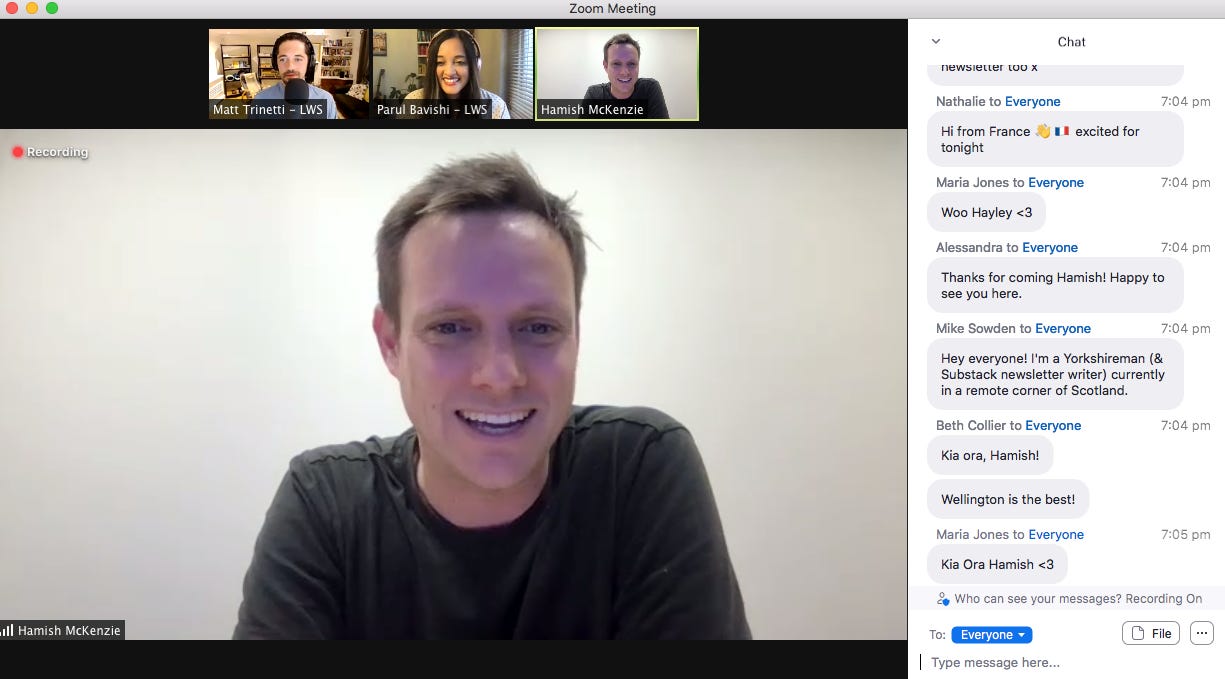
London Writers’ Salon spoke to Hamish McKenzie about his writing, the future of journalism and being co-founder of a tech startup, Substack.

Great brain food 🧠 Raw, revealing and honest – he’s no tech bro. Appreciate his vulnerability on his burnout at Tesla – engineers picking over his work, his confidence took a hit and it took him a while to come back. On the stresses of being a founder, which he describes as ‘psychological torture’. The Substack soap opera rolls on – their employees have had online abuse.

He comes across as someone who cares deeply about the future of writing and wants to create a thriving ecosystem for media based on a trusted relationship between reader & writer – rather than clickbait.

Substack is here to give the media ecosystem more options, not replace it.

He looked exhausted (it was 6 am in Wellington) and needs a break. I wanted to give him a big hug! So 👏 to Matt and Parul for a sensitive interview and giving him space to relax and open up. Refreshing for him to be asked about his writing journey and challenges rather than how to support everyone else’s.

On what writers can learn from startup culture

Put something out there, get feedback, tweak, adjust, don’t give up! Nothing important is ever easy or worth doing – stay focused.

It’s not self-promotion but giving yourself a promotion. Find the joy in marketing. You can’t be of service to this world if people don’t know you exist.

🔥People & Company is joining the Substack team to work on community upstart efforts for writers in its network. Spark the flame, stoke the fire, and pass the torch.

Watch it here. From menopause to McDonald’s: all topics are fair game at London Writers’ Salon, and they’ve built a brilliant online community. Join their Writers’ Hour Daily Writing Sprints.


Journeys In Sound →

Music was my first love by Daniel Schludi on Unsplash

Playlist of the week: John Grant


Featured Collection: The Mind at Work by Dropbox

This is your mind at work


Photo by John Schnobrich on Unsplash

Tools + resources →

✍️How to open up and create better work: An introvert’s guide to a more collaborative writing process. ‘As a UX writer, sharing early saves me time and breeds creativity.’

💡Hybrid vs remote work: everyone’s looking at big tech to see what they do next, but they’re all making it up on the fly. If you’re considering your options, here’s an open source resource that shows what firms are doing – thanks to Andy for sharing.

🚢Build an online writing habit in 30 days. Redefining the meaning of online community, Substack take note! Writing alone is hard; writing with a community is easier. Love this concept – thanks to Lauren for the tip-off.

🌵Burnout in Tech – Part 1: Declaring war. Actionable steps to fight it for yourself and others.

💰Twitter is rolling out a new tip jar feature to help you get paid for your tweets.

Happy hugging and café working! 🤗


The future of work is now

Let’s build it. The Shift is a weekly newsletter celebrating writing, good design, creativity, flexible working, growth, travel, and online communities. If you enjoy the content, please like it and share with friends. Thanks for reading!

Work Better. Live Smarter. Be Happier.

Question or comment? Email nicci@niccitalbot.io.
Was this helpful? I’m powered by caffeine and Amaretti biscuits.
You can listen to this post here.
Categories
Newsletter

Building Backlinks

What are they – why you need them + how they’ll help your business.

Building Backlinks to Your Site

Google has over 200 factors that determine your site ranking and number one is backlinks.

What is a backlink?

If you dabble in the world of marketing or web design, it’s a phrase you’ll hear bandied around a lot when talking about SEO (Search Engine Optimisation). A backlink is a link from one website to another. Like a ‘vote’ for a page, it tells Google the content is valuable and useful. Backlinks are the basis of Google’s PageRank algorithm.

The more Backlinks you have, the higher you’ll rank on Google.

Link building is an art and science, creative and analytical. It involves detective work, psychology, tech tools, and relationship building. It’s good fun! And it helps you build relationships with other business owners, and establish yourself as a trusted expert in your niche, so that people come to you for content and quotes.

Quality over Quantity

Google considers the quality of the link to be more important than quantity. For example, Sky News linking to your site would be a higher quality link than your local free newspaper. However, algorithms also consider how relevant the links are. If your links are coming from unrelated sites or pages, they will be regarded as poor-quality links. So be strategic in your outreach and target sites in your niche.

Backlinks need to Grow Organically

This means you can’t go on a backlink mission paying people to link to your site! This goes against Google’s quality guidelines, and you could be penalised. Google likes to see the links occurring over time are relative and preferably come from trusted sites with high Domain Authority. (Domain Authority works on a scale of 0-100 with 40+ considered good, 60+ excellent.) The highest score is 100 – sites like Google, Facebook, and YouTube. The more authority a site has, the more it can pass on to your site via a backlink.

How do you check Domain Authority? Use Moz’ free Domain SEO Analysis Tool to see your DA, top pages, ranking, keywords and more. Ahrefs has a Domain Ranking score which looks at the quality of external backlinks to a site, a Website Authority Checker so you can see your backlink profile (free 7-day trial for $7 if you want to see all the backlinks).

Create a spreadsheet and get this information down!

The only way to increase your website authority is to get more high-quality links to your site. 👇

8 ways to get Backlinks in 2021

1. Roundup posts

Send an email to some thought leaders in your space. Tell them you’re writing a blog and would love to include their feedback on a specific question/issue and that you will reference them, their website, and social profiles. Once you’ve published the post, let them know and ask them to share it on their websites and social channels. This will generate more traffic for your site and increase reach, giving a higher probability that someone will link back to your siteMake sure you’re following them and interacting on social media first – so you’re not pitching cold!

2. Link roundups

A link roundup is a daily, weekly, or monthly blog post that curates and links to great content online. Go to Google and type in “[Your keyword]” + “roundup” and see what results come up. Once you’ve found a roundup that seems like a good fit for your brand/content, send them an email. Here’s an example of what to say:

Hi [Site owner name]

I just came across your [Roundup name] today. Great stuff. 

I’m reaching out because I recently published a [Content description] that might be a good fit for the site [Your URL or blog post link here]. 

Either way, thanks for your time, and it would be great if you’d consider me for future roundups!

Thank you 😊

[Your first name]

[Pro email signature that links to all your profiles] so they know it’s not spam.

Remember, you are writing to a human. Personalise every email you send and gently suggest they include your linkable asset in the roundup, and if it’s a good fit, they may also share it on social.

3. Broken link building

This is a good strategy as you’re adding value to someone’s site by correcting a broken link and offering a resource. Focus on resource pages in your niche and try and find some with recent 404 errors. So, if you work in the fitness industry, Google “Fitness” + “Resource page”, “Fitness” + “Resources” or “Fitness” + “links” and see what comes up.

Add the check my links Google Chrome extension to find broken links. Then contact the site owner and let them about the broken link and that you’ve written a post on this content – feel free to use it on your resource page.

4. Loot your competitors’ backlinks

Use Moz Pro or Ahrefs Site Explorer (free trial) to research your competitors and monitor your niche. Find out where their links are coming from and start pitching to the same outlets. (FYI, podcasts are a brilliant source of quality backlinks and free therapy). Also, look for sites that list your competitors but not you and ask them nicely for a link – send them a useful resource.

5. Write testimonials for products/services you use

This can help you to earn a link from an authoritative website. If you’re using a product or service you love, send them a testimonial. They may add a link to your website without you asking.

6. Link reclamation

Try Ahrefs Content Explorer tool, Buzzsumo, SEMrush or Mention.com (all offer free trials). Google Alerts or Advanced Search is free (search using “[Your keyword]” and other nifty search strings, but it will take longer, and it’s hard to export data.

You can do the same with unlinked images, e.g. infographics or products. Use Google’s reverse image search and upload an image you think may be used online. Contact the site owner and ask them to credit you and link back.

Get into the habit of doing this quarterly – it’s good to monitor online conversations about your company. No doubt you’ll find loads of results, so prioritise the most authoritative sites.

7. Create linkable assets

Content is king! The best way to create organic backlinks is to create great content people want to link to consistently. So, blogs, videos, whitepapers, infographics, how-to guides, software, quizzes, and surveys. To help generate ideas, check out sites like Answer the Public and Google’s ‘People also ask’ to find what people are searching for information on. Then create quality content that solves their problem.

You can also pitch guest posts to blogs in your niche. Search “[Keyword]” + “guest post” or “[Keyword]” + “Write for us”, and you will find a list of sites with opportunities to pitch.

You can also promote your infographics online by submitting them to sites to help you get more backlinks.

8. Become a trusted source for journalists, bloggers, and influencers

Sign up for HARO (Help a Reporter Out) – a site that connects journalists seeking expertise for their content with sources with that expertise. Sign up as a source and look out for requests alerts for your industry. Pitch helpful information and your credentials, and hopefully, they will use you again. HARO a US site but now has UK categories. Also, check out #JournoRequest on Twitter and ResponseSource for UK focused markets.

Business is about human connection. Develop authentic relationships with people in your industry and become a trusted go-to source of information and you will organically get more backlinks. It’s great to have a support network to bounce ideas around, help each other out, and collaborate on projects and campaigns.

Happy link building!

To recap, link building is the most crucial part of your marketing/SEO. Use these strategies to help you find link opportunities, grow your authority, and you will see a steady improvement in your Google PageRank over time.

Remember to keep notes to track your progress. 🤗

Which link building strategy will you try first? Please post a comment and let us know what’s working for you. No time for backlinks? Give us a call, and let’s chat! 

First published on Perspective Marketing & Design – more about our services here.

Categories
Newsletter

How flexible working is a battle for equality

London Rising new online event series

#LondonRising on what’s next for workplace culture

Great insights into the future of work from Annie Auerbach, founder of Starling trends agency and author of FLEX – the Modern Woman’s Handbook; designer Thomas Heatherwick and Kevin Ellis, Chairman of PwC.

  • The office is evolving. It’s becoming a collaborative space for meeting and training. The strange old design briefs that banged on about workers as ‘cogs’ in the system and banged on about efficiency are disappearing. We’re now thinking of emotion as a function. If the five days on/two days off model is reversed, we’ll see more professional promiscuity, which means…
  • The office needs to work harder, not the people. The quality of experience will need to be higher. I love this: ‘The exciting bit – finally – the place of work needs to be a temple for the values of that organisation, not a gruntwork factory where the onus is put on the front desk.’
  • How do we make the office extraordinary? Like a shot in the arm delivering the company’s values? Take inspiration from religious buildings and how they engage people’s emotions and provide a nurturing environment. 
  • Creating meeting spaces that bring teams together. Clubhouse has a town hall update every Sunday, which regularly has overflow rooms – if this was a physical space, I’d imagine something like this – the Roman amphitheatre. Togas optional 😉
  • No one wants to work in an ivory tower. Companies are making changes, encouraging staff to go out for lunch instead of using the staff canteen to support the ecosystem around offices and connect with the community. The flipside is with WFA, you can support your local high street and get to know business owners for half the London price. 
  • Flexible work is an expectation, not a perk. Remote working has been gaining momentum for years, and Covid is the tipping point. ‘The genie is out of the bottle’. A recent survey said half of UK employees would quit if denied flexible working post-pandemic. And there are plenty of senior people who work part-time and keep it a secret.
  • Liz Truss, Minister for Women and Equalities, calls for flexible working to be normalised – a move that will boost employment in areas away from major cities and help turbocharge opportunities for women – who are twice as likely as men to work flexibly. 
  • All businesses are in a war for talent. Pioneering companies understand the need to ride the wave to get the best talent by giving people choice and flexibility. Great to hear PwC plans to roll out a flexible working policy that will allow its 22,000 UK staff to split their time between home and office. We should extend flexible working to blue-collar workers as well as white-collar.

I said no to an interview for a senior editor role this week as ‘they’re looking for someone to be in the office full time.’ So they will be hiring someone who can afford to live in London or commute in easily. I said I’ve been remote working for years as a single parent with a disability living outside London. What is the point of commuting to an office five days a week? I’d be too knackered to give them my best.

And good to hear Tony Blair (with his fab new hair – Brad Pitt or Gandalf?) talking about how we can move forward by working together. Covid isn’t ending – we’re in a new world and have to prepare for it. We need to use aid to quickly vaccinate the globe so countries aren’t isolated, and improve our cloud-based genome databases.

Tech is a huge opportunity

I disagree with what he said about remote working as a problem for new starters – we don’t need to be in the same room to learn – tech makes it possible to have many mentors virtually, and we can learn faster. Sharing confidential information online can be a challenge, but we have encryption and old school phone calls!

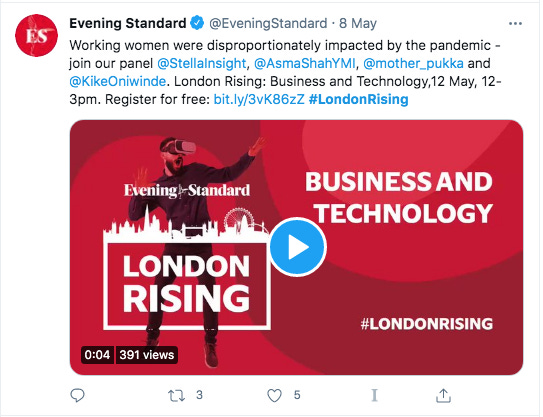
The business and tech event is on 12 May, exploring how the pandemic has impacted women and how technology can help us set better digital boundaries. I’m looking forward to hearing from Nicola Mendelson, VP EMEA Facebook and mum of four, on her challenges; Facebook’s research on how small businesses have been affected by the pandemic, and an insider view on the future of AR/VR – Facebook’s upcoming new smart glasses. 

The recurring theme at all the events I’ve been to lately is on building NEW, not building back better. We have a once-in-a-lifetime opportunity to reinvent how we live and work, so let’s not waste it. London should be shouting from the rooftops, loud & proud that it’s open for business with jobs and career opportunities for all.

Make flexible working a right from day one and build the kind of place where people want to work. Then we won’t need to talk about flex working anymore 😉

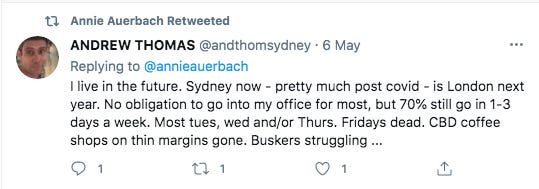
Interesting to see how things are going in Sydney – they’re a bit further along. Labor’s new policy would force companies to publicly release gender pay gap data to help close the gap.

Sector-themed events are convenient but they keep us in a box. It would be brilliant to see more cross-industry events like Creative Women, bringing people together from different sectors to network, brainstorm and help each other. More diverse experiences and perspectives can boost creativity and help with problem-solving.


Go deeper 🛠

new survey of 32,500 workers in 19 countries paints a picture of a global workforce that sees the shift to remote working as just the tip of the iceberg. We’re ready to build new skills, completely retrain and focusing on entrepreneurship.

Government taskforce urges permanent job flexibility for all workers. Millions could benefit from new rights to work from home once the pandemic is over. Even civil servants are now working flexibly ‘to capitalise on productivity gain’ – a bit of a u-turn, Rishi 😉

How flexible work is a battle for equality. New analysis – male-dominated firms want workers back at their desks… and are choking out diversity by cementing in less flexible working policies. 

A refreshing, optimistic take on the future of work from Elizabeth Uviebinene, author of The Reset: Ideas to Change How We Live and Work. ‘The future of work is community.’

Get ready for the new workplace perks. Out go gyms and free meals, in come gong baths and financial advice. It will be interesting to see how big tech companies adapt their giant campuses if more people choose to work remote. 

A Sydney fintech company’s approach to flexible work—and what lessons it can offer to companies elsewhere. And Atlassian’s ‘Team Anywhere’ policy.

What the tech world is doing to counter burnout. Microsoft’s new Outlook settings reduce meetings by five to 15 minutes. Give yourself regular doses of micro self-care.

New gen Tokyo conference room explores new workstyles to foster creativity. An experience to excite all your senses… 

Enjoy reading this? Sign up to The Shift for more updates.