Categories
Newsletter

Ground Zeroh: Bottle Alley, Hastings

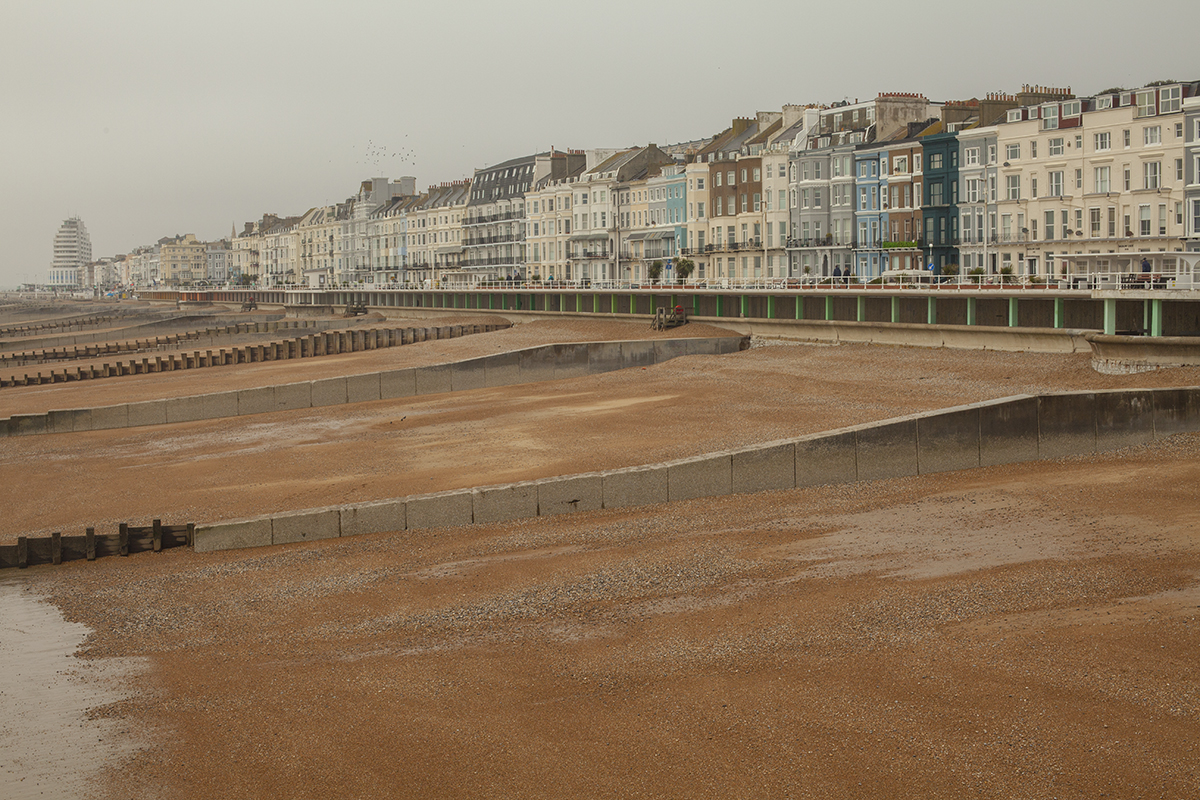
Daniel Hardiker and Neil Hetherington started working together as ZEROH on New Year’s Eve 1999 – a name inspired by new beginnings so it’s fitting that their initial project in Hastings’ neglected Bottle Alley was the first public art show in its 80-year history. Their second work, WaveLength, comes after the repairs and serves as a celebration of the iconic seaside structure. I met them to find out what’s in store for 2018.

What drew you to Bottle Alley?

How can you not be drawn to Bottle Alley? It’s an incredible space, unique to Hastings and we should be proud of it. We always take that route from St Leonards to Hastings and became really fond of it. It’s been neglected for years and people would avoid it because of the street drinkers and drugs. We got a lot of aggro when we were working on our first project, Point of Decay, as it was being used for drug dealing. We wanted to make it more inviting and encourage people to go down there and for the council to take more care of it as well. We knew they were going to redevelop the alley so we came up with a concept that would fit in with that in terms of commissioning art that would decay over time with the weather.

What was your next project?

WaveLength is our second project in the space, which was produced for Coastal Currents 2017 after the repairs. We painted 113 concrete columns of the passage in different shades of green and blue from east to west and yellow and orange from west to east. When you stop halfway along and look back, you can see the colour shifting like the sand. It’s a stunning effect and has a real rhythm to it, it makes you slow down and appreciate the view. We’ve had a really positive response with more people going down there and there seems to be more respect for space. There’s only been one incidence of graffiti since last September.

And now we have an amazing light installation….

A new lighting installation was launched in Bottle Alley in November 2017. The council has replaced some 500 metres of broken lighting with equipment that can be programmed for special effects and synchronised to music to create a sound and light show. We advised them on the lighting and produced a demo at the launch event to show local businesses and councillors what can be done in the space.

There are 1,524 lights and each one has its own address so it can be controlled as an individual entity. The potential is enormous – it’s a proper spectacle. The lights are so strong that they create their own bands of colour – pure whites and pure blacks and that’s something we want to play with in terms of sound and movement. The guys who fitted the lights were quite shocked – they didn’t envisage how they would look. We were there for the first test run and it was amazing to see the light coming towards you, it definitely makes you move faster!

Every Friday night there’s a light show in Bottle Alley, which is organised by the council in association with the pier.

How do you want to make people feel?

For the launch event of Point of Decay, we had a classical trio on a red carpet in the space. We’re really proud of that – it’s such an opposite feeling to how it is normally down there – using the language of privilege in a way to entertain people and showing how it used to be back in the day when the seaside was a destination. Hastings & St Leonards was a very social space in the 1920s/1930s so it’s interesting to reconnect old photos with the potential for what we can do now. Seaside architecture is very monotone and traditional, all white and beige. We really love the splashes of colour along the seafront and the lights add to that, It reflects the diversity of Hastings a bit more than the white architecture.

Did you have much support from local businesses? 

We applied for Arts Council funding through Coastal Currents, the town’s annual arts festival. WaveLength was supported by Trade Paints who provided materials and advice and Leyland Paints who provided the paint.

Our budget would have meant a more simple piece, but thanks to Trade Paints we were able to add two colour tones instead of one.  We had a small team of 5 – 6 artists working on the installation for one week and used over 200 tins of paint!

You said you were planning a live event in the space – how’s that coming along? 

We had plans to do something big in the spring but have moved this to the other end of the year, when the clocks go back, as we realised the people we wish to involve would need more time and none of us wanted to rush it. We want to do an event which is a little bit different, something people haven’t experienced before; a bit more challenging and less obvious. The musical response on the demo day was a real spectacle so we’d like to push that further and have a live element to it. At the moment the lights are pre-programmed and don’t cater for any live control so if we were to put an artist down there, we’d want to have the space to respond to them in a live way – that’s the goal for the next event.

What attracted you to Hastings?

We lived in Brighton in the early 90s when it was a vibrant, creative, edgy town and then it became a city and lost its identity. We stumbled across Hastings on a day trip to buy a camera. Driving by Marine Court we were amazed by the level of beauty of the architecture and the sense that it’s a real place to live with real people. Brighton had lost that a bit. We did the Hastings Moth Project, which integrated us into the arts scene – the work became a talking point and was a good way to meet new people. Since then, we’ve collaborated with a variety of artists on many levels and really enjoy the process. Andrew Kotting recently commissioned us to do the end title sequence for his next film, Lek and the Dogs, which has just had its international premiere in Rotterdam.

What else is happening on the arts scene?

We’d love to see more permanent public art in Hastings and there needs to be a space for artists to create and exhibit their work. There seems to be a hierarchy of acceptance for graffiti! If it’s not offensive and has some artistic merit like the Banksy in St Leonards then it’s more acceptable. The decision-making process seems to go up the ranks in the council. That kind of conversation should be happening in public and we would like to see an agenda for this and further conversations about permanent art. We have some fantastic street artists in the town and it would be nice to celebrate this in our public spaces. There’s been a lot of talk about a street art festival over the last couple of years and it would be fantastic if Hastings could develop this in the same way Blackpool has.

facebook.com: ZEROH
Categories
Newsletter

Interview: Paul O’Brien, CEO, Virgin Experience Days

I had the pleasure of interviewing Paul O’Brien, CEO at Virgin Experience Days, to talk about current trends in travel and the growth of the ‘experience economy’.

Last year, searches for experiences rose by 58% according to a new report by Hitwise and memory has now become the product. So what’s driving the trend and how can brands win in the experience economy?

Here’s what Paul had to say… Read more.

Photo by Andrew Ly on Unsplash

Categories
Newsletter

10 Reasons to Visit Rye, East Sussex

“Nice shoes.”

“You don’t miss me in these,” I laughed looking down at my battered fluoro Converse. I fit in with the colour scheme at Ethel Loves Me, a new interiors store in Rye, East Sussex. It’s busy too, always a good sign, which is what drew me in as I wandered up Conduit Hill to Rye’s main shopping street. “Come and have a look, it’s all work by local artists and makers.”

Part art gallery, part lifestyle store & gift shop, plus experimental space, Ethel’s aim is to showcase original pieces and collectables made in Rye. An elegant jumble of arts, craft, curios, upcycled, salvage, vintage and fun fashion – it’s a joy to stumble across something handmade that I really don’t need but have to have – funky bottles for Fairy Liquid or these fabulous knives (stick ’em in your herbs!). I also love the oversize striped furniture and adventurous paintings by Tina Kaul – (a journey to Berlin, New York and other places she’s lived) and work by former graffiti artist James Tomlinson.

So, I have a rare day to myself in Rye, a very nice feeling. It’s been a while since I last visited and I never get bored of coming here as there’s always a new shop, gallery or cafe to sit and read in. It’s a foodie place (annual Scallop & Oyster festival) and has an entrepreneurial, upmarket vibe. This goes back a long way. It has always been a port town trading in luxury goods and has had to reinvent itself since invasion. Ryers are very proud of the town’s ‘royal’ status, independent shops, literary connections, festivals, and it has some high-end places to stay. With excellent train connections to Brighton, Ashford & beyond (just 38 minutes to St Pancras on the high-speed rail), it’s easy to get to from London and there’s plenty to do in a day, weekend or longer break.

Ready to hit the Rye Trail? Here are my suggestions…

For book lovers… my first port of call is always Rye Bookshop. I can lose hours in the travel section, browsing biographies, local history and reading their recommendations (I love those handwritten stickers). All genres, regular new stuff and the staff are knowledgeable and enthusiastic. The woman next to me was addressed by her first name. Rye is the setting for the fictional town of Tilling in EF Benson’s popular Mapp & Lucia books (adapted recently by the BBC – a very funny tale of social climbing). The American author Henry James also lived in Lamb House, just around the corner and wrote three bestselling books here (ghostly turns and very atmospheric, it’s now a National Trust property which you can visit during the summer).

For local history… Rye Castle – Ypres Tower and Women’s Tower 
It’s the first time I’ve had a proper look around Rye Castle Museum and it’s well worth it. Ypres or ‘wipers’ as the locals call it was built in 1249 to help defend the town against attack, and has had many reincarnations since – it’s been a private residence, women’s prison (thought to be the only women’s prison to survive unaltered from the 1800s to present day), a mortuary and is now home to the castle museum. Great views of the town and harbour from the top and a humble medicinal herb garden hidden behind its walls.

For quiet time… St Mary’s Church, Church Square 

This is the biggest church in Rye and in a prominent spot at the top of the hill. The only pre-1200 building to survive in Rye and the former lookout point before the castle was constructed. Great views from the top of the tower. My favourite church in Rye, however, is the only Catholic one, St. Anthony of Padua, just opposite on Watchbell Street. It has a welcome sign outside the door in various languages, beautiful stained glass windows and is less busy so more peaceful. It’s where I always go to light a candle and say a prayer.

For a pint… Mermaid Street at dusk 
I couldn’t resist this beautiful photo by Helen Hotson, a landscape photographer based in Cornwall. She has captured Mermaid Street at its best, at dusk when you can nosy into other people’s homes (there was scaffolding up when I visited during the day so not quite so enticing to photograph). Once Rye’s main street (Middle Street), this is the vision in all the postcards. Cobbled streets and a pretty steep hill so not great for heels or buggies (took me ages in both). Have a drink in the Mermaid Inn, an ancient pub which is now the mainstay for celebrities, festival events etc. Charming house names too, ‘The House Opposite’ … ‘The House with the Seat’. I wonder if the owners get fed up with all the gawping?

For shopping… luxury and vintage goods… 
Rye is excellent for homewares, interiors, art, photography, books and unusual gifts. New since I last visited: Ethel Loves MeRye ChocolatesWiDEYE, an ethical beauty shop & treatment room, Rye Weddings, Rye CandyArt & Soul Gallery, and Corridor Café. I’m lusting after several pairs of beautiful retro Italian brogues from Crispin’s of Rye. There’s also Rye PotteryGlass Etc where misery, moans and frowns are banned – run by the Decanterman Andy McConnell – who once gave a talk at one of my Salons and had us all rolling around on the floor. Byzantium for jewellery and watches, butter knives and Beryl Woods Ware in Crock & Cosy on Strand Quay.

For tea and treats… 

I had a cream tea in Hayden’s – a lovely organic coffee shop and B&B with a lovely view from its courtyard and bought some Sicilian pastries (gluten free!) to take home from Rye Deli.

It’s a pleasure to wander around Rye on your own but if you want to make a connection with a local to uncover Secret Rye (buildings not open to the public like the Town Hall), I recommend booking a two-hour walking tour from Rye Heritage Centre (Thursdays, Fridays and some Saturdays).

If you’re here for longer take a walk or cycle out to Rye Harbour Nature Reserve, a conservation area just two miles out of town that’s home to 4,275 species of wildlife (more than 300 are rare and endangered in Britain). There are several walking routes depending on energy levels and you can visit the ruins of Camber Castle (guided tours during the summer). I also like to walk or cycle to Camber Sands, about an hour’s walk, for book and beach time. A pretty flat track and not that exciting but the view from Camber Sands more than makes up for it.

Getting there: www.visit1066country.com for accommodation and transport.

Photos: Nicci Talbot, Mermaid Street – Helen Hotson, Shutterstock.

Categories
Newsletter

The Lives of Lee Miller: A Woman’s War – Review

I went to Farley Farm House last week for a guided tour around the home of Surrealist painter Roland Penrose and American photojournalist Lee Miller. It is a low-key 18th-century house in Chiddingly, East Sussex managed by their son Antony Penrose.

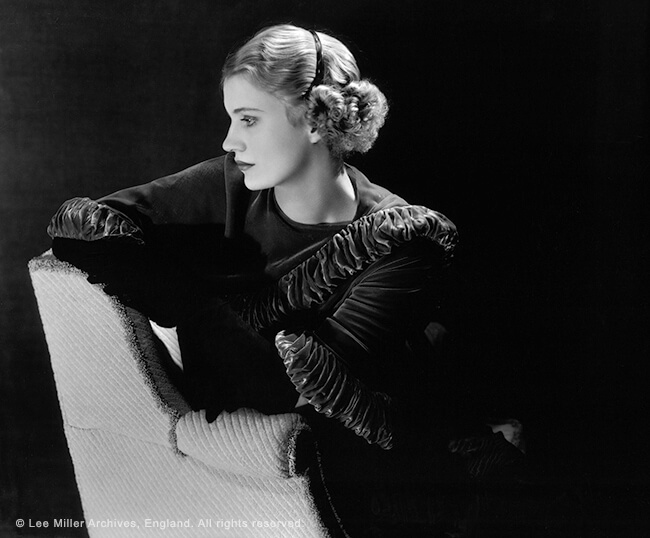
Lee Miller started her career in photography as a fashion model in New York. A chance encounter – stepping out in front of Condé Nast’s car one morning, led to her modelling for Vogue. For the next two years, she worked for various brands and was the first person to feature in a menstrual hygiene ad for Kotex, which almost finished her modelling career. She told a journalist that she wanted to “enter photography by the back end,” and sought inspiration from various artists including May RAY who she followed to Paris in 1929, introducing herself as his new student. She became his lover and muse and together they developed a new artistic technique called Solarisation, which you can see in some photographs in the house.

Lee came back to New York in 1932 and ran her own photography studio for two years before closing it down to move to Cairo with her new husband, Egyptian businessman Aziz Eloui Bey. This sparked a series of desert photography shots with abandoned villages and barren landscapes. There’s one photo in Farley Gallery of a desert landscape behind a torn net – a prophecy of what was to come when she became a war correspondent in the 1940s. Boredom and restlessness brought her back to Paris in 1937 and she met Roland Penrose at a ball, who she married 10 years later.

Lee moved back to London in 1939 just before the Second World War broke out, resisting orders from the US to return home and instead worked as a freelance photographer for Vogue. In 1944 she became a war correspondent with the US Army – and possibly the only woman to cover the front line in Europe – photographing various key events including the siege of St Malo, the Liberation of Paris, fighting in Luxembourg and Alsace, the work of WRNS, ATS, the Land Girls, WRVS and the nurses. She also photographed refugees in Europe, women forced into slave labour and prostitution and concentration camp victims. She stayed in Hitler and Eva Braun’s houses in Munich documenting Hitler’s house at Berchtesgaden in flames prior to Germany’s surrender.

In the sitting room at Farley Farm House, there are various artefacts, photos, books and mementoes from various assignments and their travels together. One photo shows her sitting in Hitler’s bathtub, her muddy boots staining the white bath mat. Another is a group photo of May RAY and his lover Ady Fidelin, Penrose and Miller, Nusch and Paul Eluard picnicking in the sun, the women topless and relaxed. In the corner, there’s a silver tray with her brand of cigarettes and alcohol. Doctors told her to drink to help her relax and forget what she had seen in Europe, which led to her alcoholism.

Lee and Roland lived at Farley Farm House for 35 years, entertaining visitors from the art world including Man RAY, Picasso, Max Ernst, Joan Miro, Echaurren Matta, and British counterparts Antoni Tapies, Eileen Agar, Kenneth Armitage, William Turnbull, John Craxton and Richard Hamilton. In the kitchen, there are humorous paintings by Picasso and above the Aga, a tile he decorated set in the wall. Surrealism was about finding the magic in every day, exploring what happens when inner and outer worlds collide and Lee wanted art to be part of the everyday.

In the study alongside her modelling photos and various vintage magazines, there are lots of cookbooks. Lee developed a taste for surrealist cooking – becoming a gourmet cook and frequently told her guests to roll their sleeves up and get chopping.

I saw Antony’s performance piece, The Angel and the Fiend a couple of months ago in Hastings, which is a fantastic biography told through stories, letters and music. Restoring Farley Farm House and founding the Lee Miller Archive has been a lifelong project for him (he found her photographs in the attic and says growing up, he knew little about her war photography). I suspect it has healed some rifts over his mother being away for a large part of his childhood and given him a deeper understanding and appreciation of his parents’ lives.

I left the house feeling emotional, humbled and inspired by the rawness of the work and the richness of the life they created together. Outside is a beautiful sculpture garden, a peaceful, healing space overlooking the South Downs, which has been enjoyed by many visitors over the years. Roland Penrose died at Farley Farm House on 23 April 1984, seven years after Lee Miller died from pancreatic cancer. He had been ill for some time but was holding out for something, which was Lee’s birthday.

Farley Farm House is open from every Sunday from April to October with an additional opening day on Saturday 3rd October.

www.leemiller.co.uk

Lee Miller: A Woman’s War – an exhibition of 150 photographs depicting women’s experience of the Second World War by Lee Miller – opens on 15th October at the Imperial War Museum. It is the first exhibition to address Miller’s vision of gender and features photographs, objects, art and personal items not before seen on display. Book tickets online here. 

Lee Miller: A Woman’s War is published by Thames & Hudson.

Image © Lee Miller Archives, England 2015. All rights reserved. www.leemiller.co.uk

Photo: Thanks to Thomas Curryer on Unsplash

Categories
Newsletter

Markwick Gardens, St Leonards

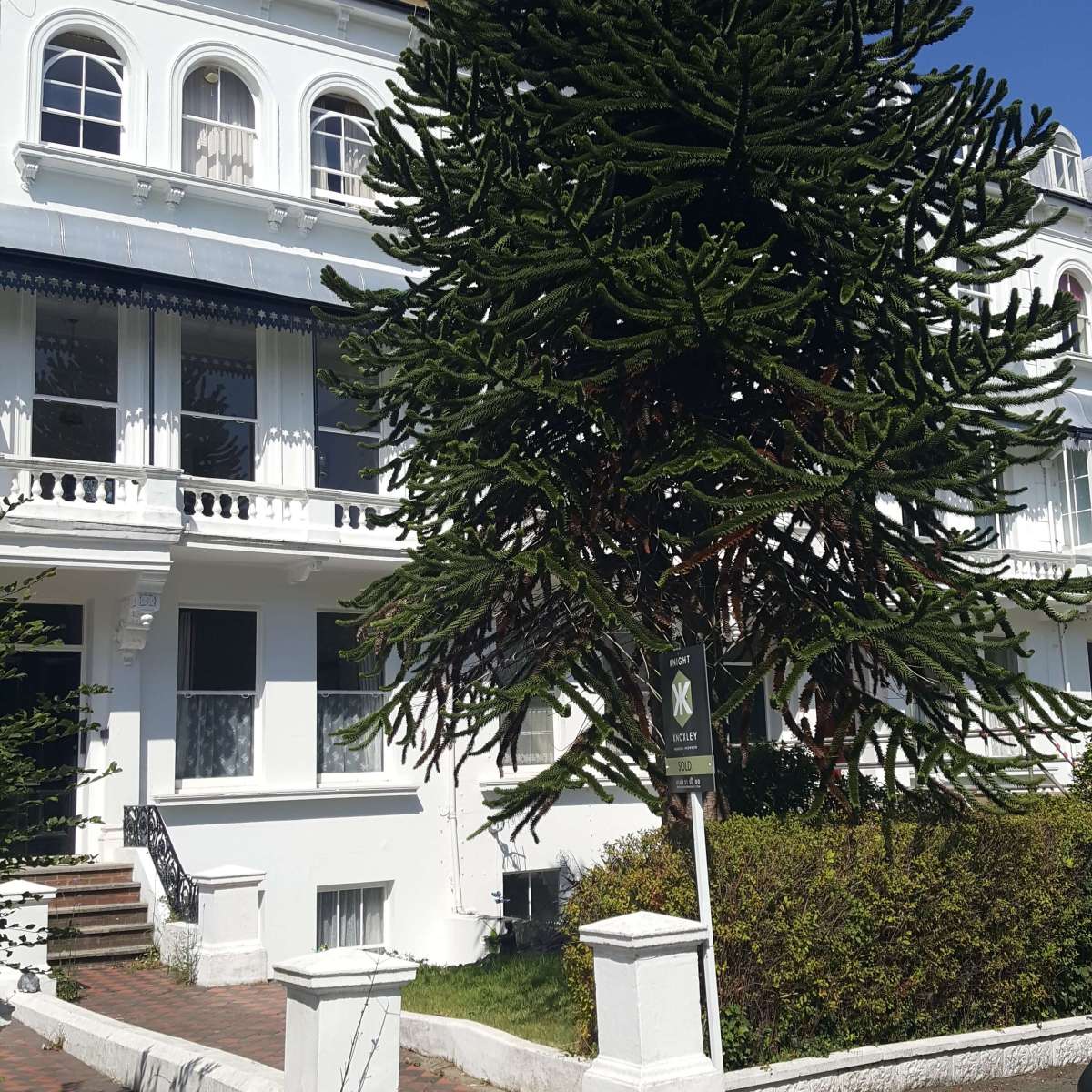
I have just moved into a lovely flat in Markwick Terrace, St Leonards on Sea – the last great Regency seaside resort. St Leonards has been part of Hastings since the late 19th century, but it has a distinct character thanks to the vision of London architect James Burton who bought land here to create an upmarket pleasure resort. Markwick Terrace is high up on the hill and one of the most beautiful residential streets – a row of white Victorian properties with huge windows and decorative balconies with cast iron railings. My balcony is still intact – the one at no 11 was damaged during the war.

Markwick Gardens was formed in the 1860s for residents in the terrace to enjoy. It is privately owned and since WW2 has been managed by the Markwick Gardens Association whose aim is to restore it to its former Victorian/Edwardian splendour. “Much history has been lost or forgotten, and we are trying to piece it back together again.” You don’t have to be a resident to join, and they host free events so you can come and have a look around. I went to the dog show a couple of weeks ago – a proper parade of various breeds with judging, rosettes and doggy book stalls (this is a doggy town). Next weekend there’s a barn dance & supper, a summer fete in July and the fantastic Rude Mechanicals touring theatre in August. The gardens are well maintained and bigger than they look from outside. They have a high fence so feel very secluded, like being in your private retreat. There’s a bandstand, BBQ facilities and in the far corner, the head gardener’s house. “It’s a lovely location, especially when you’ve got access to the gardens as well”, I heard a man in the street say this morning.

The prolific author and novelist Sheila Kaye Smith was born at 9 Dane Road and lived there from 1887 and 1924. She used the gardens as a setting for one of her books, “Selina is Older”; well worth a read for an insight into what the gardens were like at the time. Her work focused on the changing role of women, provincial life and the effect of industrialisation.

I love the flat. It’s light and peaceful and I feel quietly focused. It’s fantastic to have a space to create, grow my little Mediterranean garden and plan my next adventure. It’s amazing what a difference high ceilings, big windows and outdoor space make. I’m motivated to get up and have coffee outside, watch the street wake up and plan my day. It’s all residential around here but it doesn’t feel suburban, perhaps because of the literary history, beautiful architecture and activity in the gardens from dawn to dusk.

St Leonards is full of open gardens. I’ve lived in Anglesea Terrace opposite Gensing Gardens, on The Mount behind the recently renovated St Leonards Gardens and St Michael’s Hospice Garden, and on the seafront near Warrior Square with its lovely rose garden. I walk through there to go to work and see the same crew out walking their dogs and having a chat; it’s a friendly community.

St Michael’s Hospice in Maze Hill has just launched its 2018 Open Gardens season. Part of the National Open Gardens scheme, it’s very popular – last year they raised over £36,000. This season 40 beautiful private gardens will be open from May to August in Hastings Old Town, St Leonards, Winchelsea, Northiam, Westfield, Udimore, and Mountfield, all in aid of the Hospice. It’s a beautiful way to explore Sussex through the eyes of keen gardeners and get some inspiration for your own. Every summer beauty writer Jo Fairley hosts a cream tea at her home in Hastings Old Town. She raffles off beauty products she’s been sent throughout the year to raise funds for charity. There’s also a well-known gardening writer who opens up her place in Croft Road. For a small fee, you get the chance to see Sussex through someone else’s eyes, access private spaces, learn something new and gain inspiration for your own garden.

Find out more:

http://markwickgardens.co.uk

http://www.stmichaelshospice.com/opengardens